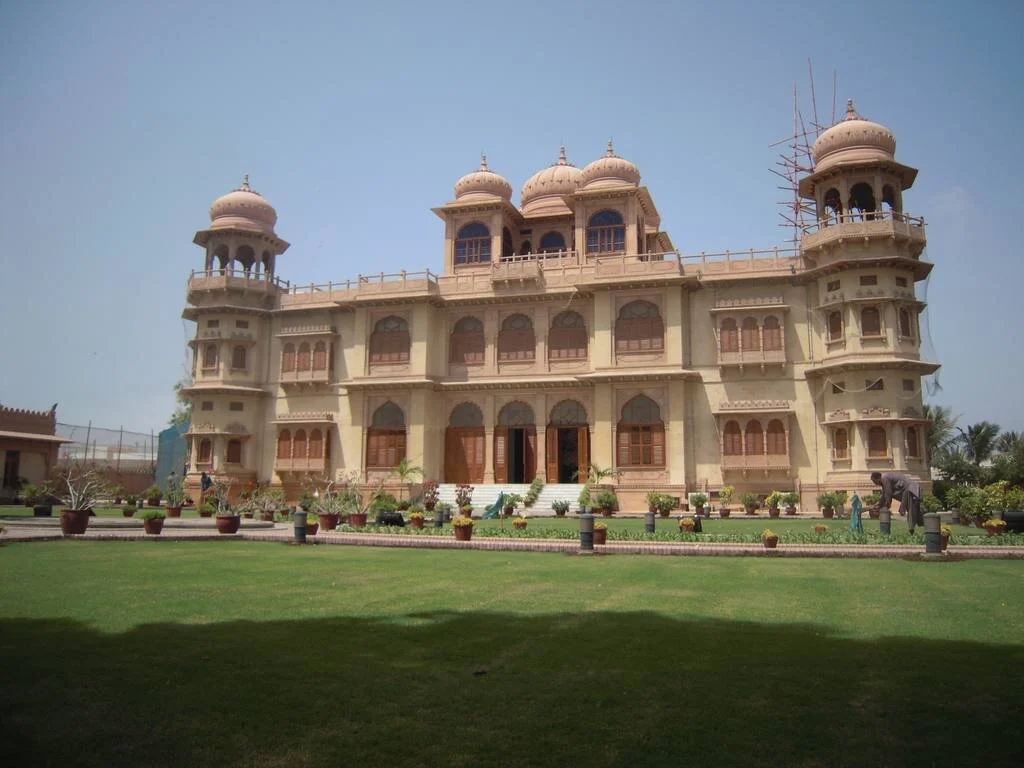
Mohatta Palace Reunion
Mohatta Palace Reuinion


I had Haider Ali sahib drop me off at Mohatta Palace on his way to work. It’s a beautiful, privately owned museum that I had visited 11 years ago, when I was in Karachi before. There was a beautiful exhibit on the history of map making. One of the staff members recognized me, as we had met back in 2008, when he was studying in Jamshoro. He had seen a facebook photo of me at Najib sahib’s exhibition the night before and recognized me. That changed the whole visit. He gave such a rich inside look at the pieces and process of putting the show together. It was fascinating and I really appreciate the immense effort and value in the work that the team did.I also picked up Abida Parveen’s CD set of Shah Jo Risalo. Afterwards, I walked around Clifton, then grabbed a rickshaw over to Sadar, which is an older part of the city. I started looking for some older bookstores there, and looked at one. By that time, the car my cousin had sent to pick me up had arrived, and I travelled in comfort from Sadar. I’m not used to such luxury, after these months on this trip.We made a little stop at the National Book Foundation as it was on my list of places to go to. It was funny following the signs into the building, that lead to a sign that said the book shop had moved. It was not clear where, so I asked around. Walked out a back gate, down an alley, past a building and found it. I was hoping to find books from different languages and provinces of Pakistan, translated into Urdu. I didn’t really find anything that wasn’t already easy to find. A bit disappointed I head out, got back in the car and head on my way to see my cousin.It was fun to catch and I ended up spending the night there as he lives a bit further out of town. Since I last saw him years ago, he has added a few little additions to his family. Dinner was amazing.
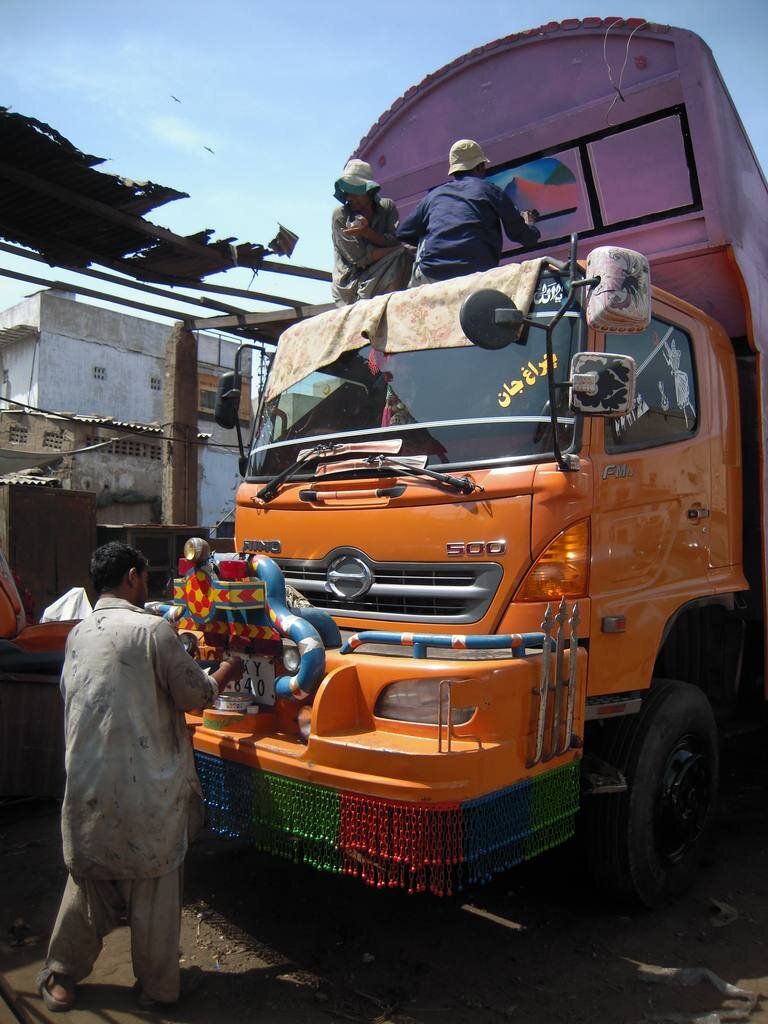
Indus Valley
Indus Valley


We road through all kinds of crazy streets to get to one of the spots where the Phool Patti team was painting a truck. Mumtaz bhai and Gulraiz were hard at work in the sun. After that, we went to the Indus Valley College of Art and Design. I joined Haider Ali for the day and got to meet lecturers there and see the work of students. I got to take a fun tour of the college. The main buildings were deconstructed piece by piece and rebuilt at their present location to preserve them from being demolished. What an amazing feat. The rest of the buildings were built to compliment those main buildings.


I also worked on some more drawings to hand off to Haider Ali, for his portion of my film “Risalo”. It will be interesting to see how this collaboration works. After a day of teaching, Haider Ali took me over to Mumtaz bhai and Gulraiz, still hard at work on the truck form the morning. That is a long and exhausting day of work in the sun.We sat down afterwords in a room close by. We had some snacks and biryani. The heat is pretty tough. Afterwards, we zipped through insane traffic to get home.
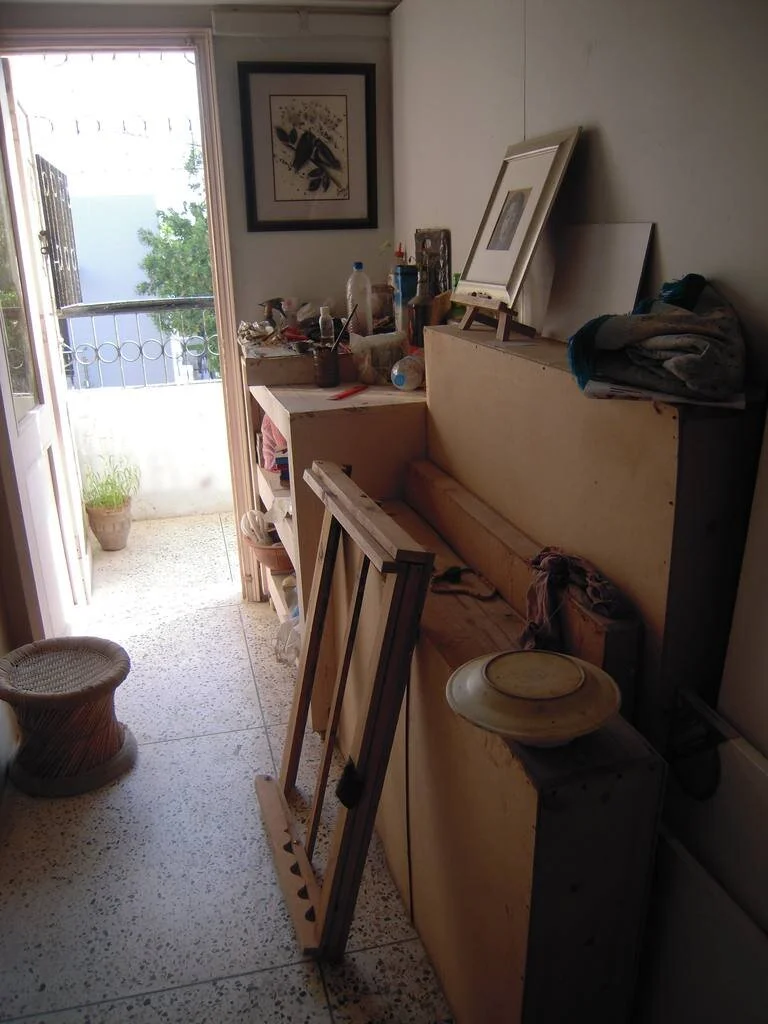
Back to Karachi
Back to Karachi

Time to go to Karachi. I spent the morning packing and prepping to go to Karachi. My friend Najib sahib had a gallery opening as well. I would either take the bus or ride down with Najib sahib if he had space in his car. He pulled up after his class and invited me to join him, which really made things easier and more comfortable and fun for me.It had been a long time since I had sat in an air conditioned car, and the luxury was much appreciated. We picked up another artist friend from CEAD and head out no the road. We grabbed some food along the way, enjoyed some beautiful landscapes, then visited another artist in Karachi, before going to the show at the Canvas gallery in Clifton.


My friends Haider Ali and the Phool Patti team joined us there too and it was great to see them. The show was a lot of fun, featuring four artists. Najib sahib is a fantastic artist and it was great to see his work in a show, though he has so much more beautiful art hidden away in his home. I hope to see more of it in gallery shows soon!Afterwards, I head out with Haider Ali sahib, just like back in February. He was teaching a 2 week long workshop at the Indus Valley School of Art and Design. We went back to his home, enjoyed some food and catching up. It was great to see his family again too.
Happy Birthday!
Happy Birthday Kristeen!


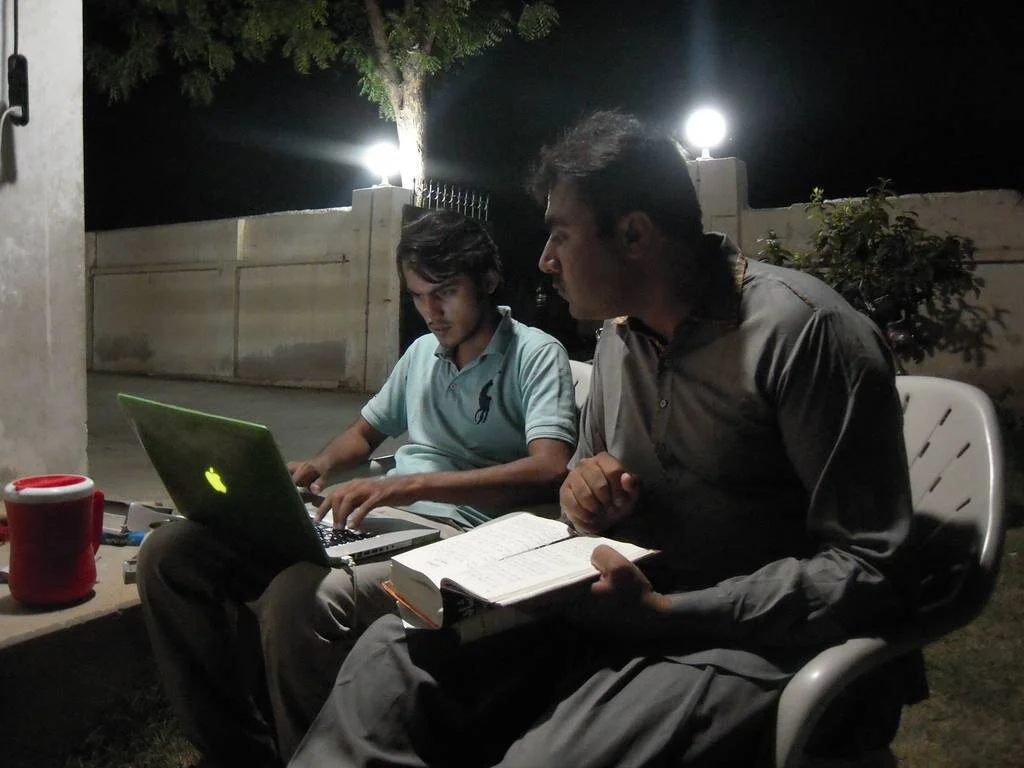
It was my wife’s birthday, across the border. Well, at least I sent her a little animated birthday card I made.I spent the day working on drawings, then towards the evening my friend Javed came by and we went over to Shahid’s place and worked on the Sindhi script. After a few hours, Muhib sahib joined us as well. They are both very busy, with so much going on, so it was a big help and I can’t appreciate them enough. This was a much needed push.Afterwards, I caught up a bit with my wife on Skype and then stayed up until about 3am just putting together the formatting etc for the script to prep it for a final double check. I decided I would head down to Karachi and get the Phool Patti artists started on sur Karayal paintings, and work out the finalization of scripts while I was away. I just need to do whatever I can during the time I have despite a myriad of obstacles and shifting plans beyond my control.
Let's meet at...never
Let's meet at...never
After a great night’s sleep I got ready, then worked on some drawing. Najib sahib prepared some breakfast and we hung out for a while. I was supposed to meet a musician to get some leads on female singers who could sing Shah Latif’s poetry well. In the evening, I was going to work with friends to get the remaining portion of the Sindhi script typed up. So, around 11am, I head back to the hostel and started prepping for the rest of the day.At noon, I called the musician as he had told me to. No answer. Over the next two hours, I ate lunch and kept checking back and calling. Of course there was no answer. I feel like Jamshoro has an epidemic of this. This past month, I have spent the majority of my time waiting for people and calling them with no response at times they had suggested. What a waste of time.I ended up doing an overhaul of the script, removing a few verses here and there that seemed unneeded in the animatic of “Risalo”. I even went through the painstaking task of checking the Sindhi verses that were typed, against the verses in the books they were from. I found some mistakes and did my best to correct them.My evening/night meeting never happened either. I wish people would at least let me know that they are canceling. I understand that plans change and things come up, but I’ve spent the last month just waiting, and just not believing people when they say we are meeting up at a particular time anymore. I don’t know how to make plans like this. I do make a point to keep reevaluating options and then doing whatever I can, but how do you make plans when no one sticks to them or even lets me know they have changed?I did make a point to create a funny little happy birthday animation for my wife. That was fun to do. Hisam’s brother came by and fixed the fan, which is a much appreciated relief. Plans for monday, shifted to tuesday…
Respite from heat and isolation
Respite from heat and isolation


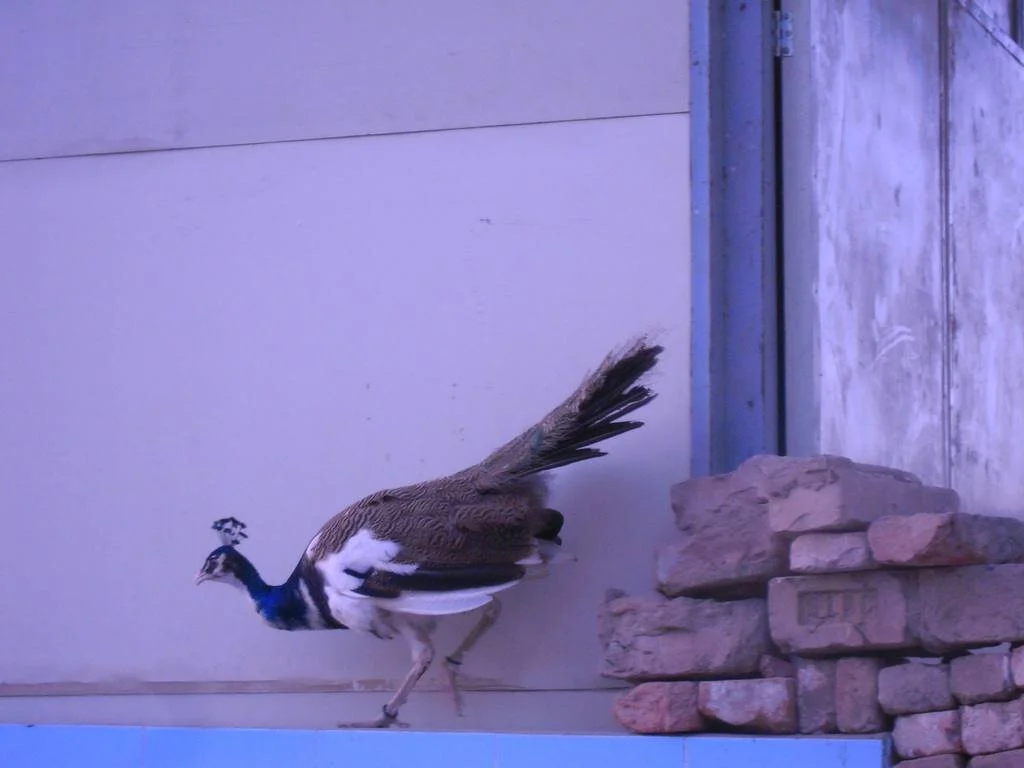
I really needed a break. It was another hot morning without a fan. I didn’t feel like eating breakfast. I thought I would try to call my friend Najib sahib, as I had not heard from him in a while. I haven’t been hearing back from most people lately. Everyone is busy.He called me back and invited me over. I grabbed my drawing things and walked over to his place. What a relief. Good company, nice and cool place to draw. What more could I ask for? It was so much better to hang out with Najib sahib, talk art and work on designs at his place, than in the sweltering hostel room.Najib sahib made some delicious daal, and I knocked out a good chunk of my drawing tasks. Afterwards we took a drive to his village, which was past Bhitshah, Hala and Saeedabad. It was a really nice change of pace. There were horses, cows and peacocks around. Everyone was very interested in Najib sahib’s new car. For me, it was just great to be non isolated, and not melting in the heat. Najib sahib is great company, and I am very inspired by his art.


We visited another cousin of his surrounded by beautiful farm land. He had his own little zoo of sorts with all kinds of beautiful animals. We sat around and talked to some tv directors and actors who were there. It was just the change of pace I needed. We head back to Jamshoro after another delicious meal. I ended up staying at Najib sahib’s place to avoid the heat.
No fan...time passes slowly
No fan...time passes slowly
I worked on drawings for sur Karayal. This involves working on designs for various animals featured in that piece. I had started with studying photos, then sketching them and then trying to push stylization of their shapes. The next step was to apply those shapes into the poses I had storyboarded.The heat was really bad. With a running fan it is quite difficult. Without the fan, I kept falling asleep, then drinking lots of water, trying to draw and just felt very lethargic. I did not get a lot done.In the evening, I ate my dinner, then went up to the roof and slept. Even when I speak to people at the hostel, it is but a few words before I become invisible, back in my own world. I take pleasure in the good food, and zone out in the mess hall tv room for a bit in the evening at times.
Isolation and progress
Isolation and progress
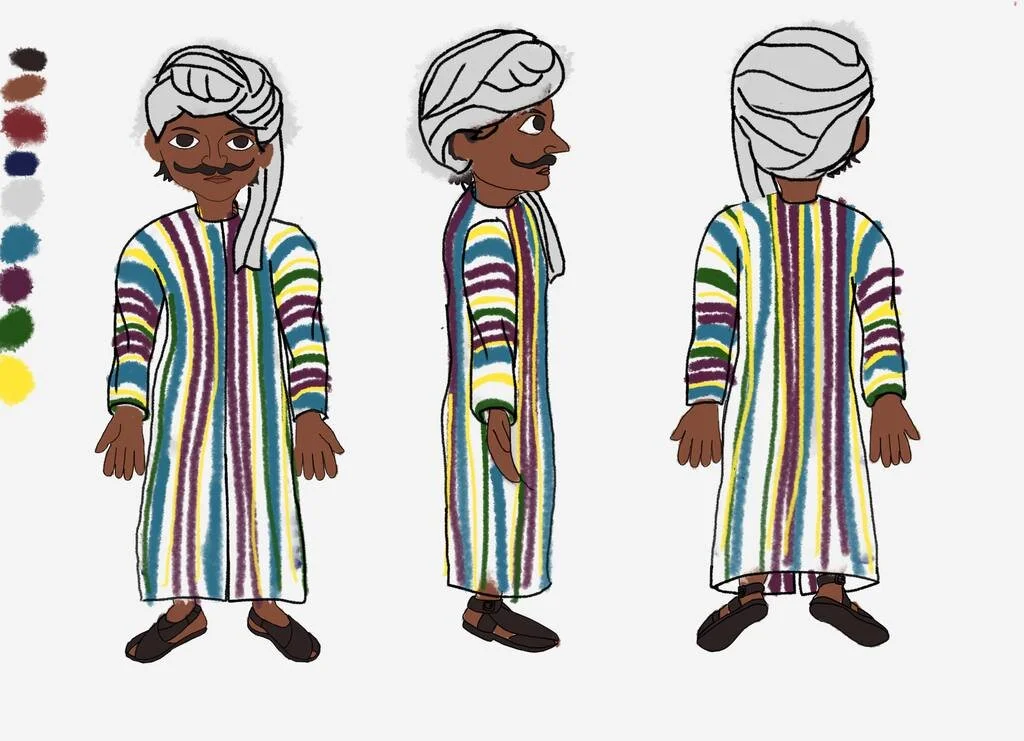
I received some odd visitors this morning at the hostel. I recognized the hostel staff member who came in to tell me that the room had been allotted to someone else and that my friend Hisam had been spoken to and had agreed, so I needed to hand over the keys. While that is nice, I didn’t feel like just handing over the keys because some guy came up and said so. I said fine, I’ll check into it and give you the keys around lunch. He wanted me to call Hisam then, so I did. Hisam had not agreed to any of this, so the sure thing was actually a bunch of bullshit. I said bye to the guy and he was off. My friend Hisam came by and explained a bit, and reassured that the room was not being given up. He was living there too after all.I was getting ready to meet Muhib sahib who had so graciously offered to give me some time to work on finding Sindhi verses for “Risalo”. Anyway, that turned out to be nonsense. I called Hisam and then said no to the guy regarding giving the key and vacating the room. Hisam came by to visit after a while. After he left, a few other people walked into the room to question me. When I asked for their names, I got no response. It sure is annoying. I find this happens often with other people in the hostel in regards to myself also. They ask who I am and never reply when I ask who they are in return. It increases my sense of isolation and the desire to be done with this.I grabbed a rickshaw and head over to meet Muhib sahib at WAPDA afterwards. It is a bit daunting going up to a power plant. He had a friend pick me up from the colony next door and drive me to his office. We sat down and worked on finding as many verses of the ones left as possible. We ate some daal, then he graciously invited me to his home for lunch part two, which I ate because it was delicious. I was a bit depressed with all the nonsense of people asking who I am, where I am from and then promptly shutting off when I ask the same. I spend too many hours here in isolation, even if there are other people around, as I do not speak Sindhi. It makes me feel as if I were serving out a sentence, rather than trying to create things. I know it’s not as bad as that, but it is still challenging.Muhib sahib dropped me off afterwards, and I spent the rest of the day trying to get work done in the heat. I ended up making lots of phone calls to puppet makers to try and keep things moving..or even get them started. This is one of the many challenges of trying to get puppets made across the border, without being able to go there. This project hinges on a lot of variables that are beyond my direct control.The fan in the room also stopped working, so I slept on the roof as the people who would fix it are off until monday
Meeting some singers
Meeting some singers


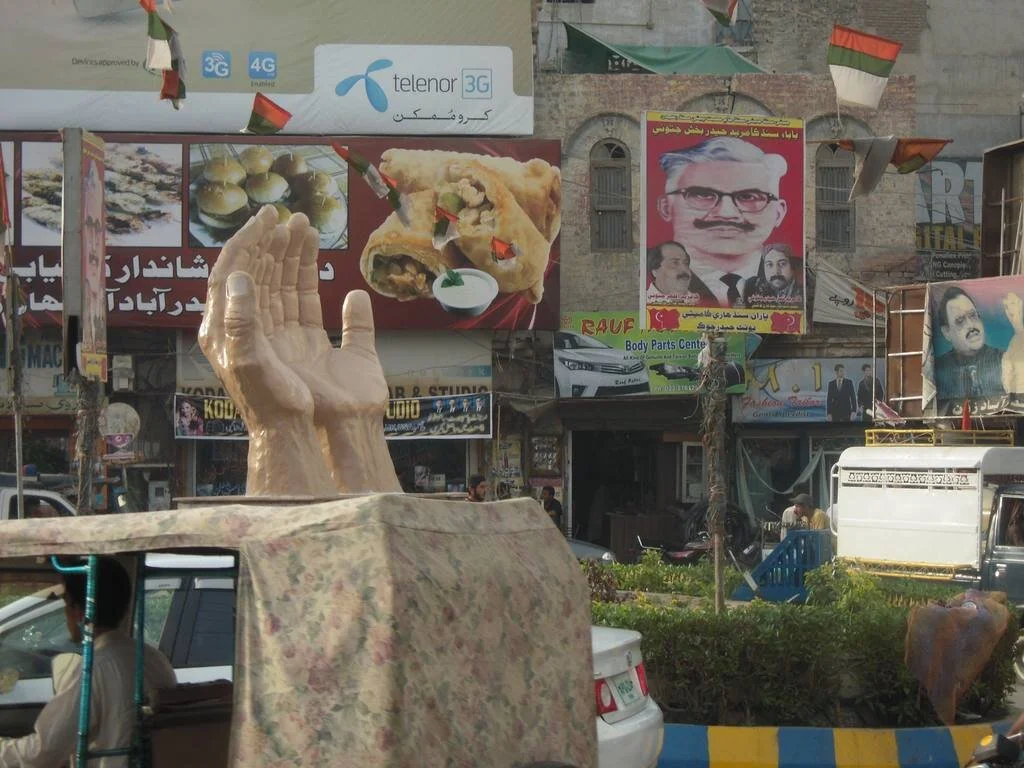
Since I had a version of the script ready for two surs in Sindhi and Urdu, I printed them out at a print shop, then head to Hyderabad to meet Ustad Amb Jogi at Radio Pakistan. It is always quite a journey, taking the bus in the heat to get there, so I try to do several tasks in one go. I stopped at the Adabi Board book shop and picked up a few books I needed before heading to Radio Pakistan.This was the first time that we had something that we could even begin testing out. There were a few singers at the station, so Ustad Amb Jogi asked them to give it a go. At first they looked at the verses and were taken aback. The first response was that they could not sing it. After a bit more explaining and coaxing, they understood that these verses need not be sung as song in the traditional sense. Ustad sahib suggested we drop percussion, thus freeing the singers to express the words in the time they needed with other instruments accompanying them. This made sense to the two singers who gave it a go.While these two surs are to be sung by women, it was still helpful to get someone to give it a try. Ustad sahib had some more work to do before we could leave to meet some female singers he had in mind, so I walked around in search of some more books I needed, around Hyder Chowk, which was down the street. Of course, I also visited my friend Abdul Majeed Sumroo at his office there. He’s such a friendly and fun loving person, despite being very busy, dealing with constant challenges in the printing business.Ustad sahib picked me up after his work and we went to meet the family of Farzana Bahar, a Sindhi singer.We spoke to some family members who were musicians, regarding what we were looking for. The women were out for a bit, but returned soon enough, so we were able to present the project and talk about what we needed. One of the challenges was that a reference would be needed for the correct pronunciation of the original Sindhi verses. I thought of Mehboob Ali Shah sahib. That would be something to figure out. The women would be away performing for the next 5 nights, but we could start looking at this afterwards.In the evening, I returned to Jamshoro and met Shafqat sahib who had offered to help with the script that night. We ended up going to meet a group of friends and it was Javed Solangi sahib who did all the verse hunting that night. Every bit, is a huge help as I still need to complete the surs that will be sung by men.
Stylizing animals and typing Sindhi
Stylizing animals and typing Sindhi
I met Javed at Shahid Sahib’s place to work on typing the surs we had completed. I worked on drawings for Sur Karayal. I played with the shapes of the animals. Previously I drew different poses of swans, crows, cobras and peacocks based on photos. The next step was to look at how those animals have been depicted in miniature paintings and other artwork from the region, adding my spin on top.It was very relaxing to be in an air conditioned room. I felt my energy levels come up and managed to create a lot of sketches. Javed worked for hours while I did that and typed up verses. I don’t know how I would do this without his tireless efforts.
Mehboob Ali Shah and Dinner at Muhib's
Mehboob Ali Shah and Dinner at Muhib's


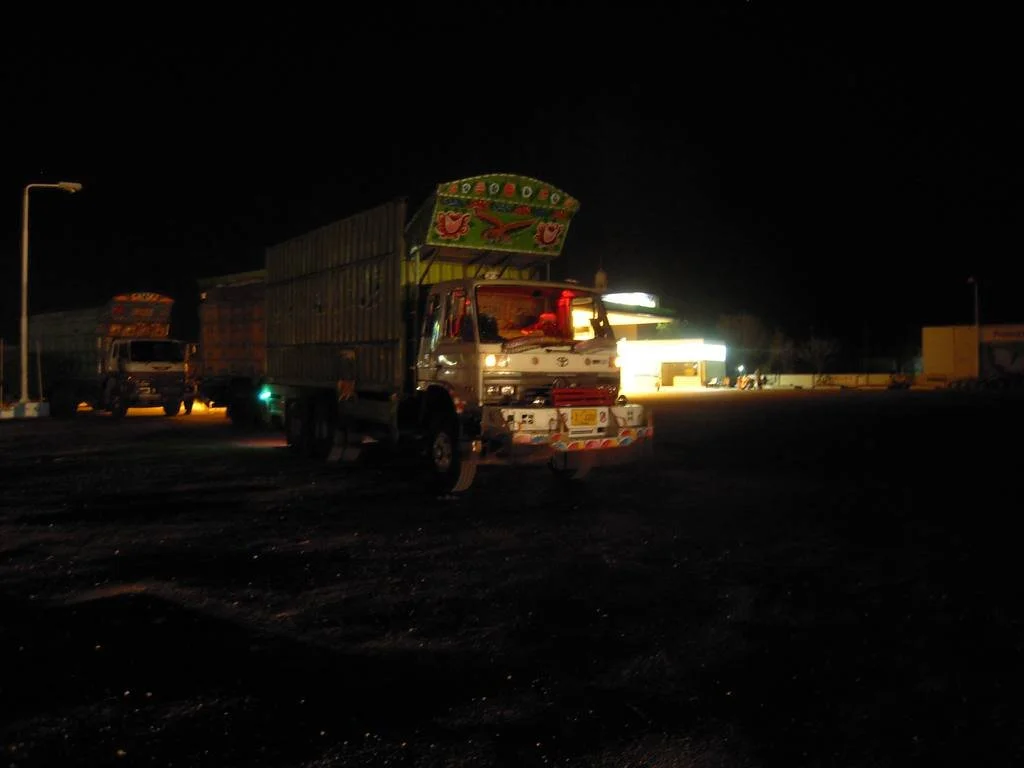
I took another morning rickshaw to Mehboob Ali Shah sahib’s place. He was actually preparing for the Urs celebration of his paternal grandfather, but did not want to say no to me, and insisted that I come for an hour or so. We sat down in his bethak. We were going to work on Sur Sorath today and try to find the original verses by Shah Latif that corresponded to the Urdu ones I had chosen from the translation for my film “Risalo”.Mehboob sahib started with the very first verse and the discussion ended up being about it. Again, he used several stories to clarify his point and expressed understandable disappointment that Shaikh Ayaz had seen fit to simply omit that first verse, which set the stage for Bijal and Raja Rai Diyach’s dynamic in the story of Sorath to also be used in verses aside from the folk tale to connect to the story of the Prophet Muhammed visiting God and asked for something as well. The idea that the Raja was so taken by Bijal’s music that he offered his head, citing it as not valuable, just a dirt vessel.Similarly, God, so taken by the Prophet’s love gave everything to him. I’m not doing this justice in my explanation here, but the way each word in that one little verse was dissected and rich with meaning, brings about all of these connections and allusions. While we did not work on finding the verses today either, I really appreciate these riches of knowledge that give me a chance to see different interpretations of Shah Latif’s verse and put it in a larger context.I appreciated the session, but I also felt worried about being able to get these verses completed in terms of finding the Sindhi verses I needed. It is hard, because the task is not in my hands. I came back to the hostel and finished the design for the Sohni puppet. Then I head out on the long, sweaty ride to the city (Hyderabad) to pick up another translation of Shah Jo Risalo that included Sindhi, Urdu and English. Perhaps this would help me find some of these verses.


I kind of forgot that it was Friday. All the book shops were closed. Thankfully I had come for one other thing as well. I went and treated myself to a Chinese restaurant that I saw every time I went into town. The food was really good and there was plenty left. I knew that this was the only way my friends would let me treat them to a meal, so I went and visited Abdul Majeed Soomro sahib afterwards, with plenty of food.It was fun to catch up. I even had that apple soda I had been craving for a week. Then I head out to try one more store, which was also closed and then hopped on a bus to head back to the city.The heat takes a lot out of you, whether you go out in a bus, or even sit in the hostel room all day. It’s pretty oppressive. I rested a bit, then did my English tutoring. After that I waited, as a few friends were taking me to a dinner at Muhib sahib’s place.


We went all the way out to the WAPDA (power company) housing society where he lived. The way there was as usual a series of near death experiences on the terrifying road.Once we got there, it was really nice. I had been pretty out of it when they got me, from the heat. Though I kept drinking lots of water, and taking baths, it is hot, even at night. Once we were there, the AC was running, I sat down and felt much better very quickly.Muhib sahib sat with me and went over Sur Karayal (which I am adapting with a Peacock and Snake story in “Risalo”). He had basically found all the verses for those three pages already and marked them for me. Now he was explaining the richness and beauty of those verses and several others, which was extremely valuable for me.We all shared an amazing dinner together, then sat afterwards. His little sons were a welcome change from my evenings in the sweltering hostel, thinking about work. They are very cute and funny. It made me think of my niece, whom I really miss, that much more, but the night was really helpful. The help with the work was huge, and just the change of pace and such nice people helped lift my spirits and give me some more energy to get through another day.
Moomal Rano with Mehboob Ali Shah
Moomal Rano with Mehboob Ali Shah


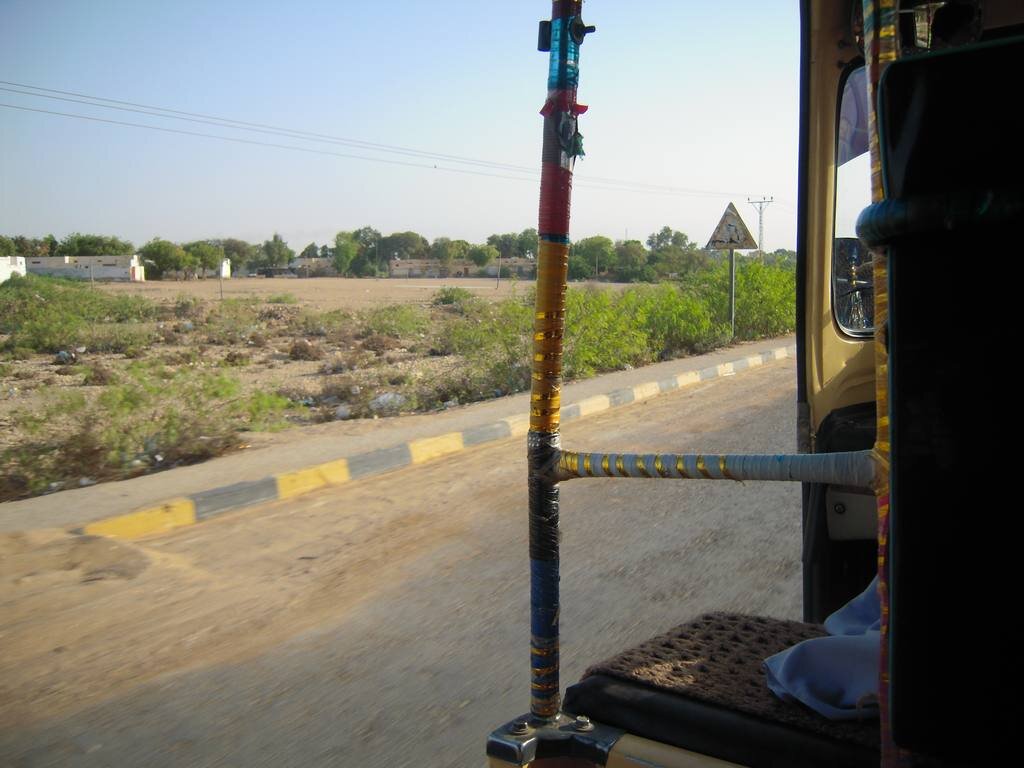
I went to see Mehboob Ali Shah sahib in the morning. We sat down. I shared the drawings and animatic for my project “Risalo”. He had asked me to bring by these things to share at the end of our last meeting, so I made sure to do so. He took time to understand what I was trying to do, and asked questions for clarification, then shared some suggestions. Seeing the photos of puppets, he thought of a verse related to the story of Moomal Rano, which seemed to fit. It was a verse about how things that don’t speak can tell you more than words sometimes. He started to share some interesting insights into the story of Moomal Rano as told by Shah Latif in his poetry.At one point in the story, Rano has been away from his love Moomal for a while and returns in the night to see that behind the curtain of her bed there were two figures sleeping in the bed.He does not step closer to see who it is, thinking it best to accept that she was with another man, and let her be with her choice. There is no violent reaction either. He simply places his walking stick or staff beside the bed, and leaves, as he came, quietly in the night.Moomal wakes up the next morning and sees the staff and realizes that Rano had come in the night and left. The other figure in her bed, had just been her sister. It was all a big mix up and now Rano had gone far away to where he was from, and Moomal had no chance to reconnect. In typical melodramatic style, they never meet again, so goes the popular folk tale.Shah Latif, the great Sindhi sufi poet used this as a vehicle to say something more and that is what Mehboob Ali Shah sahib was explaining to me. When I had read it, I just felt that Rano was a bit dramatic and stubborn. Moomal had not done anything wrong and so I did not understand why in later verses she was thanking him for the lesson he taught her.She said that he taught her more with his silence and that gesture of leaving the walking stick by her bed than he could have with words. Mehboob sahib shared the Sindhi verses and translated word for word to share some of the rich beauty of Latif’s words with me. I had read the Urdu translation by Sheikh Ayaz, which is beautiful, but as I began to learn, had omitted quite a bit.Mehboob sahib went into a few stories to illustrate another aspect of what was going on in this story as told in the poetry. Just as only a single sword fits in a scabbard, so only one can live in your heart. The idea, was that the one in your heart needed to be God. The story in affect, was illustrating that point. The story of Moomal Rano was just a vehicle for Shah Latif to express this thought. In the Islamic tradition, God’s aspects are mostly in service to creation, be it compassion, beneficent etc. God asks for only one thing, and that is to be unassociated with any other. This is the lesson she is thankful for here.This wasn’t about a man and a woman meeting, but about a human being’s relationship with God. Mehboob sahib further gave example of a story of Hazrat Ali who had vanquished a warrior in battle and was about to take his life, when the man kneeling before him spit in his mouth. The story goes that Hazrat Ali stopped his sword and told the man to stand. The man stood. He asked why he had done that. The man replied that he wanted to anger Hazrat Ali so that he would bring down his sword faster and without any doubt and end it all.Instead, the story goes, that Hazrat Ali tells him that he is free to go. The man is shocked and asks why. The response is that to kill him now would be to satisfy his own ego, out of personal anger, rather than as the will of God. These kinds of examples are interesting. While not quite in tune with my feelings on how to do things. I am getting interesting perspectives and stories from a Sufi Islamic perspective as well as from a few other friends who are communists. It is fascinating to see the range of what people pick out and own in this beautiful poetry, and which stories they link the work to.The story goes on, that the man is so taken aback by Hazrat Ali’s honor and fear of God, that he stops and asks if he can become a Muslim. Hazrat Ali says sure, but why? Both fierce combatants, he says that he did not think Hazrat Ali would fear anything, but that he feared God and had such honor that it inspired him to join. All religions have such stories of obedience and violence. They are also a product of the cultural norms of their times, but in this case the story was told by Mehboob sahib to illustrate the commitment to God, that even one’s ego or in urdu khudi was not to occupy that place of most importance in ones heart.I enjoy the way Mehboob sahib tells several stories to explain the ideas behind each verse of poetry. Another story he shared was of a famous Pakistani singer, who facing a sad illness and failing at all treatments, mentioned in an interview that if she was given time in her life, she would devote herself to sing only praises of the Prophet Muhammed. This is a pretty natural response when facing ones mortality to seek the help or favor of God. However, the point in the poetry was that the place of the creator should always be paramount in your heart, not just when you need help.So in the end, the idea was that Moomal and Rano were representing the relationship between created and creator. When God was out of her mind, Moomal allowed her sister to take that place where God belonged, and then suffered that separation from her beloved, God. It was certainly an interesting point of view and from a structural point of view, gave the story more sense.At that point, our time was up as Mehboob sahib had let me know before hand that he had to attend to other tasks at that time. Yet he did not rush me to go. Like a true teacher, he stopped and shared another thought. He told me of a conversation his mother and father had when he was much younger. She was reassured by four of her sons and the good jobs they had, but she worried about the one son, who seemed not to have figured out what he was going to do. I asked, “Which son might that be?” with a smile. Mehboob sahib smiled then told of how his father told his mother not to worry about him, for to him he would give his knowledge and a river would flow and provide for him. So it was that he continued his father’s tradition of imparting the deep wisdom of Shah Latif to people as well as the verse of his father.He continued by connecting the story to me by reassuring me that though I may not know what immediate gains or successes may or may not come of the work I do, that as I continue, it would certainly bring benefits that I may not even fathom right now. I had not mentioned my concerns or tribulations of this project, beyond that I needed help finding the Sindhi verses. Yet, I thought it so kind of him to think of me and what I might face as challenges in what I am doing, and to say something kind and reassuring, even encouraging to me.I really appreciate the vote of confidence. In fact he even suggested that I take a verse of his father’s and put it to puppetry, which is a very sweet endorsement of what I am trying to do. All of these deeply knowledgable people, including Javed Solangi and Shafqat Qadri sahib as well are pouring out the gifts of their knowledge to help me.Lastly, Mehboob sahib related another verse of Shah Latif’s regarding serving the ocean, for the tiniest of treasures gleaned from it would be enough to satisfy ones needs forever. There are many ways to look upon each verse. He shared that the ocean which certainly feels without limit, represented the limitlessness of God and that once you served God with love and humility, that God too would take care of you.Afterwards, I visited Zulfikar Ali Gopang sahib who had encouraged me to meet Mehboob sahib to begin with and we chatted for a while about his own connections starting with his father and Mehboob sahib’s connection going back, and how generous they had always been with their knowledge.I spent the rest of the day digesting knowledge and working on the design for the Sohni puppet. In the evening I did a bit of tutoring in English reading to Naveed Mohammed, who works at the corner store. He had stopped his schooling at grade 5 years ago, and was interested in learning.Afterwards, I went down the street to meet Solangi sahib and Moeeb sahib. Moeeb sahib was the Shah Latif expert we had been waiting for. Solangi sahib and several other friends had kept saying that he was the one to meet and work on this whole reverse engineering translated Urdu verses to Sindhi verses for the “Risalo” script. He had been gone for a couple of weeks, and had just returned. It was good to meet. We discussed a few pieces of poetry, and he shared many beautiful verses with detailed on the spot translations for my benefit. Such is the love that people have for this wonderful poet, Shah Latif.There was more talk of how the Urdu translation so heavily veered away from the source material, which really worried me as I am running out of time. This step of the process had taken way too long already. It was good to know people’s thoughts and they were right, but I also shared my ground realities and limitations. I needed to move on and get this project actually going so that one day I could go home to my family and life and also actually create this film rather than abandon it.The friends reassured me that they would help me make this happen, then I got dropped back at the hostel and called it a night.
Sorath with Mehboob Ali Shah
Moomal Rano with Mehboob Ali Shah

 I woke up early, got ready and hopped on a rickshaw to see Mehboob Ali Shah sahib. I got there a bit before our meeting time of 8 am. I called him, then sat down in his bethak (sitting area).He came out with three cups of tea, and his warm nature. He was looking around for someone else that was there, hence the third cup, but did not see him, so I got some more tea. We sat down and I waited to let him lead the conversation.We talked a bit about teaching here and as the conversation logically lead that way, it made sense for me to share more about “Risalo”, as well as past projects in Jamshoro with the help of friends here. It can be a lot of information to share, so I share it when people are curious. After all, they have a right to know about me too, as they are investing their time and thought towards my efforts.He shared a lot of relevant and interesting stories throughout our conversation. In fact, before we even got to the poetry, he spent a good hour on discussing humility through the example of a story of the prophet Musa (Moses), and how even after achieving so much, God asked him to go to a seemingly random person to learn from. He went, and the man did things that seemed dishonest, cruel, and evil. At each step, Musa could not contain himself and spoke up. The person told him if he spoke up again, he would be sent on his way. At the second time, he was given a final chance.He did not manage to stay silent and was sent packing, disheartened. The man stopped him and did explain why he had done the cruel acts he had commit in front of him. There was an idea of how each of those acts was really to benefit others as told to him by God. While those acts themselves, and that particular mode of “belief” is not exactly how I feel, the moral of the story was very relevant. The idea that even when you feel you know a great deal or are accomplished, let there be humility. Life or God, may push you into situations where you are forced to learn these lessons. What I have written is a brief summary, that really doesn’t do justice to how fantastic a storyteller Mehboob sahib is.We also discussed the idea of payment for his help. He refused any monetary compensation. What he did ask of me, was something greater and something I intended, but have only more reason and need to fulfill with the help of each person I meet along the way. He wanted me to do this film, but not let my work end at that. He requested, that in lieu of payment for his efforts, I should do my part to take Shah Abdul Latif Bhitai’s poetry and message, back to Lahore, to other parts of Pakistan and to the world in a meaningful way. I take this responsibility seriously, and will continue to try and learn from Latif’s example and do my part to take his work to the world.We worked on poetry for several hours. The portion we worked on today came from a different sur, other than Sorath, which I used to bring in some of the background to the story presented in Sorath, but not featured in Latif’s poetry. With great care and attention to detail, we went over that entire chapter. I see more and more, that Sheikh Ayaz, upon whose Urdu translation of Shah Latif’s poetry; “Shah Jo Risalo” my work is based, did a lot of rearranging of the verses in a sense as I did too for this film. That makes it much more difficult to find the sources, as we are not looking for direct translations, but trying to find those verses from which these meanings were extracted into beautiful Urdu poetry.After completing that section, piece by painstaking piece, we were done for the day. Mehboob sahib continued with a few more stories, that seemed to fit well with adjusting my own state of mind. He shared a story of Hazrat Ali, the son in law of the prophet Mohammed. Hazrat Ali spoke of how he finds God in his own failures to reach his goals. In essence, that when he strives for something and finds himself beset upon by missteps or obstacles, it is within those challenges that he remembers God or feels his presence in guiding himself forward. Perhaps those missteps or obstacles are not really that. Perhaps they are the steps that guide you forward, just not in the way you expect. I’m not going to lie. I get the logic, it’s just hard to set my mind into being able to flow with it without frustration.I head back to the hostel. I went through and wrote blog posts for the week. When going day by day, it feels like I am wasting away, with little hope at progress, but when I write it all down, there is indeed progress, albeit painfully slow.
How to keep things going?
How to keep things going?

 First thing in the morning, I put together emails for Rajesh, the puppeteer in India with designs for custom puppets as well as reference guides. That took a few hours, then I went back to Sindhology to ask about a musician I could not find the name of in a video I had, and to pick up some recordings that Zulfikar sahib had picked up from Maka sahib who had a record label called AA from which I found most of my current day musicians.The musician ended up being Gulzaib Panhwar who sang a beautiful rendition of Rano. Zulfikar Ali Gopang sahib had recorded that piece at a performance, it turns out, at Mehboob Ali Shah sahib’s place, which I had visited on Friday.I came home and knew that I had to get this Sindhi verse matching task going. People were helping, but they were also understandably busy, and it could take weeks or months and even then there was no guarantee I would be any further along if I just waited. I called Mehboob Ali Shah sahib to see if we could meet. He agreed to meet me the next morning to help me. As this is part of my work for “Risalo” I offered to pay for his efforts. It’s a tricky thing to offer pay. Many who are helping me are helping me out of their kindness and a desire to push Shah Latif’s words out into the world. If I offer to pay people in certain cases, it will offend them. At the same time, I would not think less of anyone if I paid them, as it is their right to be paid for their work. Mehboob sahib said we could simply discuss it when we met.I slept a bit easier, knowing that there was some positive step toward this challenging task.
Shooting the Sunrise
Shooting the Sunrise


I woke up at 5 am and called Abdullah. He was up and getting ready too. I got ready, and he picked up a friend of his then me. By about 5:30am, we were just past Mehran University, off a dirt road with some rocky hills. As fate would have it, the direction the sun was rising from was where all the buildings we had left behind stood.My other still camera had been stolen, which had some nice time lapse features which I had planned to use for the sunrise. The cheaper, used replacement I had picked up also turned out to have a time lapse option. I had gone through all the buttons and settings of the camera the day before to prepare. I set it up just behind a hill to capture the sunrise. I ended up moving it 3 times as we figured out the exact location of the sun.Meanwhile, I took my other camera and shot footage of rocks, shrubs, and other details. This is all for one of the scenes in “Risalo”. As I did all of this, my two friends were chatting, giving suggestions where they could help and watching curiously. I explained a bit if what I was trying to do as I fiddled around, up and down hills. Off in the distance we were being serenaded by relentlessly barking dogs from small tent settlements. They were warning us to stay away from the livestock under their protection. We kept an eye on them too, because we really did not want them to visit.The sun began to rise around 6am. I shot lots of bits of footage based on what I had storyboarded and also based on what was in front of me. Afterwards, we dropped off Abdullah’s friend, and my gear. Then we head to Javaid Solangi’s place for breakfast. I got to meet Javaid’s father, but Javaid, famous for his ability to sleep through anything was not able to wake up. That was fine, Abdullah and I were tired too. We enjoyed some breakfast and tea, before he dropped me back at the hostel.I tried to sleep, but could not. Instead, I just lay down to rest and fiddled a bit with the footage I had shot before and what I had shot that day. I spent the day, relaxing in the heat, working on bits, resting and biding time.I spent the day finishing a few more puppet designs. It took a lot of drawing, reference gathering and redrawing, but I needed to finish these designs to send off to Rajesh in Udaipur to get made. He had sent me some photos of puppets he had, amongst which I could get a few background characters I needed, but the main characters needed to be custom made to my designs.That night, as every saturday night, the amazing hostel cooks were off. These guys work very hard, and I look forward to each meal thanks to them. I called in an order to a little fast food place, then studied a book I had picked up on various Sindhi musical instruments. The food arrived, and I ate my zinger (the word for all chicken burgers here it seems) with fries and a little can of mirinda (orange soda).
Designing in the heat
Designing in the heat


I spent the day working on some more puppet designs to send to Rajesh, the puppeteer in Udaipur, Rajasthan, across the border in India. It’s hot here, so I work for a bit, drink lots of water, take a nap and repeat to get through the day. By evening, I was good and ready to sleep or so I thought. I ended up staying up late.Abdullah had graciously agreed to take me out to some area where I could shoot some video of the landscape during a sunrise early in the morning, without all the trash that people have defiled this land with in more inhabited areas of Jamshoro. I tried to sleep around 9pm, but ended up falling asleep just after 1 am.
Meeting Mehboob Ali Shah
Meeting Mehboob Ali Shah


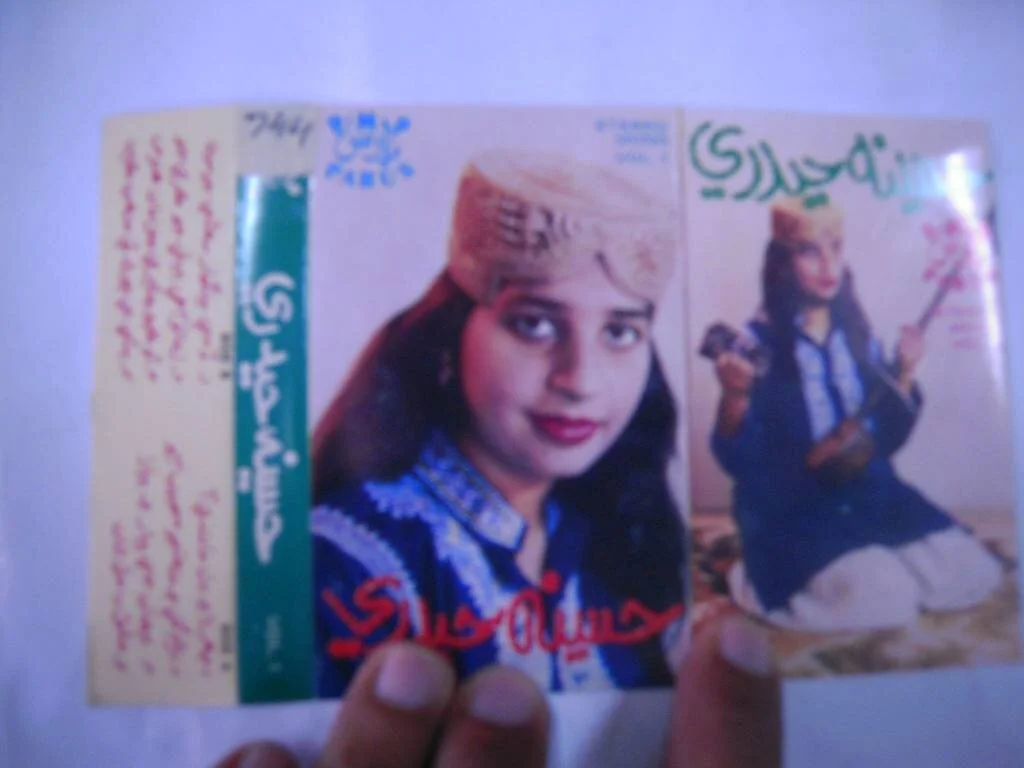
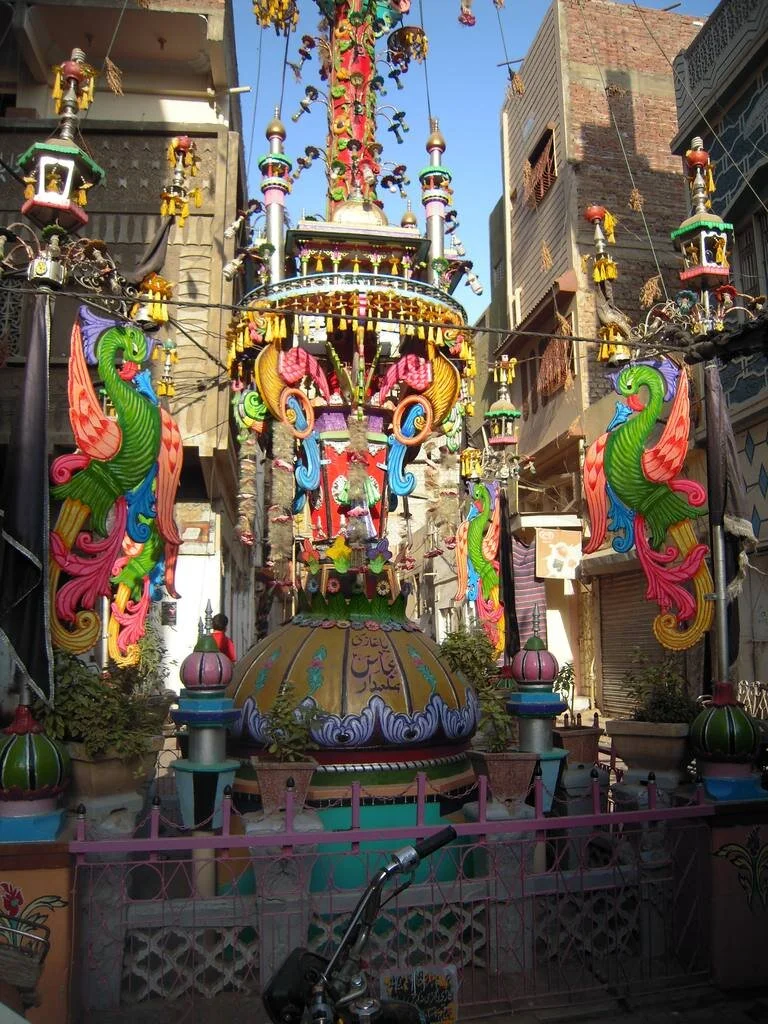
I went back to Sindhology, and was requested to pick out the tapes I would like to hear from the register. I was asked if I can read the register in Urdu and at times Sindhi. I could, even the Sindhi enough to pick out names of artists. I had been looking at tape covers to figure out which had female singers, but these tapes are a treasure and impossible to purchase these days. People have been known to lift selections and so you are not allowed to directly access the collection. Instead, you pick out tapes from the register and go from there.I went through the register and picked out every female sounding name I could find from the remaining collection as well as a few that were specifically tapes on Shah Latif’s poetry. I was struck by how few tapes there were with his poetry.It was a bit tiring to listen to portions of each of these tapes I selected, but I felt I needed to hear as much of what has been done before as I can, to properly play with the material. Most of these singers had long passed on or were probably far too aged to perform at this point, so I really could not look to this collection for contemporary artists. However, the music of that era, when the public better supported their artists was also something I could not find today, and in it a richer variety of Sindhi music than could be seen in current CDs.I finished up, then head back to the hostel. I called Mehboob Ali Shah sahib, whom Zulfikar Ali Gopang sahib had recommended I speak to regarding Shah Latif’s poetry from a Sufi perspective. He agreed to meet me. I called Abdullah, one of the circle members who had been gracious enough to give me time. He too was interested in going, so he picked me up on his motorcycle and away we went.We arrived at Mehboob sahib’s home. The gate was open. On motorcycle, we stood outside and a man invited us to enter. Inside was an open sitting area. The sun was setting. Mehboob Ali Shah sahib came out to greet us and we sat and spoke. With each meeting, though there is a task to be finished which has brought me there, I do not want the interaction to be just focused on getting things done. I would lose a great deal if I did not take the time to share a bit of what I am there for, but then listen to whatever is being offered.I decided that we could focus on sur Sorath, the story of Bijal the musician and Raja Rai Diyach, the king who had everything monetary but no peace or happiness. This way, with each expert I met, we could try and tackle different sections of the material, in the hopes that it could be pieced together with all of this generous support.Mehboob Ali Shah sahib is the son of another revered local poet and scholar named Sardar Ahmed Shah Lakyari, who has a tomb in Saeedabad. He too was devoted to the verse of Shah Latif. He studied it and shared its vast richness while also writing his own poetry. His son, now older as well carried on that tradition. Such was their devotion, not to some mythical figure of what Shah Latif might be, but to the true essence of the words that have brought many to revere him.Before discussing sur Sorath, Mehboob sahib shared an introduction of Shah Latif’s poetry, to sort of set the stage and context of what it was that we were discussing. He shared a beautiful quote regarding Shah’s own thoughts on his verse which mentioned that this was not poetry, but ayats (scripture) to bring your heart closer to the beloved.He also spoke of how the verses themselves were written by Latif according to his own spiritual needs. They were there for any who found value in them and were given freely for those who wished to apply them for themselves, or discard them to keep seeking whatever it was that they needed. The point being, that there was no ego regarding the necessity of everyone to follow what Shah Latif needed for his life. These verses were needed by him to navigate his life and but there was no compulsion or expectation that others need follow him.I also heard views on the selection of folk stories as a vehicle to sharing Shah Latif’s thoughts. Mehboob sahib said that he selected stories based on various criteria. Partly based on where he had travelled and also based on how that story contained the elements needed to convey his thoughts. Sorath, he shared was about asking or begging for that which one needs. This became a perfect vehicle for Shah Latif to express that dynamic between asker and receiver and how the roles are often reversed.He went on to share some beautiful chosen verses, which he read in Sindhi, then graciously translated into Urdu for my benefit. It turned out that several of those verses were among ones I had chosen and so I was able to find the original verses to several that I had chosen for my script.The whole time, there was a peace about the whole discussion. Mehboob sahib has a rich voice and he has a way of conveying the depth of what he is sharing through stories and examples that become easy to understand. This is how he deconstructs Shah Latif’s verses, to offer even a non Sindhi speaker such as myself, a taste of the beauty therein.I was struck by his sagacity. His adorable grandson was there with us. He was probably almost a year old, walking about and starting to speak in his own baby language. Mehboob sahib woud be in the middle of discussing a deep point, when the little one would stumble into his lap or ask a question. It was heartwarming to see how Mehboob sahib turned to the child with such love, to answer his question or acknowledge his presence and give him some love before going right back to sharing the depths of philosophy and poetry. To me, this seemed to exemplify the application of what was contained in Shah Latif’s verses.He shared such a wealth of knowledge with Abdullah and I. It was dark and we had been pouring over books with flashlights for most of the session. After several hours of sharing, we said thanks and goodbye as we head out.We rode back to Javaid Solangi and some of his friends. I was kind of floating on the appreciation of both Shafqat Qadri sahib and Mehboob Ali Shah sahib’s sharing of their wealth of knowledge with me on Shah Latif and his poetry. These moments help keep me pushing to get this project made.After some time hanging out with Javaid, Abdullah and some other friends of theirs, they insisted on making sure I had some food before they dropped me off. We grabbed some food, then I was dropped to my hostel.
Audio Tapes at Sindhology
Audio Tapes at Sindhology


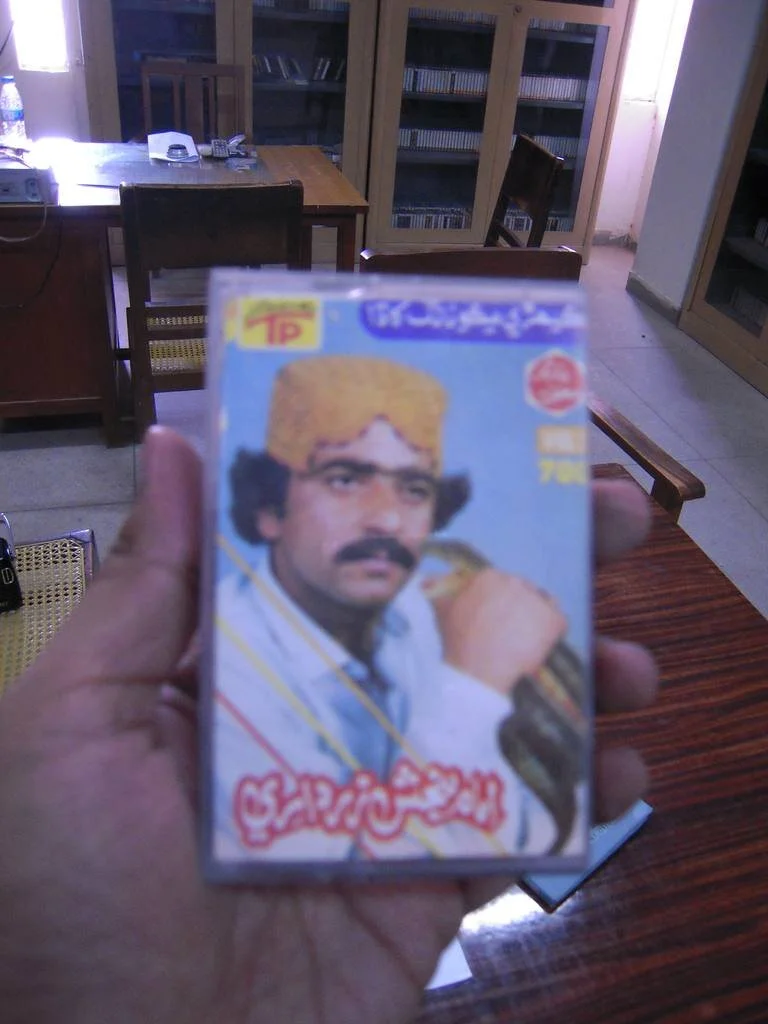
I went back to Sindhology with my new tape player in hand and spent the morning sifting through 30+ year old audio tapes, focusing on female singers and noting down the qualities of each voice. The beauty of many of these recordings for me lies in the complex layering of acoustic instruments with so much variety and beauty.The singers voices vary, but I was struck by the lack of emotional resonance in delivery of poetry. What I mean is that while the voices are beautiful and interesting and rich in variety, the bit that I most looking for was missing for my purposes with my film “Risalo”. The tone of voices was mostly consistent, rather than emphasizing particular words and emotions. There was almost no one who even sang Shah Latif’s poetry. I am told that the Sindhi of Shah Latif is difficult even for native Sindhi speakers. The language is old, with usage of many terms that may be unknown to most today, and yet rich with depth and meaning. Few singers can even begin to present this richness in their voices.I went through a more than half the collection in this session. I’ll return for more. I stopped at lunch time, to go eat some food at the hostel, rest and work on drawings for other aspects of “Risalo”.Zulfikar sahib had suggested another person I should meet who was an expert on Shah Latif’s poetry, but came to it from a Sufi background instead of the more academic background of others who were helping me. Each was invaluable in their insights and help, but each also had the potential to offer varying points of view which are invaluable.I spent the evening with some students from the study circle who graciously gave me time. It was good to have a break from my own mind.
Hisam to the rescue
Hisam to the rescue


So, I've been struggling to find people who are experts on Shah Latif's poetry, who can help me get the original Sindhi verses for the Urdu translated ones I am working from. Each Sindhi edition is different and so the task requires someone who really knows it well.My friend Hisam took me over to the Sindhi department in the University. I had looked up the outdated page for the department online to find possible contacts. It turns out that he knows people there, so we head there to talk to them.I'm always humbled by how nice people are and encouraging towards the work that I am doing, and willing to help, despite being very busy. I got some info on an original Sindhi edition of the Shah Jo Risalo that might better match the translation I am working from. Cacca sahib even checked out a copy from the library in his name to let me try it out.I also dropped off a few sheets of the script to the head of the department who kindly offered to have a look. I would love to take care of this myself, but really, I can't do this without the help of all of these generous people, who so love Shah Latif that they are willing to take time out of busy schedules to help me with a project to promote his work.That whole process just made me feel a lot better after the past week. Afterwards, I visited the fine arts department, where I had taught about a month ago. It was nice to see the students and faculty friends. Hisam's brother got me from there and I dropped off a few things in my room before heading with him to the paathak, where I catch the bus for the city (Hyderabad). I went along the bumpy bus ride to the city, then got off where I needed to catch a rickshaw to get to the Sindhi Adabi Board bookshop. Everywhere I go, people offer tea or sodas, so I end up drinking quite a bit of both. I looked at the books, picked a few out then sat down to talk to one of the people at the shop. I found a copy of the book I had gotten from the professer at the Sindhi department, so I picked it up. I also grabbed a book of Urdu translations of another famous Sindhi poet named Sachal Sarmast as well as a book on Sindhi folk musical instruments.We had some tea and chat for a while, before I head down the street to find a tape player. Along the way, I stopped at the Oxford bookstore. I am always surprised at the amount that prices are discounted at the publisher stores. It makes these great books very affordable.I made my way to a mess of electronics shops. I kept asking people for tape players and they directed me all over. Finally I found one, but I really did not like the shop people, so I kept walking. Eventually, I found it at a few other places down the road, and picked it up from a spot where the people were eating their lunch. I had a funny chat with an eccentric old man and the shopkeepers while they ate. It gave me a chance to sit and rest a moment. Then they showed me the tape player. There are not that many options, so I went ahead and bought it.For musicians, I still need to figure out the female voices I need to reach out to, and listening to the tapes in the audio library seemed to be my best bet at finding the voices I wanted. Since they don't have a working tape player, I picked one up.From there, I walked further to say hello to my friend Majeed Sumroo at his office. He was just about to head out when I saw him at the entrance of his building. He insisted that we grab some tea or soda, so we went over to a shop, sat down, enjoyed a couple of sodas and caught up. It is always great to see him.From there, I said hello to the poet/book seller nearby, then hopped on the bus to get back to Jamshoro. I even saw some camels right before the bus arrived. On the bus, I ran into a guy who works at the hostel general store. We caught up a bit, then decided to hop off and take the University bus the rest of the way, as it would take us to the hostel doorstep.I got back, then head over to the weekly Shah Latif circle. We waited for our scholar friend Shafqat Qadri to drop by and lead the discussion. I did not understand 90% of it as it is in Sindhi, but it is a cool thing. I just sat and read my Urdu translation. Afterwards, I grabbed some dinner, then Shafqat sahib opened up his mind and vast knowledge to me and we sat until 3am finding the Sindhi verses that correspond to the Urdu ones I chose. We managed to get through about half of one of the stories. He used 4 or 5 different copies of the Shah Jo Risalo, and combed through the text meticulously to find the best match. I could not ask for better help in this task. He also pointed out some other beautiful verses along the way, including some fantastic ones that were not included in Sheikh Ayaz's Urdu translation that I read.The boost of progress did wonders.
Visit to Sindhology Audio Library
Visit to Sindhology Audio Library

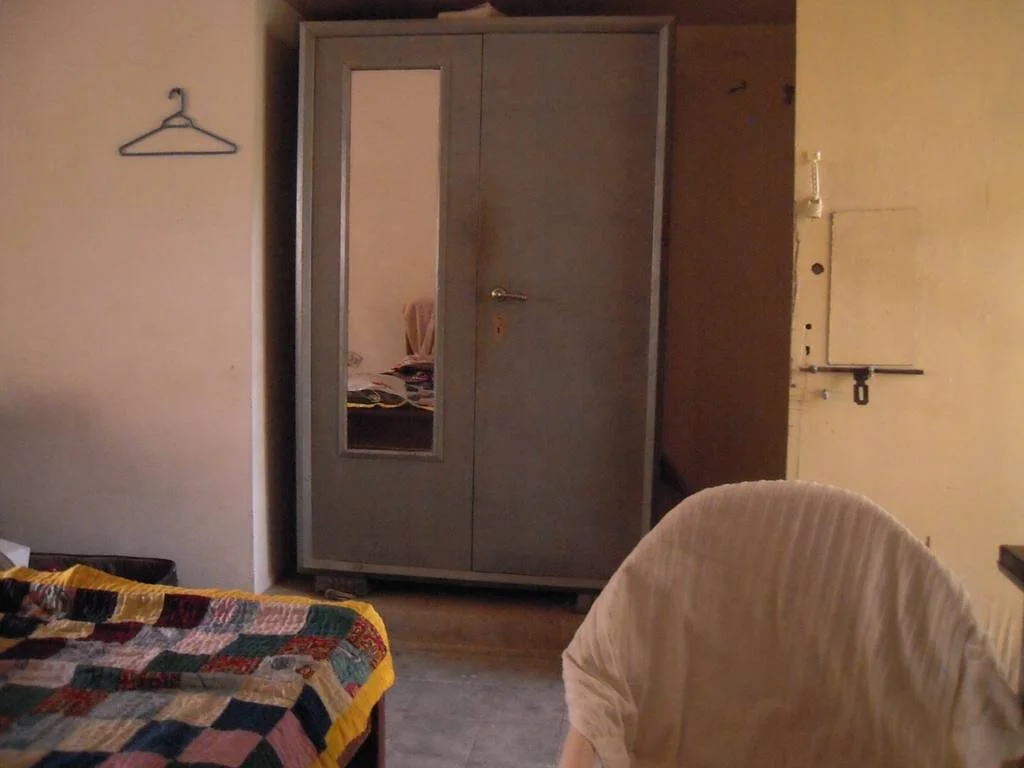
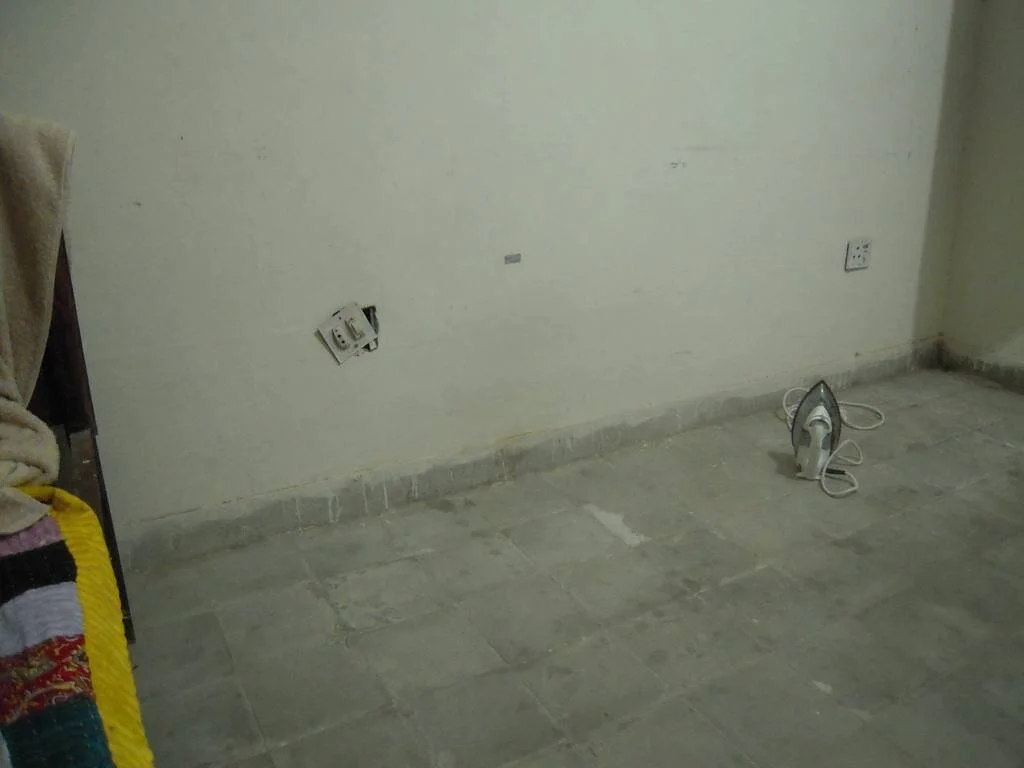
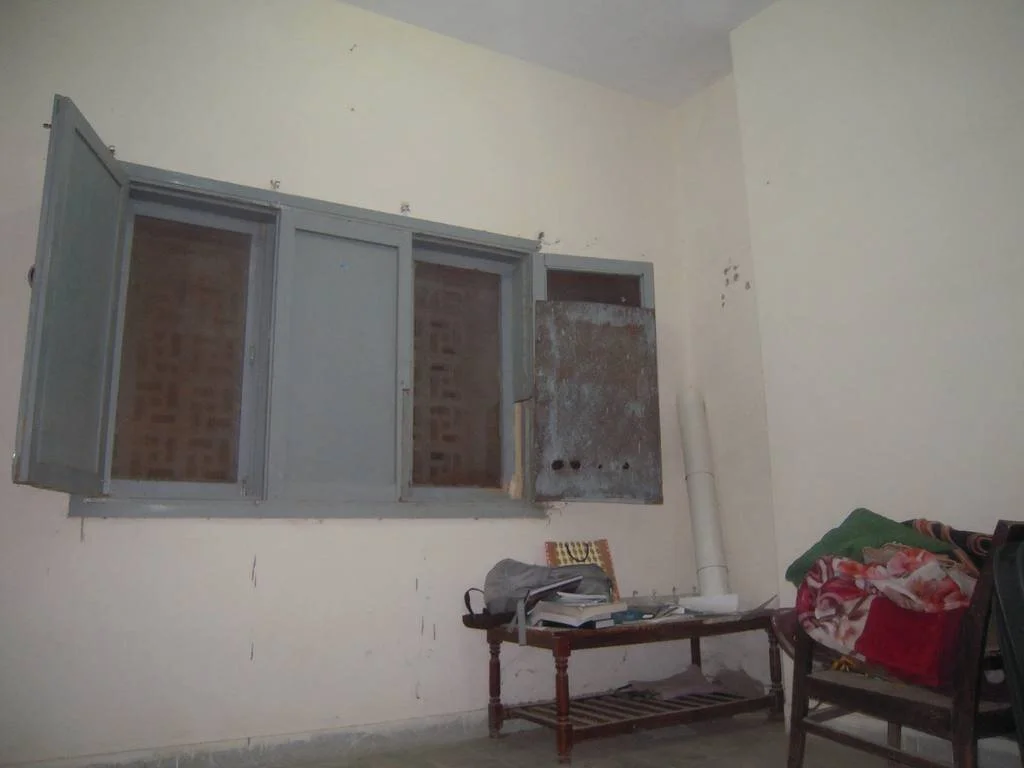
I visited the audio archives at Sindhology. I did not get to hear anything in the collection. I’m not sure why. I mentioned it several times while there, but nothing seemed to happen. Instead, I shared the recordings I had been studying on my laptop and learned a bit more about each of the musicians I had already chosen.The rest of the day was spent drawing and looking for people who might be able to help with the Sindhi script which involves taking the Urdu translated verses and finding the corresponding original Sindhi verses of Shah Latif’s poetry.Photos of my room...


Latest Posts
- animals
- animation short film concept art
- california
- china
- condo
- costa rica
- culver city
- dance
- dance performance
- data darbar
- desert
- downtown
- festival
- figure drawing
- film festivals
- ger
- hasan abdal
- hate crime
- human rights
- humanrights palestine israel conflict activism
- India
- jamshoro
- kyrgyzstan
- la zoo
- lahore
- landscape
- landspcape
- life drawing
- live music
- live music performance watercolor sketch
- los angeles
- los angeles forest
- mogolia
- mongolia
- montezuma
- motel
- music
- music show
- musicians
- naadam
- nadam
- nankana sahib
- Orange County
- painting
- pakistan
- palestine
- panja sahib
- photo
- photography lahore pakistan travel people
- photos
- post natyam
- protest
- risalo
- sindh
- sketch
- sketches
- students
- sufi
- travel
- ucla
- USA
- uzbekistan
- uzbekistan people travel photography
- venice beach
- volunteer
- watercolor
- watercolors
- wrestling
- Yorba Linda
- zoo