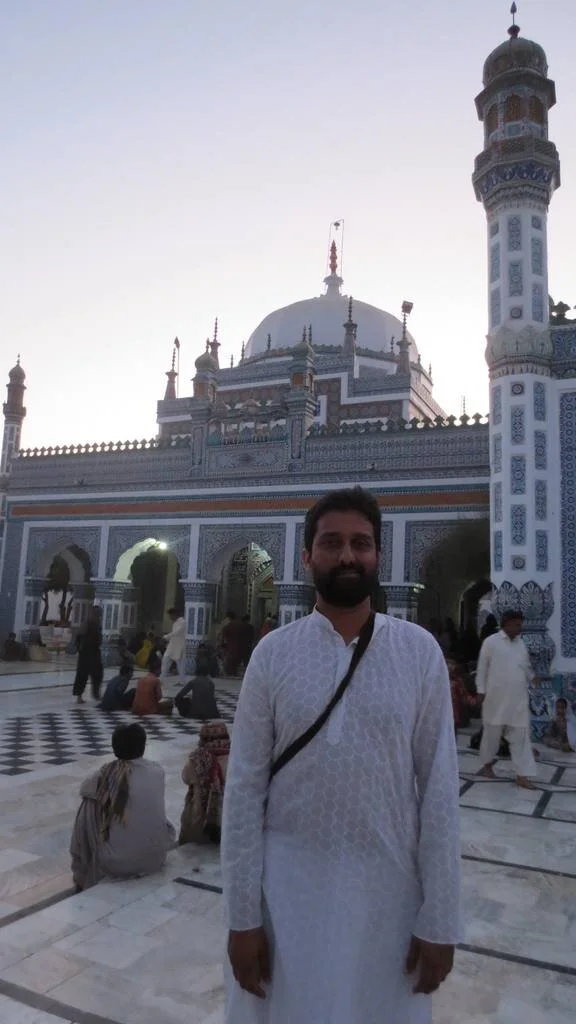
Bhit Shah
Arriving at Shah Abdul Latif Bhitai's dargah in Bhit Shah at last.

I woke up for the final session of my series of workshops with the third year communications students in the fine arts department at the University of Sindh. I said thanks and goodbye to the hostel staff as we put my luggage in the car. Sheryar sahib brought me to the campus and I rushed over to my class.The students had photographed their storyboarding assignments and most were ready to bring the work into premiere. I spend a lot of time between lectures, sitting down with each student and helping them to apply the lessons to their particular stories. The students are very sweet and appreciative. For the most part, this group was good about completing their assignments, and putting some care into them. They are not the fastest illustrators though, as it can take a whole class to knock out a few sketches. It is a lot of fun to see the students improve over the course of the class.


There are many computer problems. From computers filled with viruses, to student computers being slow or incompatible with software. Only about 1/3 of the students had laptops, but they are generous in sharing with one another. We managed to get most of the students’ work on a timeline in premiere. At lunch, the kids threw a party for my, which was combined with a birthday celebration for one of the students. It was very sweet. They brought biryani, sandwiches, cutlets, noodles, custard, french toast etc and we had a nice meal together.The students invited me to join them for many rounds of photos, and made me feel very appreciated. I see a real desire to learn and do something. These young women and men are fun loving and hopeful for the future. They don’t have the option of just picking up and going somewhere else, so they look to working at jobs where they can stretch their creativity and do something.


After class, I had to rush out with my luggage, along with Sadiq who works at the department. We hopped on a rickshaw to the “point”, where buses leave from campus. We hopped on a bus that took us around campus, then down to Hala. The bus stopped right in front of the sign for the College of Design Hala Constitute College of Pakistan Institute of Fashion and Design Lahore. We hopped out with our luggage and made our way to a little campus. I met my friend Azam Bugti, who teaches there with a small group of faculty. I got to see some of the beautiful ceramic and pottery art by the talented students. It is a very grassroots level effort, and an excellent example of what can be done with limited resources in the hands of a committed staff and group of students.


A few of us hopped on a qing qi (frankenstiened motorcycle with seats in the back) to visit Bhit Shah, the home of Shah Abdul Latif Bhitai’s dargah (tomb). I have been studying and adapting his poetry for months. To finally come to a place that is so focused on his study and a celebration of his life and works was truly inspiring. The tile work on the tomb is beautiful as is the variety of musicians scattered about. My friend Fatah sahib had connected me to Ismail Faqir, who is a Shah Jo Ragi who practices Shah Latin’s style of singing and plays his instrument, the tambura. We met with him and he took us to the living quarters of Latif, that have been apparently preserved from his time. We sat back there with the Shah Jo Ragis and their beautiful instruments. I asked a few questions regarding context and meaning of a few verses I am adapting, and we had some interesting conversations.


Ismail Faqir was very generous with his time and knowledge. He humbly introduced us to several people, including a faqir, who seemed as much comedian as ascetic. We spent a good deal of time sitting and listening to groups of musicians that were spread about the courtyard of the tomb.Hala back from Adnan Hussain on Vimeo.Afterwards, we watched the thursday night performance of the Shah Jo Ragis after which we caught a freezing cold qing qi ride back to Hala, for a delicious meal at a complete dive of a restaurant, before we head back to the college. There’s a museum that Ismail Faqir sahib mentioned, which I hope to return to soon.
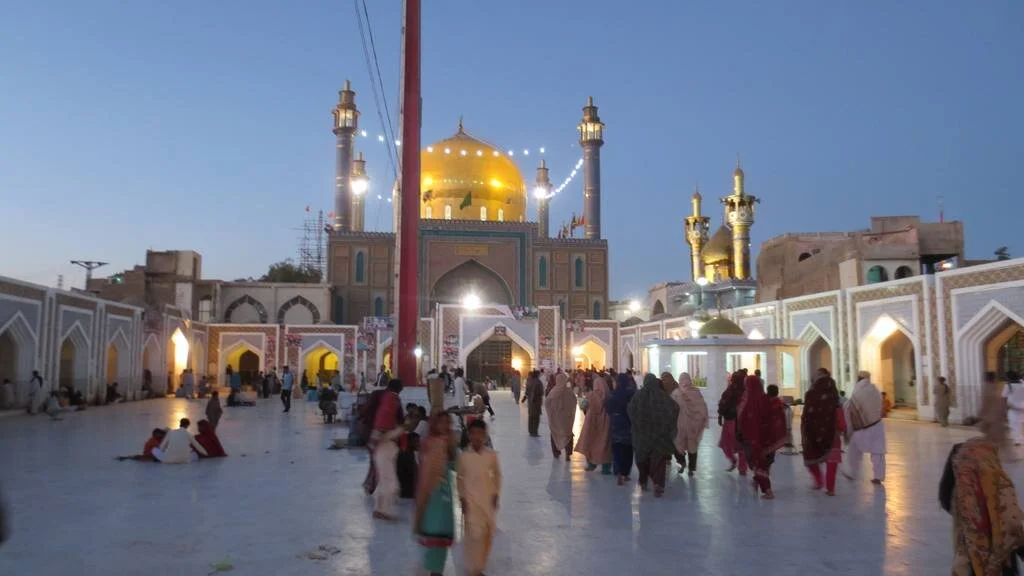
Sewan
Sewan, visiting Lal Shahbaz Qalandar's dargah.
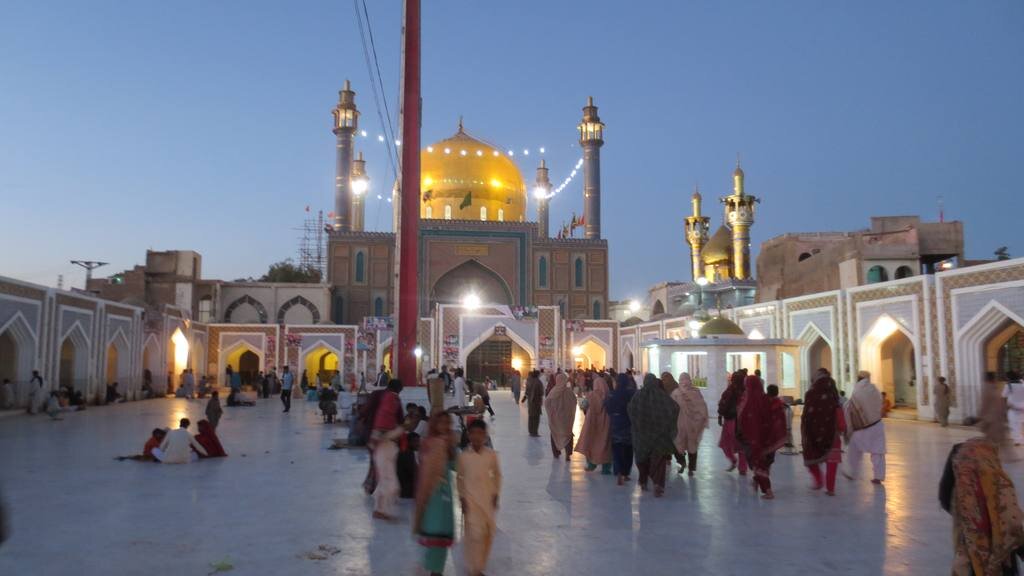
After another class at the university, I ate some delicious food thanks to the hostel staff, then hopped in a car with Shehzad sahib with his son and Naimatullah sahib’s nephew Sayed Lakho, whose a talented artist as well. Thanks to Mangi sahib, who arranged this trip at my request, I had the best company possible. Shehzad sahib and his son are both deeply connected to the personal stories and respect of Lal Shahbaz Qalandar, the sufi saint and various other respected people in the area. People all over the sub continent and around the world have heard the famous song on Jhule Lal Shahbaz Qalandar, and here, I was finally going to visit his darga in Sewan, Sindh.


Along the way we passed farmland and arid desert landscapes with pockets of mud homes, livestock and people living, I imagine, quite close to the way they have for hundreds of years. The homes are beautifully made with mud walls and thatched roofs. There’s a sort of romantic quality to it all, when you look at the beautiful fields, homes and kids playing, while men and women work. It’s kind of amazing to see it all. At the same time, it’s really heart breaking to see these same people struggling to survive, without basic facilities or education. There is a beauty in what is old and traditional, but not when people have no choice but to live on meager means and subsist on so very little. These are not people without a government, just a people without one that cares.


The driving on this two lane highway is insane. People are constantly passing each other by driving into the opposing lane. Moving away from the city, there is a great deal of beauty in each unique landscape.We stopped by one beautiful dargah along the way with golden domes and intricate glass inlaid interiors. Though I have seen several similar dargahs in Punjab, each one has something unique and beautiful in its design and decoration.


There are caves with fabled paths to Iran, through to Iraq where legends says that those whose belief was truly strong would crawl through tight packed rocks to reach the other side. We had some tea at the entrance to this place.


The sun was setting as we reach Sewan, to pay a visit to Lal Shahbaz Qalandar, a sufi saint who fought for the rights of the local people against an abusive ruler. This dargah is famous for its dhamal (an ecstatic sufi dance). The faithful, and less faithful flock to this beautiful shrine which I heard has benefit from a massive artistic overhaul, with beautiful brand new tile work. The space is beautiful, as is the music. There are all kinds of people. Those desperate for a prayer on their behalf because God seems to have forgotten them. Others are deeply devoted to Lal Shahbaz Qalandar, while others prey upon those in need.


Lal Shahbaz Qalandar Dhamal, Sewan, Sindh, Pakistan from Adnan Hussain on Vimeo.
The dhamaal itself is something to see. You squeeze through a mass of bodies in the center of the main open area. Drums are beating, and men dance ecstatically to one side and women on the other. Apparently, some of Lal Shahbaz Qalandar’s first devotees were the “wild” women of the area. It is interesting to see people on their knees, waving their hair around, or dancing with fervor. It is a chaotic scene, but there is also something peaceful when you squeeze through to other side and find a spot to sit and take it in. Kids recite entreaties for alms, wishing spiritual rewards for you and yours. Some kids try to tie a little string bracelet on your wrists. While these things can be annoying, it’s also part of the acceptance of all people in this dargah. The floors are not particularly clean, though they are being swept constantly. The tile work is beautiful and the sound of music and the variety of people around is something powerful.


Afterwards, we walked through the market to another dargah, that of one of Lal Shahbaz’s most devoted mureeds (students). It was a lot more calm. We looked at the beautiful glass work in the ceiling, then sat down to enjoy a lone musician in the courtyard, playing an ektara. This space was a lot more calm and peaceful. I recorded a bit of his devotional music. At one point the electricity went out. Everything went dark, but he kept playing and I looked up at the stars and moon. That was perhaps the most beautiful part of the whole evening.


My friends who brought me there were equally appreciative and moved by all that we did and saw, which made me feel good. It’s no fun to drag someone to these things when they really have no interest. Shehzad sahib and his son share many interesting stories about these respected elders, that made it all that much rich of an experience. We drove back on the same treacherous way we had come. Traffic is crazy, as on coming trucks and cars veer back into their lanes at the last moment, to inch ahead of one another. We made it back somehow.


Sewan Fakir from Adnan Hussain on Vimeo.
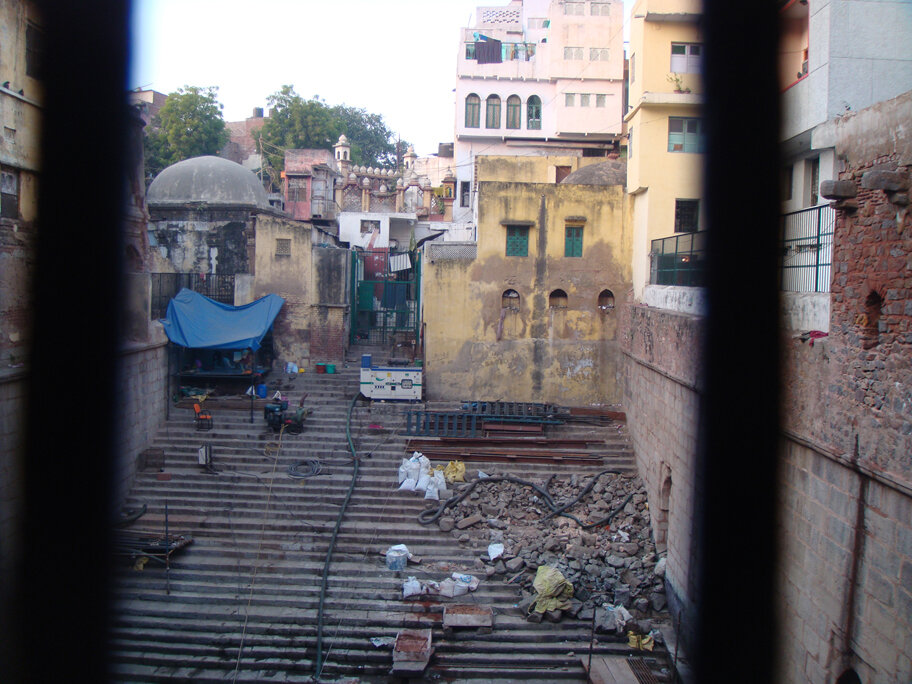
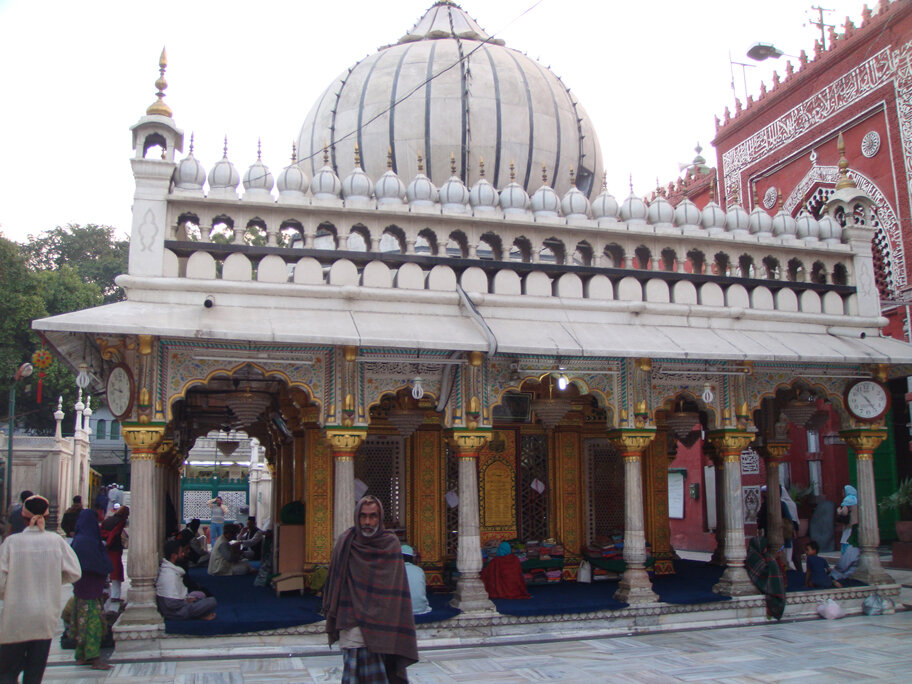
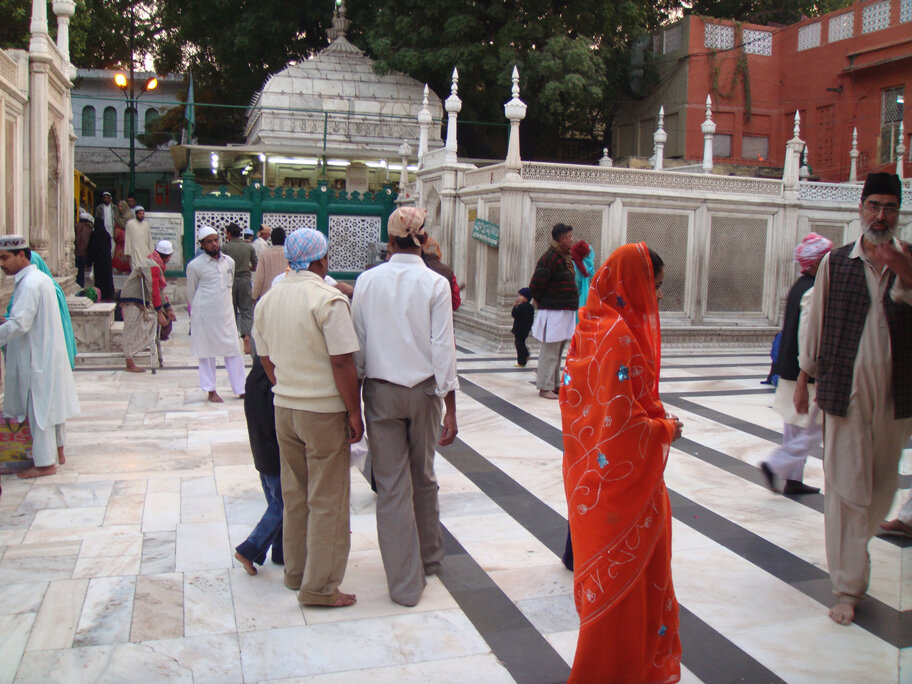
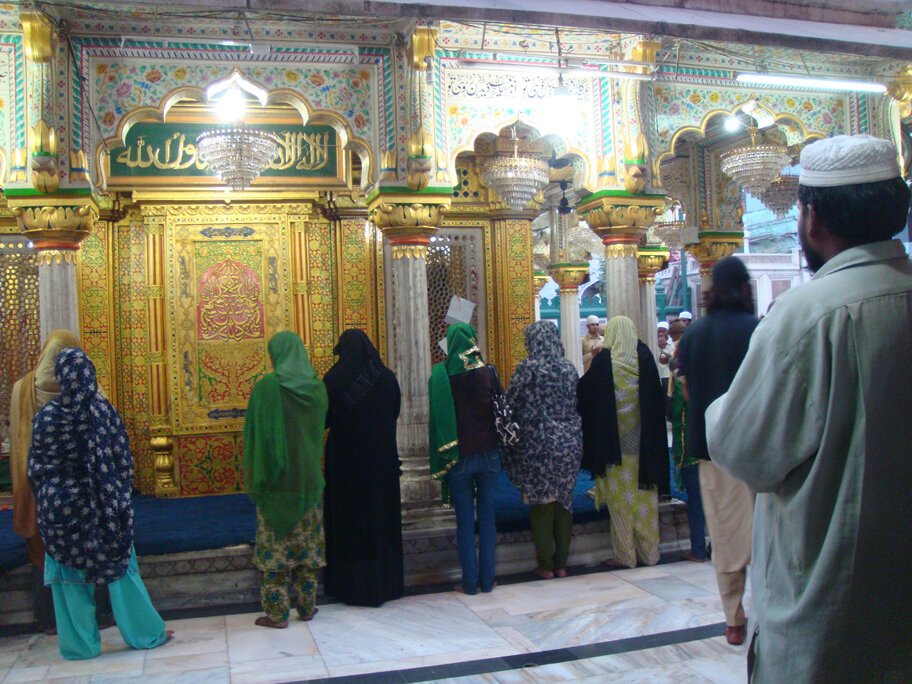
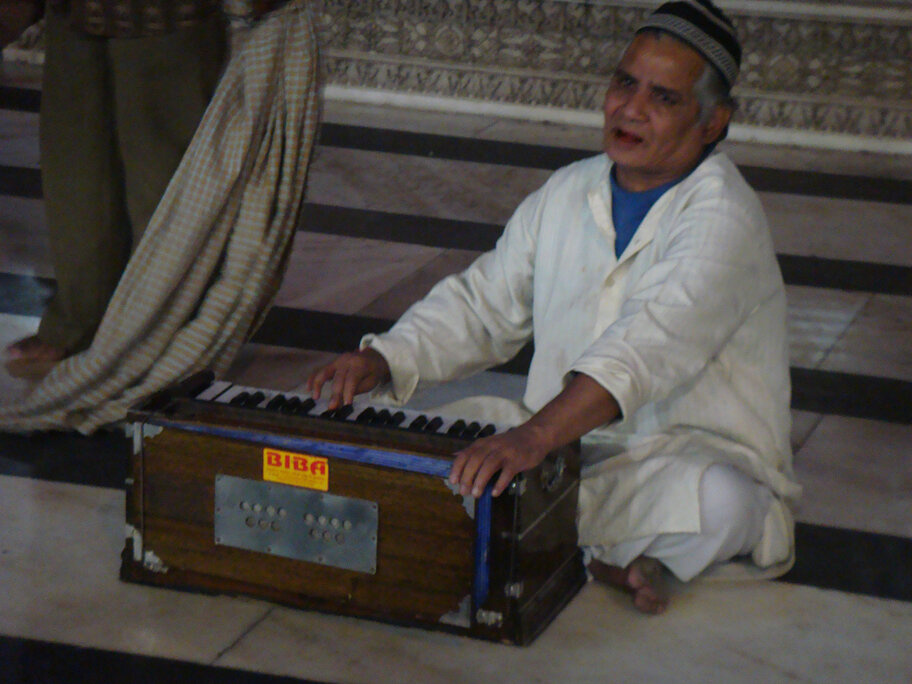
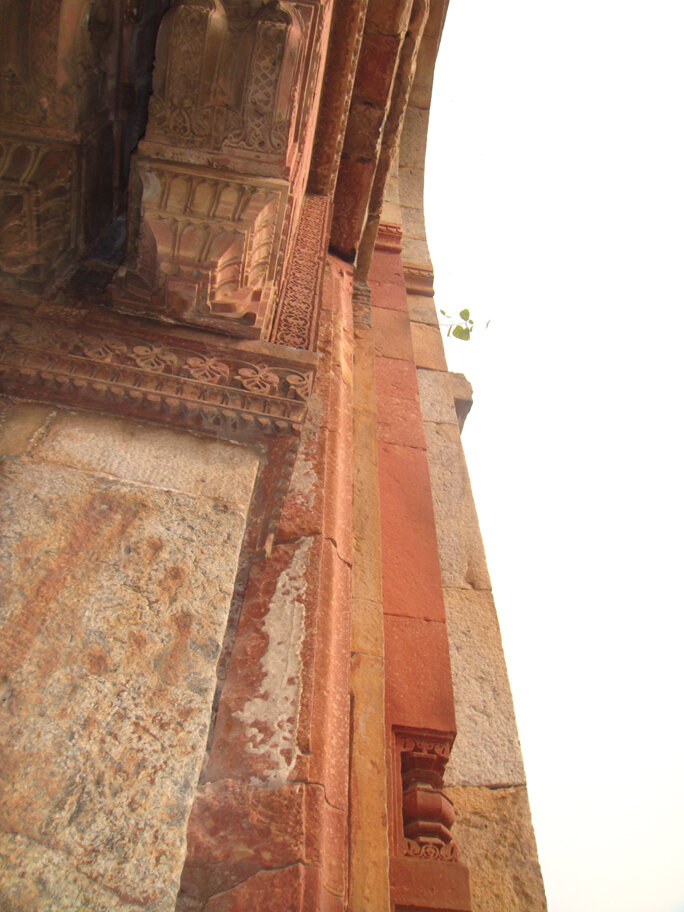
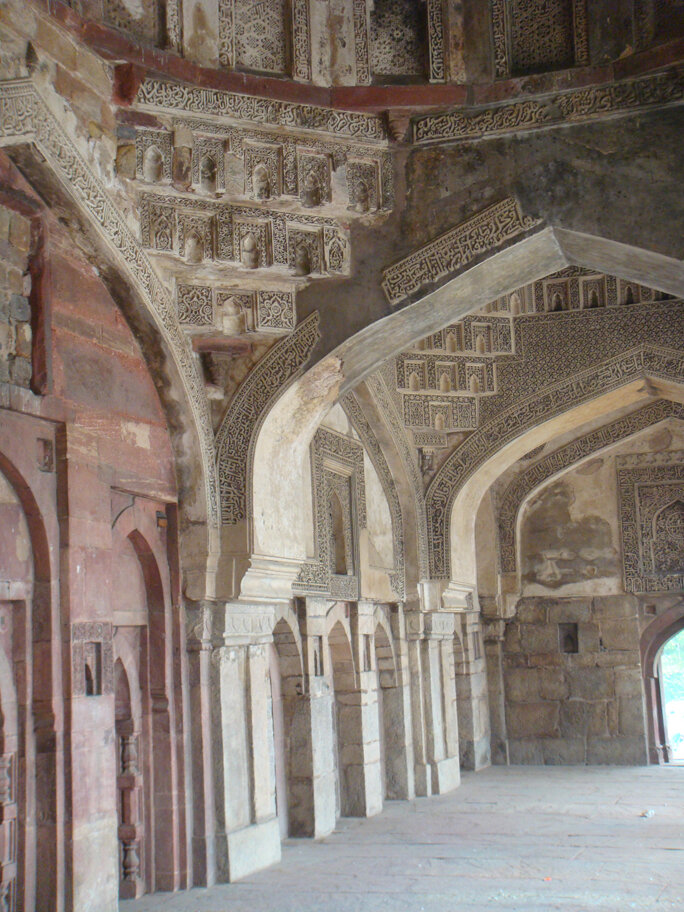
Delhi, Nizamuddin Auliya's Dargah
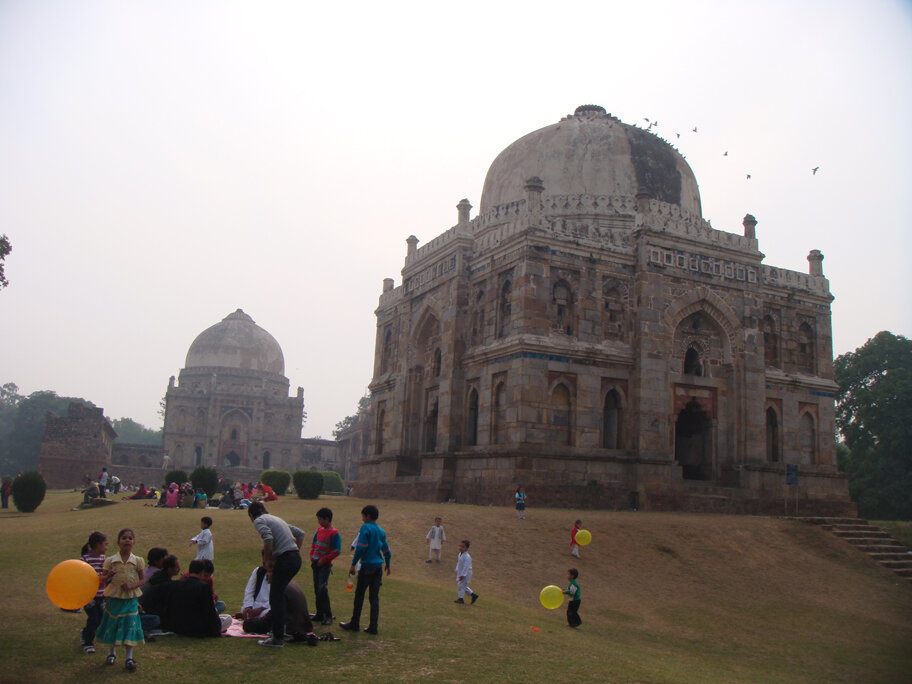
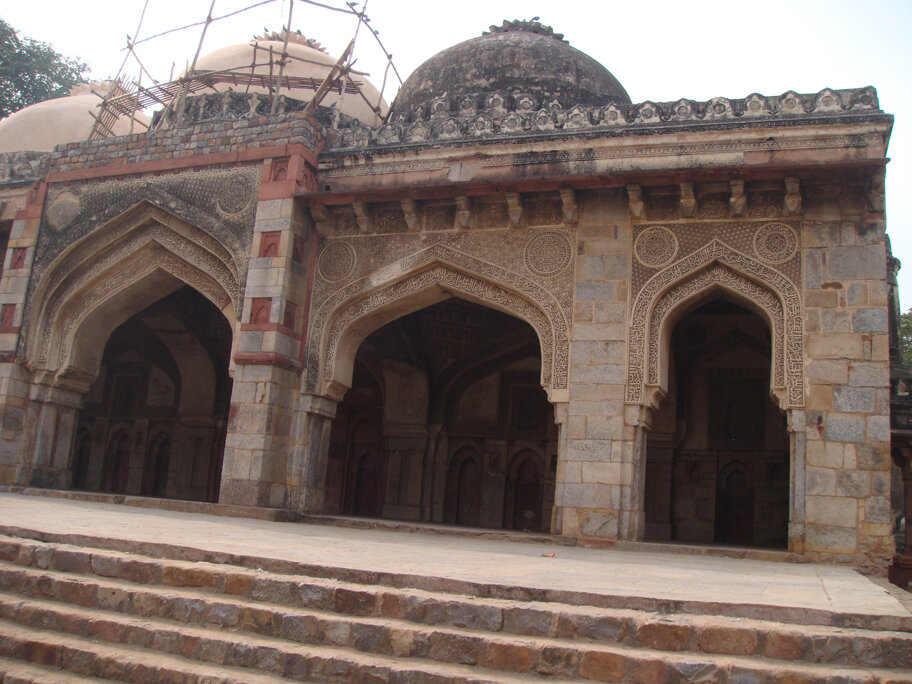
So, I arrived in Delhi, tired, but happy. I went to Nizamuddin Auliya's and Amir Khusro's tombs. These are two amazing figures in the history of North Indian Classical music, Qawwali and various other forms of music.These were two important figures in the Chisti Sufi Order who are remembered not only for their musical contributions, but by people of all faiths in India for their life long efforts to bring people together.
So, I arrived in Delhi, tired, but happy. I went to Nizamuddin Auliya's and Amir Khusro's tombs. These are two amazing figures in the history of North Indian Classical music, Qawwali and various other forms of music.These were two important figures in the Chisti Sufi Order who are remembered not only for their musical contributions, but by people of all faiths in India for their life long efforts to bring people together.




Peshawar Dancers


 Here again are dancers from Peshawar (dressed in red) and one mentally handicapped man from Bulleh Shah's Urs in Kasur. I tried to draw a few versions of one of the dancers to see what I could come up with.

Sidi Goma
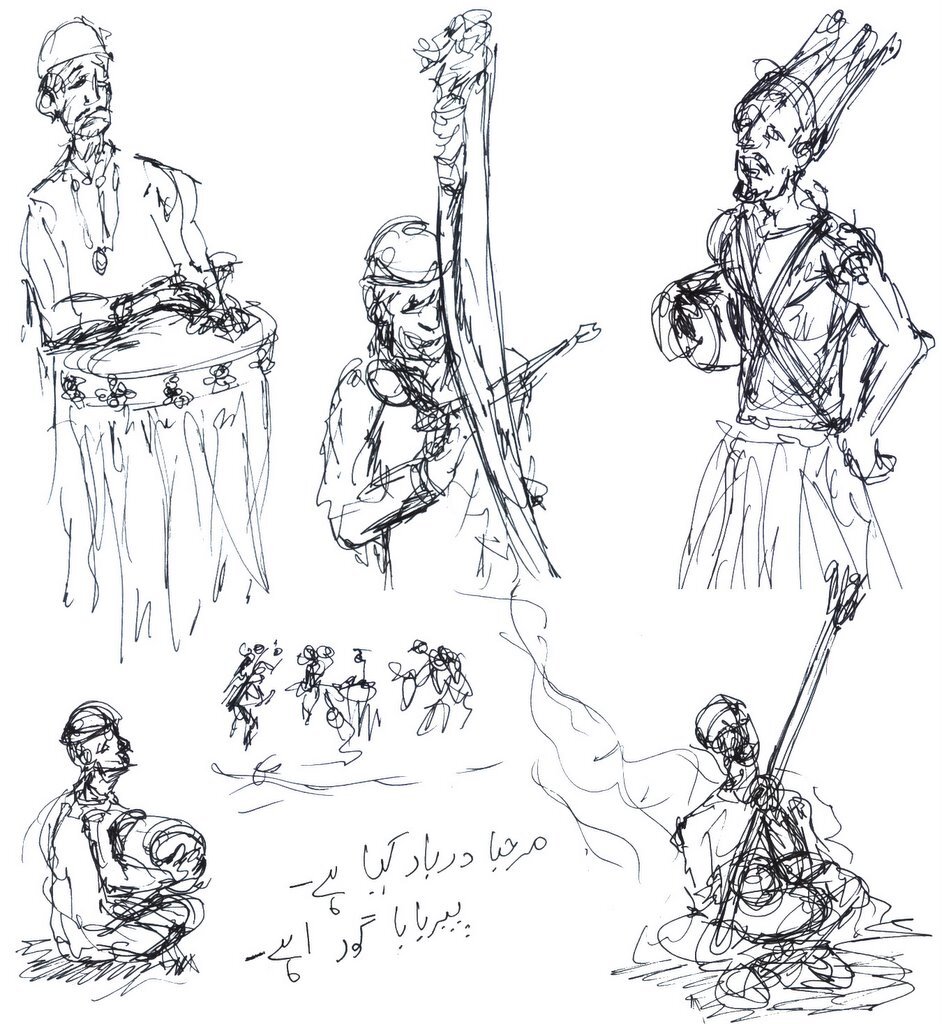
Here are some sketches I did at a performance of Sidi Goma at their performance during the World Festival of Sacred Music. They are Indian descendents of Africans who migrated to India over 800 years ago. These particular ones were Sufi Muslims from Gujarat. It was a lot of fun doing really quick sketches of the performance, which was very playful and humerous at times as well as sincere in its devotion. Afterwards I spoke to some of the members. They were all very humble and appreciative. Interesting to see the similarities to Sufi culture I saw in Kasur, Pakistan at Bulleh Shah's Urs this past summer.
For some more info on them:
Latest Posts
- animals
- animation short film concept art
- california
- china
- condo
- costa rica
- culver city
- dance
- dance performance
- data darbar
- desert
- downtown
- festival
- figure drawing
- film festivals
- ger
- hasan abdal
- hate crime
- human rights
- humanrights palestine israel conflict activism
- India
- jamshoro
- kyrgyzstan
- la zoo
- lahore
- landscape
- landspcape
- life drawing
- live music
- live music performance watercolor sketch
- los angeles
- los angeles forest
- mogolia
- mongolia
- montezuma
- motel
- music
- music show
- musicians
- naadam
- nadam
- nankana sahib
- Orange County
- painting
- pakistan
- palestine
- panja sahib
- photo
- photography lahore pakistan travel people
- photos
- post natyam
- protest
- risalo
- sindh
- sketch
- sketches
- students
- sufi
- travel
- ucla
- USA
- uzbekistan
- uzbekistan people travel photography
- venice beach
- volunteer
- watercolor
- watercolors
- wrestling
- Yorba Linda
- zoo