Where to now? Lahooti and the Sketches
Where to now? Lahooti and the Sketches

I felt a bit better after some rest, but knew I needed to take it easy. I was waiting on word of some puppeteers in Umerkot. They are wanderers, who head out on “sair” without any way of contacting them. This is their way. They could come back in a few days or a couple of weeks. Thankfully, friends are there to check in and can send me photos when they return.I don’t feel like I can wait around here though. While I had done many interesting things during this last month, I have not been able to reach any possible puppeteer collaborators yet. I feel it is time to go to Punjab and investigate the state of puppetry there. I have spoken to one puppeteer on the phone who lives in Multan, and have researched several who are on that side of the country. Now it is matter of obtaining their contact info and meeting them to get to know their work and personalities. It is a very disheartening process. So many people are helping me, and yet, it is still a huge undertaking to try and find something that has all but vanished and then hope that it is in a state that can be salvaged.Since I was in Jamshoro again, I took care of a few things that needed to be done. Met up with Zulfikar Ali Gopang, who was the recording engineer who did such a fantastic job on “Gul” and the Girnari Jogi Group album. It was great to catch up and I really appreciate the willingness to do something positive for these musicians who are the living embodiment of our cultural heritage.


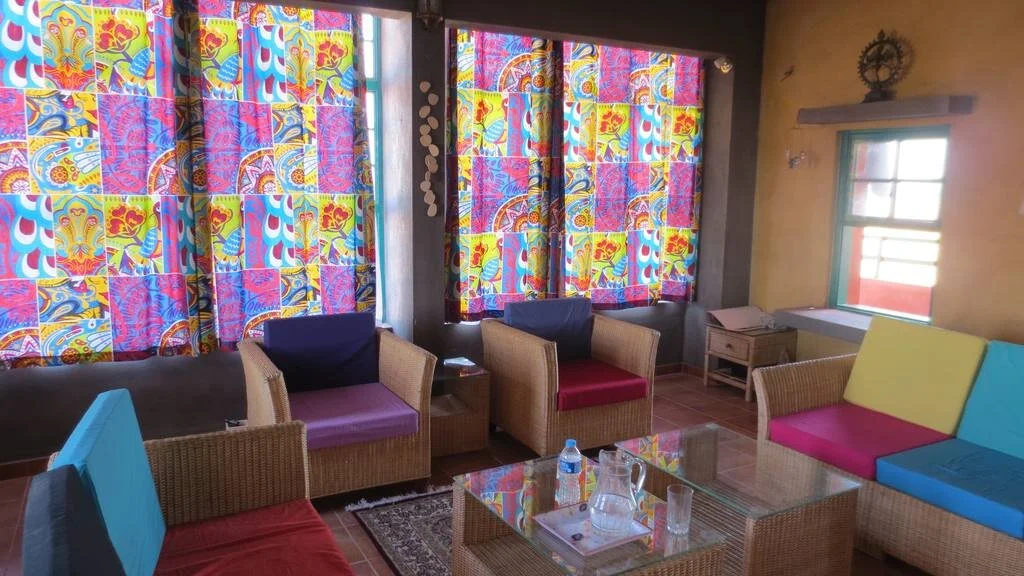
I contacted Saif Samejo of the band the Sketches and Lahooti which are two fantastic projects that I have been following for a while. Samina Panwhar had connected us via facebook a few days ago and Umair Jaffer had mentioned that I should talk to him before my trip as well. He called me back and sent his car to pick me up as he is in Jamshoro, but a but inside of a residential area, which would have been difficult for me to get to. It was really great to connect and learn more about his work. I have already been a fan of the work he is doing, but to meet him and share a bit of my efforts as well was really great. He is creating a beautiful space for music and creativity. I look forward to seeing his future projects.I took it easy that night. Hisam let me crash at his faculty dorm. I got some much needed rest.
Hala to Hyderabad
Hala to Hyderabad


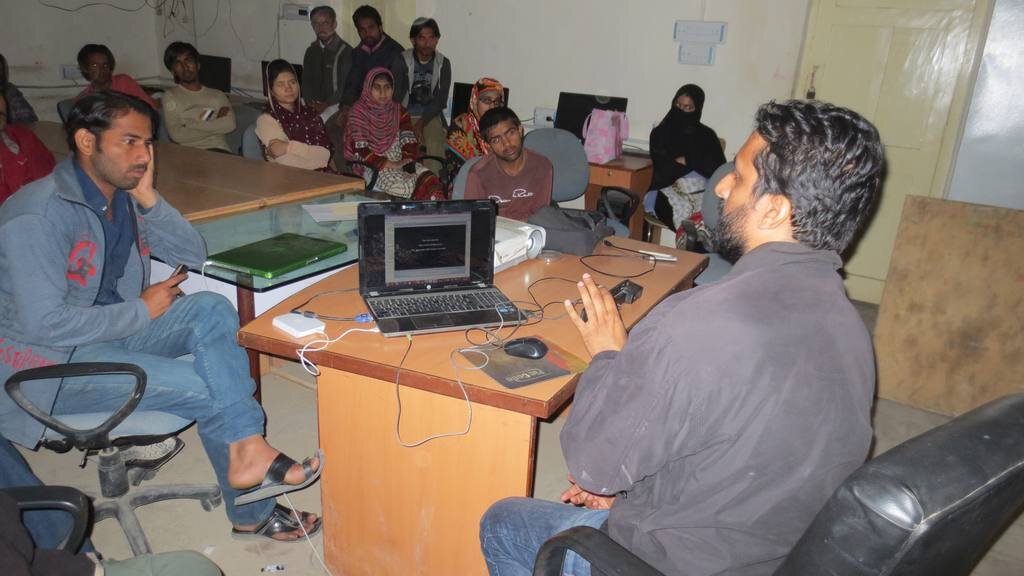
I woke up, got ready and had breakfast as usual. I worked on uploading a few blog posts, and made plans for leaving Hala. During the time I had been at the design school in Hala, I was around those students who lived there. The rest of the students came back today, and I gave a presentation on some of my professional and personal projects in animation. I showed my reel and my short film “Gul”.Screening “Gul” was a lot of fun due to the discussion afterwards. It is always fun to dodge the question of what it is about and encourage viewers to create their own version, based on what they see or feel. As is often the case, some struggle with this, while others allow their imaginations to flow freely and share really interesting insights. Afterwards, we had lunch, and I left with Azam and Noor via bus to Hyderabad. With my bags, the trip was a bit tight as I sat hunched over, with one arm on my bags to keep them from falling on people. Eventually, we reached Hyderabad, and hopped on a rickshaw the rest of the way. Azam and Noor head off to Jamshoro for a class, while I continued to my friend Majeed Soomro sahib’s office.We lugged the bags upstairs, then spent some time hanging out. Hyderabad is a horrible, disgusting city. It doesn’t need to be, but with traffic, pollution, trash and overflowing gutters, it has been made that way. It has much to offer as a city, but it is so filthy and nasty.Soomro sahib and I went out to meet a puppeteer; Mudaser, I had heard about. Unfortunately, he does more the hand puppet style puppets, but was a very friendly person. He got into puppetry inspired by Farooq Qaiser, a legendary figure in Pakistan who brought sarcastic wit and social commentary to the nation with his fantastic work puppets featuring characters like Uncle Sargam.


Afterwards, we went to a dinner thrown by talented artist Nadir Ali Jamili sahib. He hosted a dinner in celebration of his very successful gallery show of sculptural works in Karachi. It was a huge achievement; a culmination of some 15 or 20 years of work. I appreciate being able to join in such a beautiful celebration with so many amazing artists and delicious food. I was very exhausted from the previous week of running around, teaching and researching. I felt like I had pushed myself a bit too much. Nadir Ali Jamali sahib drove Hisam and I back to the faculty dorm in Jamshoro, where I crashed for the night.


Nasarpur
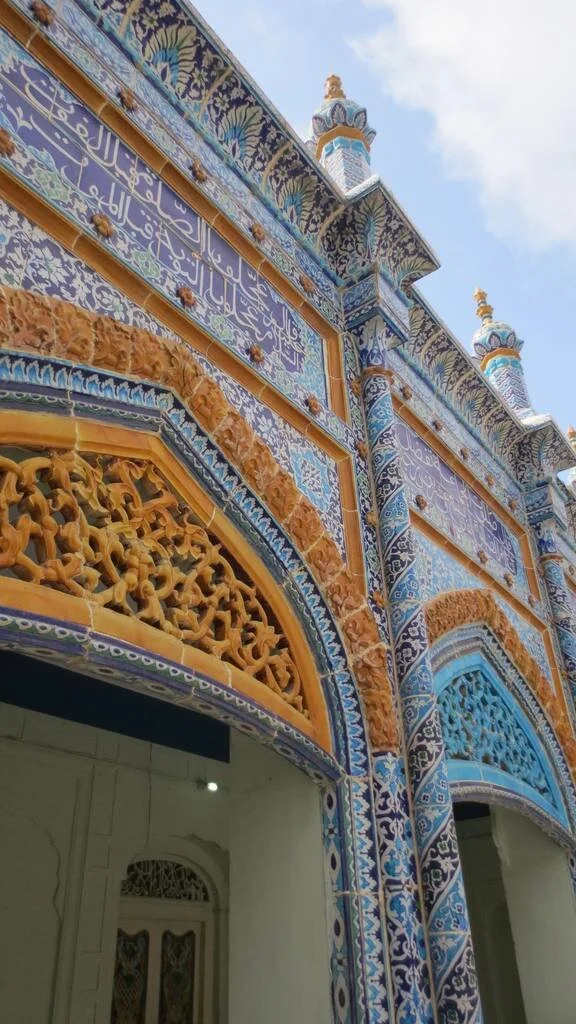
I went to Nasirpur with Azam to see innovations in ceramics work. We hired a car to get there, as it is out in a much more rural area, away from bus routes.


I went to Nasarpur with Azam to see innovations in ceramics work. We hired a car to get there, as it is out in a much more rural area, away from bus routes.


There was a lot of beautiful farm land along the way. Once we got there, they shared their process, innovations, career, goals and life story. In addition Poto sahib took us to a govt. funded site, with better facilities for similar work, that is in disrepair due to disuse of the machinery and what seems like a general disinterest in doing work. I see a lot of this when I travel. People share all the things that are decaying and all but destroyed and lost in this country. These things are real, but it sure is depressing. I also see people making very real efforts to make things better.


It can be difficult to have all the miseries of every aspect of life around you dumped on you each place you go. I need to figure out how to politely end those conversations. I’m here to do something, and while much of what is shared is real, it is less relevant than what each of us is doing on a daily basis. All that negativity makes it very difficult to maintain the energy you need to do things that are difficult. It is certainly challenging to do work in Pakistan, but I am fortunate to be able to spend time with students and artists working to do something positive despite some very formidable odds.
Shah Abdul Latif Bhitai Museum
Shah Abdul Latif Bhitai Museum and Hala crafts


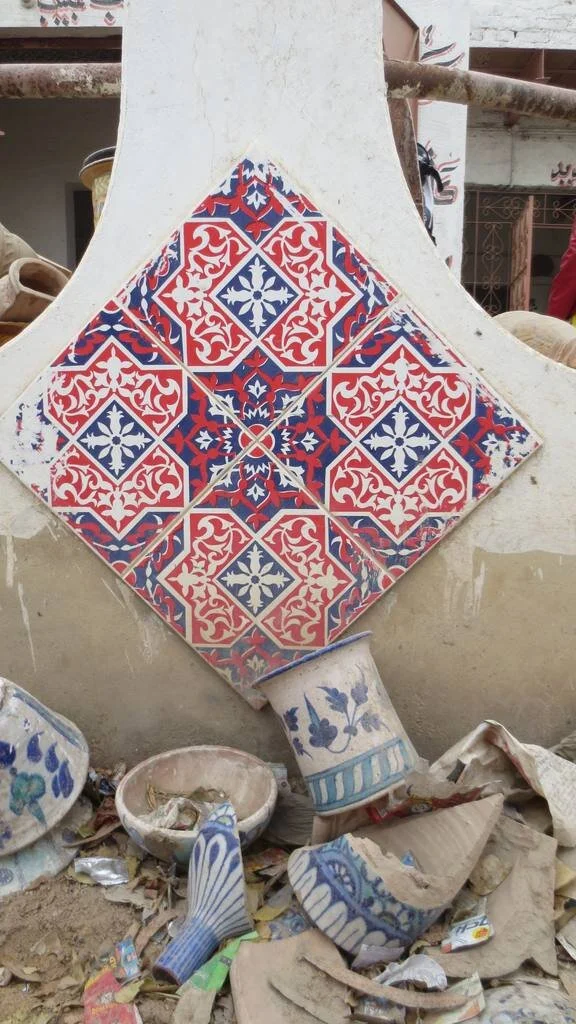
I woke up and did some more blogging. A few of us went to visit the workshops of local ceramics, pottery and ajrak (an ancient and beautiful form of block printing). The work is beautiful, though far undervalued, which makes it difficult for these artists to make a living on their hard work. They were all so generous in sharing their process and allowing me to take photos and ask questions.


This time spent traveling is really enriching for me. I am filled with fresh ideas and new contacts with which to create potential collaborations in the future. These art forms are certainly in danger, but there are some fledgling efforts to raise awareness and support them before it is too late.


After that, we came back and had some lunch. The students have been eager to learn Zbrush, since I told them how cool the software is, so once the electricity came back, we rushed to the computer lab and I went over it for about 45 minutes. After that, it was time for me to meet Ismail Faqir for a trip to the Shah Latif Museum in Bhitshah. Azam and I hopped on a Suzuki daba (pickup), and met him there. The museum is small, but there are beautiful displays depicting several of the folk tales in Latin’s poetry. In addition, there is a large auditorium for concerts during the annual Urs celebration, as well as a new research library in the works. Afterwards, we head back to his place where Ismail Faqir graciously shared many of his experiences and his knowledge with us. He and his family members took us to an event at the Bhitai College, where there was some really interesting Sindhi poetry on contemporary issues (I managed to pick up the main points of several pieces. It was great to see Mangi and Naimat sahib with their kids as well. There was a play on religious tolerance with a strong commentary on current issues in Pakistan. Though it was in Sindhi, I was able to pick out a good portion of what was being said.


We had early morning plans, so we decided to to head back to Hala on a Qing Qi which was blasting some beautiful Sufi music by Abida Parveen. We made it back for dinner, and then walked back to campus.
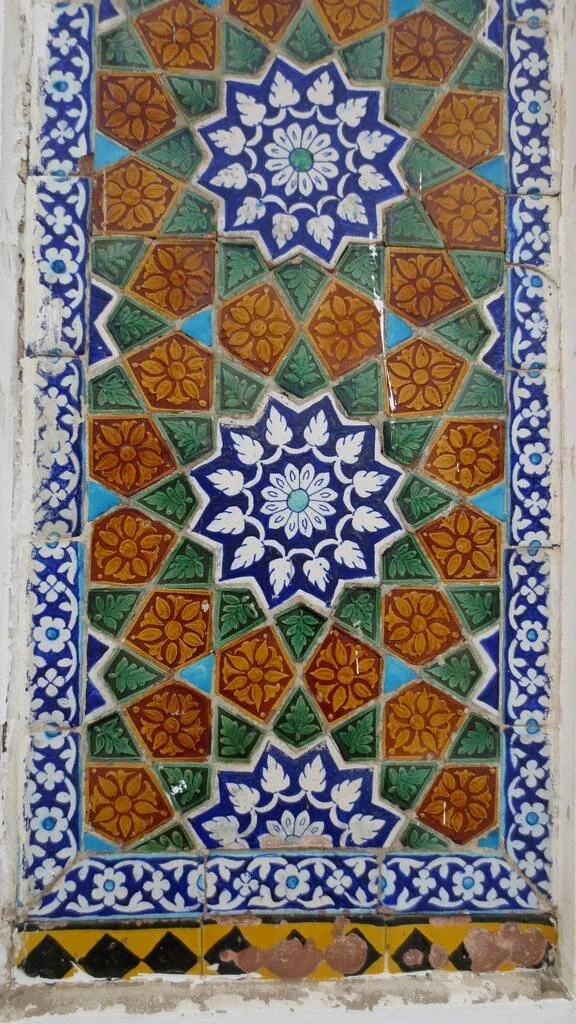
Hala


I was working on some blog posts in an office at the design school in Hala, when I heard all of these voices saying “Assalam u Alaikum sir!” one after another. I looked up from my laptop and saw a whole bunch of my students from Sindh University. They knew I would be here, and I knew they were coming on a field trip to visit. It was really fun to see them and get a presentation on ceramics and pottery with the amazing faculty here. I got to meet the principal before the students arrived, and he is also very inspiring in the efforts he is making to revive and revitalize the ceramics and pottery industries here by supporting the artisans and working with them to create new innovations using modern technology.


It was fun to see the students and Naimat sahib. Afterwards, I went around Hala a bit with Azam. We walked through some of the old markets and visited a beautiful dargah just down the street. It is a small town, but relatively peaceful compared to Hyderabad, Jamshoro or Karachi. At night, I put together an on the spot workshop for the students who are living on campus on UV mapping and polygon modeling in 3ds max. It was a bit tricky, as the software was 5 years old and did not have a lot of features I have come to rely on in newer versions, but hopefully they were able to gain something.
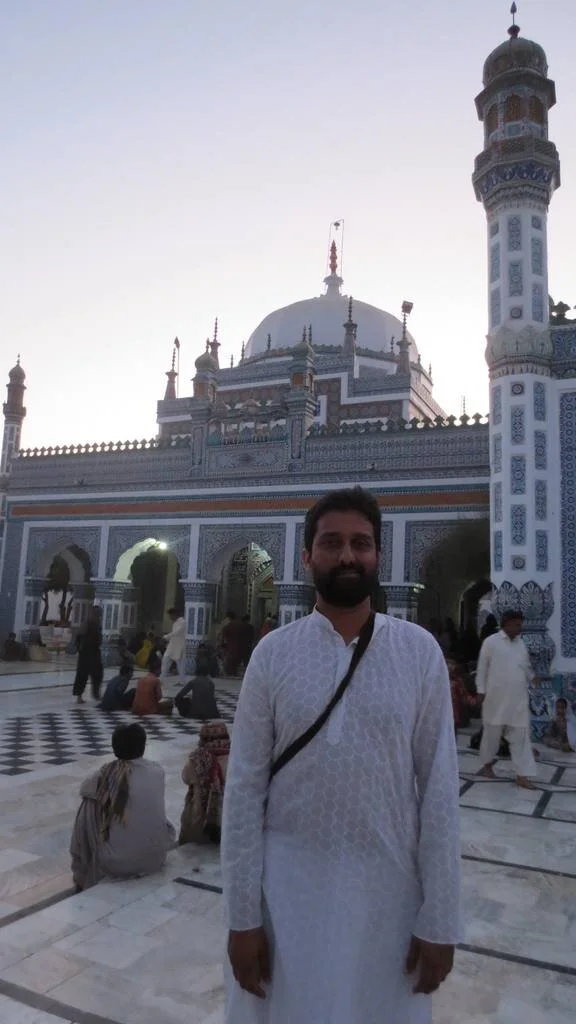
Bhit Shah
Arriving at Shah Abdul Latif Bhitai's dargah in Bhit Shah at last.

I woke up for the final session of my series of workshops with the third year communications students in the fine arts department at the University of Sindh. I said thanks and goodbye to the hostel staff as we put my luggage in the car. Sheryar sahib brought me to the campus and I rushed over to my class.The students had photographed their storyboarding assignments and most were ready to bring the work into premiere. I spend a lot of time between lectures, sitting down with each student and helping them to apply the lessons to their particular stories. The students are very sweet and appreciative. For the most part, this group was good about completing their assignments, and putting some care into them. They are not the fastest illustrators though, as it can take a whole class to knock out a few sketches. It is a lot of fun to see the students improve over the course of the class.


There are many computer problems. From computers filled with viruses, to student computers being slow or incompatible with software. Only about 1/3 of the students had laptops, but they are generous in sharing with one another. We managed to get most of the students’ work on a timeline in premiere. At lunch, the kids threw a party for my, which was combined with a birthday celebration for one of the students. It was very sweet. They brought biryani, sandwiches, cutlets, noodles, custard, french toast etc and we had a nice meal together.The students invited me to join them for many rounds of photos, and made me feel very appreciated. I see a real desire to learn and do something. These young women and men are fun loving and hopeful for the future. They don’t have the option of just picking up and going somewhere else, so they look to working at jobs where they can stretch their creativity and do something.


After class, I had to rush out with my luggage, along with Sadiq who works at the department. We hopped on a rickshaw to the “point”, where buses leave from campus. We hopped on a bus that took us around campus, then down to Hala. The bus stopped right in front of the sign for the College of Design Hala Constitute College of Pakistan Institute of Fashion and Design Lahore. We hopped out with our luggage and made our way to a little campus. I met my friend Azam Bugti, who teaches there with a small group of faculty. I got to see some of the beautiful ceramic and pottery art by the talented students. It is a very grassroots level effort, and an excellent example of what can be done with limited resources in the hands of a committed staff and group of students.


A few of us hopped on a qing qi (frankenstiened motorcycle with seats in the back) to visit Bhit Shah, the home of Shah Abdul Latif Bhitai’s dargah (tomb). I have been studying and adapting his poetry for months. To finally come to a place that is so focused on his study and a celebration of his life and works was truly inspiring. The tile work on the tomb is beautiful as is the variety of musicians scattered about. My friend Fatah sahib had connected me to Ismail Faqir, who is a Shah Jo Ragi who practices Shah Latin’s style of singing and plays his instrument, the tambura. We met with him and he took us to the living quarters of Latif, that have been apparently preserved from his time. We sat back there with the Shah Jo Ragis and their beautiful instruments. I asked a few questions regarding context and meaning of a few verses I am adapting, and we had some interesting conversations.


Ismail Faqir was very generous with his time and knowledge. He humbly introduced us to several people, including a faqir, who seemed as much comedian as ascetic. We spent a good deal of time sitting and listening to groups of musicians that were spread about the courtyard of the tomb.Hala back from Adnan Hussain on Vimeo.Afterwards, we watched the thursday night performance of the Shah Jo Ragis after which we caught a freezing cold qing qi ride back to Hala, for a delicious meal at a complete dive of a restaurant, before we head back to the college. There’s a museum that Ismail Faqir sahib mentioned, which I hope to return to soon.
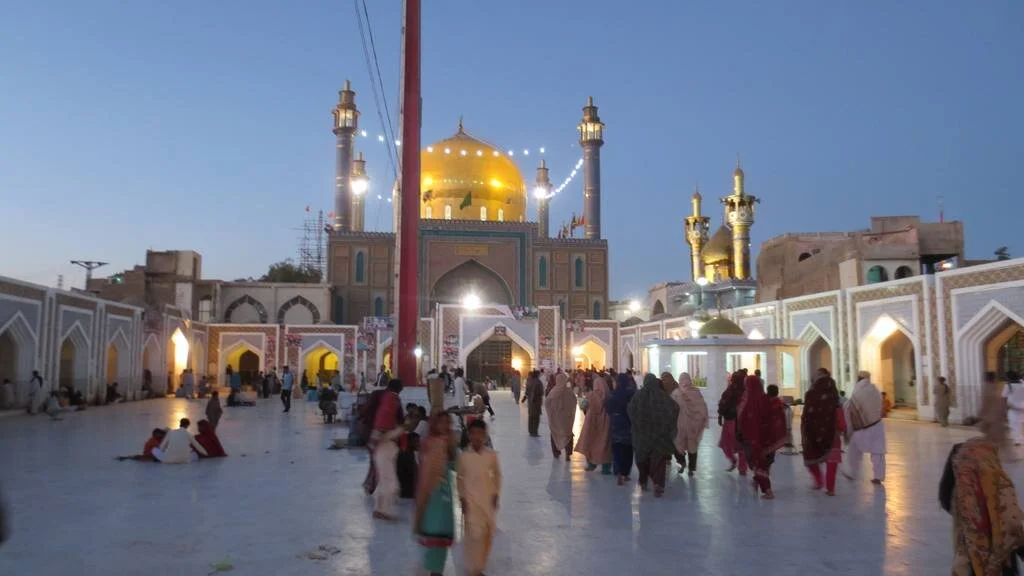
Sewan
Sewan, visiting Lal Shahbaz Qalandar's dargah.
After another class at the university, I ate some delicious food thanks to the hostel staff, then hopped in a car with Shehzad sahib with his son and Naimatullah sahib’s nephew Sayed Lakho, whose a talented artist as well. Thanks to Mangi sahib, who arranged this trip at my request, I had the best company possible. Shehzad sahib and his son are both deeply connected to the personal stories and respect of Lal Shahbaz Qalandar, the sufi saint and various other respected people in the area. People all over the sub continent and around the world have heard the famous song on Jhule Lal Shahbaz Qalandar, and here, I was finally going to visit his darga in Sewan, Sindh.


Along the way we passed farmland and arid desert landscapes with pockets of mud homes, livestock and people living, I imagine, quite close to the way they have for hundreds of years. The homes are beautifully made with mud walls and thatched roofs. There’s a sort of romantic quality to it all, when you look at the beautiful fields, homes and kids playing, while men and women work. It’s kind of amazing to see it all. At the same time, it’s really heart breaking to see these same people struggling to survive, without basic facilities or education. There is a beauty in what is old and traditional, but not when people have no choice but to live on meager means and subsist on so very little. These are not people without a government, just a people without one that cares.


The driving on this two lane highway is insane. People are constantly passing each other by driving into the opposing lane. Moving away from the city, there is a great deal of beauty in each unique landscape.We stopped by one beautiful dargah along the way with golden domes and intricate glass inlaid interiors. Though I have seen several similar dargahs in Punjab, each one has something unique and beautiful in its design and decoration.


There are caves with fabled paths to Iran, through to Iraq where legends says that those whose belief was truly strong would crawl through tight packed rocks to reach the other side. We had some tea at the entrance to this place.


The sun was setting as we reach Sewan, to pay a visit to Lal Shahbaz Qalandar, a sufi saint who fought for the rights of the local people against an abusive ruler. This dargah is famous for its dhamal (an ecstatic sufi dance). The faithful, and less faithful flock to this beautiful shrine which I heard has benefit from a massive artistic overhaul, with beautiful brand new tile work. The space is beautiful, as is the music. There are all kinds of people. Those desperate for a prayer on their behalf because God seems to have forgotten them. Others are deeply devoted to Lal Shahbaz Qalandar, while others prey upon those in need.


Lal Shahbaz Qalandar Dhamal, Sewan, Sindh, Pakistan from Adnan Hussain on Vimeo.
The dhamaal itself is something to see. You squeeze through a mass of bodies in the center of the main open area. Drums are beating, and men dance ecstatically to one side and women on the other. Apparently, some of Lal Shahbaz Qalandar’s first devotees were the “wild” women of the area. It is interesting to see people on their knees, waving their hair around, or dancing with fervor. It is a chaotic scene, but there is also something peaceful when you squeeze through to other side and find a spot to sit and take it in. Kids recite entreaties for alms, wishing spiritual rewards for you and yours. Some kids try to tie a little string bracelet on your wrists. While these things can be annoying, it’s also part of the acceptance of all people in this dargah. The floors are not particularly clean, though they are being swept constantly. The tile work is beautiful and the sound of music and the variety of people around is something powerful.


Afterwards, we walked through the market to another dargah, that of one of Lal Shahbaz’s most devoted mureeds (students). It was a lot more calm. We looked at the beautiful glass work in the ceiling, then sat down to enjoy a lone musician in the courtyard, playing an ektara. This space was a lot more calm and peaceful. I recorded a bit of his devotional music. At one point the electricity went out. Everything went dark, but he kept playing and I looked up at the stars and moon. That was perhaps the most beautiful part of the whole evening.


My friends who brought me there were equally appreciative and moved by all that we did and saw, which made me feel good. It’s no fun to drag someone to these things when they really have no interest. Shehzad sahib and his son share many interesting stories about these respected elders, that made it all that much rich of an experience. We drove back on the same treacherous way we had come. Traffic is crazy, as on coming trucks and cars veer back into their lanes at the last moment, to inch ahead of one another. We made it back somehow.


Sewan Fakir from Adnan Hussain on Vimeo.
Teaching, artists and art CEAD
Teaching, artists and art

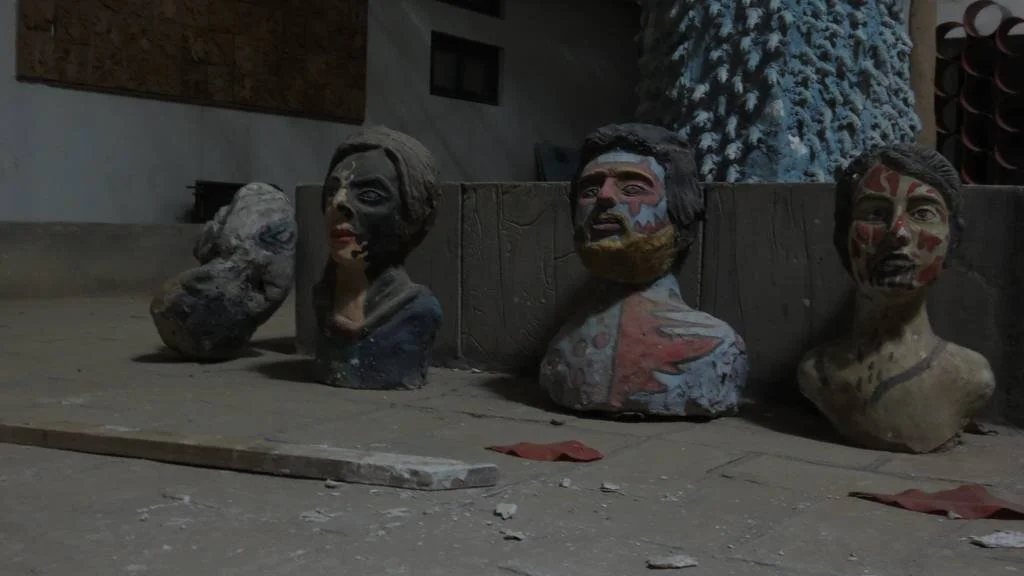
Another day, another class. I was really happy to see the work that the students brought. They had storyboarded scenes. Each one presented their work, and I helped them with suggestions on how to play with various elements to push their work even further. It was great to hear some of the students chime in with suggestions as well. Teaching is exhausting work if you’re doing it right. I can see the hunger in most of these students to learn and try and do something. Many come from relatively far distances to study there. Most of the class consists of young women. It’s fun to see the excitement and fun nature of their personalities come out as they discuss their ideas and share their drawings.I try to help them create some more variety in their shots. It is challenging to draw things from various angles, and I have been helping them to break down things into simple shapes that are easier to draw from different views. I want to these kids to feel confident and strong in their art. They have ideas, and I don’t want to see them become jaded over time. It’s not really in my hands, but I do what I can to give my best. Nothing would make me happier than for these students to bring their imaginations to life.Later in the day, I visited my friend Shahid from CEAD, which is an art and design college here in Jamshoro. I worked with some students there when I first came out here to record music for my short film “Gul”. Now those students are teaching, having worked at several kinds of jobs and developed their skills. More phone calls were made, and no puppeteers were found in Sindh.


I visited Shaukat at his office at CEAD and got to enjoy several of his paintings and some really good videos of his more conceptual pieces he created at NCA. There is a lot of horrible stuff going on in Pakistan, but the painting scene here is very rich in skill. I can’t wait to see some of that self expression spill into the animation scene and find its way into more of the independent film scene as well. I wish I knew how to sell art. The campus is interesting and has expanded quite a bit since I was here in 2008. I took some photos of the cool sculptures in the courtyard. I hope these pieces will rotate out more often than the ones at NCA.


Thoughts and late night at the University
Thoughts and late night at the University


So many people here have reached out to their contacts in parts of Sindh, bordering Rajasthan to help me in my search for puppeteers, but thus far, all signs point to Punjab. There used to be puppeteers here, but like so much, this place seems to be decaying and dying. Honestly, I have a hard time with the deep levels of helplessness and despair I see in the disintegration of safety, culture and at times it seems humanity all around. I see bits of hope in the efforts of people around me to create institutions that support communities and bring better prospects to students. However, these efforts seem to be dwarfed by the rapid decline of seemingly everything around us. My students don’t seem to be crushed by that sense of helplessness. They know just this reality that they are in, and are working towards a better future in their lives.It’s very depressing that so many puppeteers have gone to unskilled types of work, like selling vegetables or eggs to sustain themselves, and have thus stopped passing down their art and essentially disappeared from contact. Things never go as planned on any of the projects I have created in Pakistan. They have thus far worked out, thanks to the help of many people, but not once have things gone as planned despite my best efforts to plan and prepare. There are always points where I question why I was foolish enough to try something so seemingly out of reach. Yet I know that when I find the right people, the humility and skill I get to work with here makes me quickly forget the pain of endless weeks of fruitless searches.


In the US, I watch the decline of my livelihood in animation and the depressing work conditions that only worsen. Here, I see a lot of untapped resources that are very challenging to reach. There are so many apathetic and ingenuine people that have contributed to this mess, that it takes every bit of my mind to keep inching forward, and working towards realizing the vision for “Risalo”. If I did not feel as strongly as I do about the source material and the value of the art I wish to incorporate, I would never have gone to such lengths to be here.


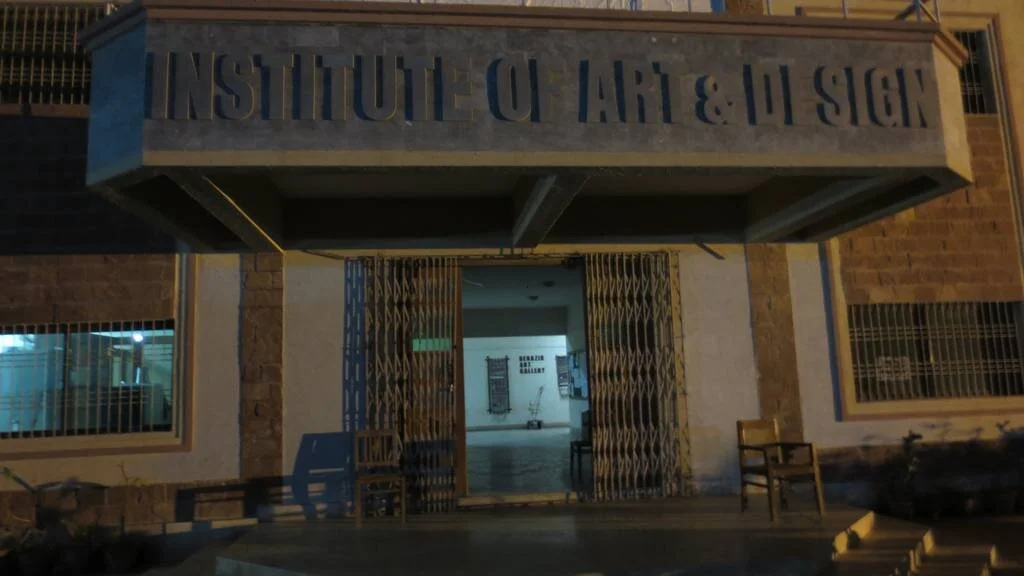
The photos are from a late night at the Sindh University Arts Department. My faculty friends were printing some brochure pages for a thesis show that is being put together with a great deal of care and effort. This work was being done late at night after busy days of administration and teaching. I’m a little lost, not knowing where I am going at times as most people are speaking Sindhi to each other. Efforts are certainly being made to help me with this project. I could use a few more positive results soon. Let’s hope we can find some puppeteers in Sindh before they vanish.


Hyderabad, Sindh
Hyderabad, Sindh book hunting


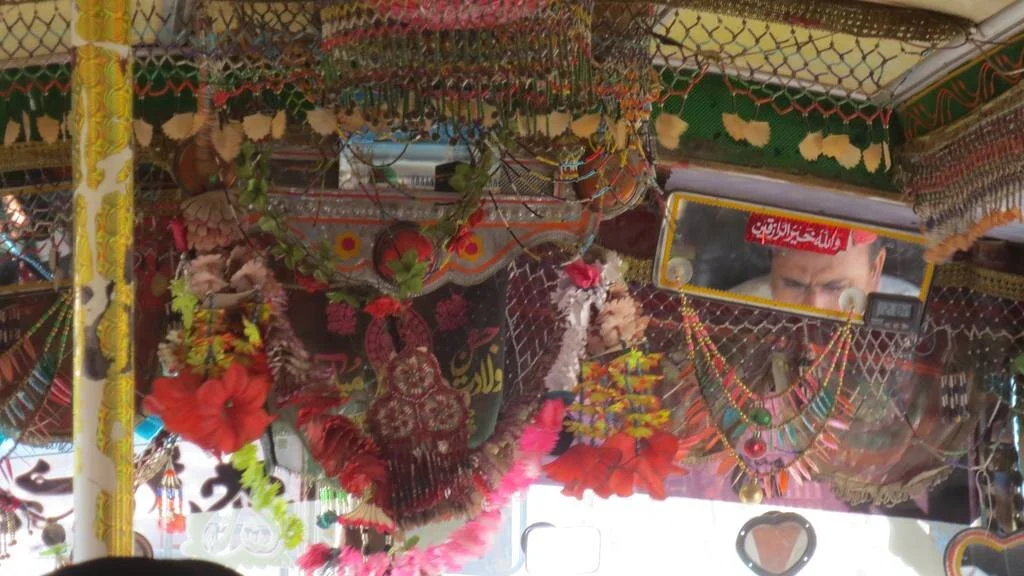
Today I decided to head into Hyderabad, which is the nearest big city. I had my usual anda paratha breakfast with chai, then head out to the “phaatak” via rickshaw, from where I hopped on a bus to get into town. It’s interesting to see the neighborhoods, huts and river along the way. There are fishermen in brightly painted boats on the river, just as Shah Latif described in his poetry, the the dam stops the flow of water flowing south, creating puddled stretches of land.I sought out a few places to try and pick up a book and CD set. Traffic is seriously nuts. I mean…there is no right way on these streets. I feel like it has only become worse. People push their way through with their vehicles form all directions, unwilling and really unable due to driving styles here, to let anyone pass. I think that way of thinking exemplifies a lot of the issues here today. Everyone needs to get their inch and they don’t care who they trample to get that momentary benefit, while burning any possible long term gains. This is interesting, because in basic interactions, many people are incredibly kind, but in official settings it is a ruthless place.


I went to a few bookstores without any luck in finding what I was looking for. The music CDs I was looking for were also not available. In figuring that out, I went to a bunch of different places, switching rickshaws to go to Gul Center, the Press Club, Hyder Chowk and the museum. The museum, while run down, had amazing displays showcasing traditional instruments and crafts as well as scenes of different types of artisans at work.


It was a fairly tiring trip. On the way back, I hopped on the outside of a bus to get back to the phaatak. It took a while before enough passengers got off at stops before I could get inside, but it was ok. I got off just past the phaatak and took a chingchi (these are motorcycles lobotomized with a carriage in the back) to the Adabi (literary) Board of Sindh. It was closed. My friend Mangi sahib came and picked me up with his son. We went back to his place, and I was able to check some email etc, hold his third child for a bit and chat. I enjoyed another delicious meal at his home (I’m going to gain some weight on this trip). Afterwards, we dropped by my room. Najeeb sahib joined us with his adorable little daughter and we went to hang out. We enjoyed some snacks at a sort of family club, then head over to hunt for books. They are so kind, that we went around to several bookstores, just to try and find this book. Mangi sahib also called a few friends, and eventually we found a place that has an Urdu translation I was looking for while driving back via a phone contact. We’ll visit that place another day. On the way back I was once again treated to delicious snacks. This time it was kulfi faluda in a cool little clay boat. Even during all of this time we spent together, I would pick up enough of Sindhi conversations that my friends would have over the phone while I was hanging out with them to know that they are calling all kinds of folks to help me find puppeteers in Sindh.


I’m basically making my way north, looking for puppeteers. It is a dying art form, particularly here in Pakistan, with only a handful of practitioners left. I’m trying to find them, with the best people to help me do it. Mangi and Najeeb sahib dropped by my room once again at night. This time I gave Mangi sahib a proper presentation of the animatic for “Risalo” and the thoughts that go with it. He started looking at the introductory pages of the book I have been basing this work on and found names that he knows. Now that he, Najeeb and Ustad Amb Jogi have a clear idea of the project, they will be able to add from their wealth of knowledge and contacts who have much more deep understandings of the material and the music I am attempting to compile in this film.
Teaching at Sindh University

Due to some technical difficulties on my end, I was not able to screen my short film “Gul” during the first workshop session. We had an in depth discussion on the creative process, from the seed of an idea, to visual development, reference gathering and concept refinement and execution. I had spoken about my work for companies, and answered questions on the division of tasks at companies, as well as differences between character animation for gaming and films.


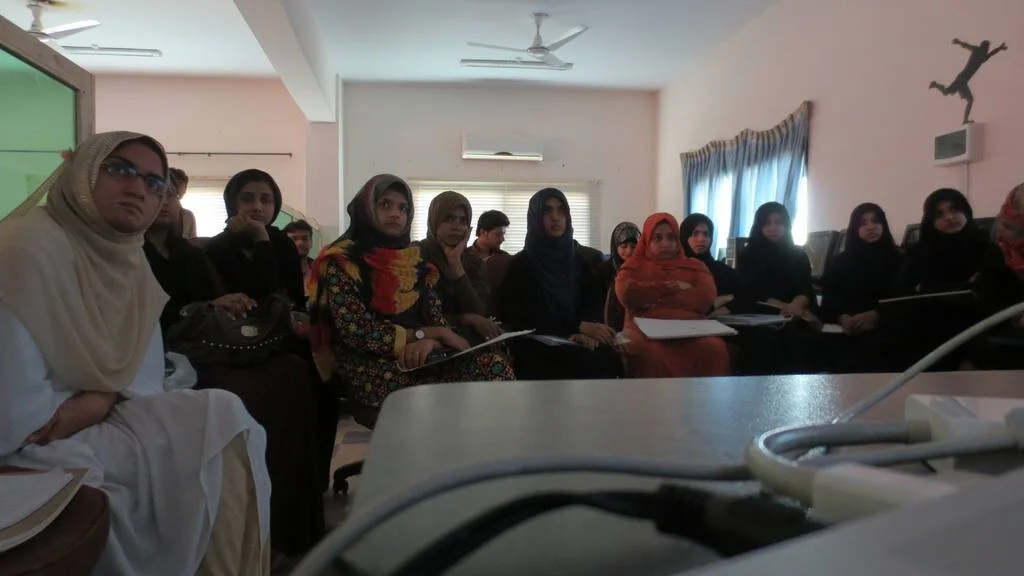
After the usual, and delicious anda paratha (egg and paratha) breakfast at the hostel, I head to the campus. I setup my things and we began our second session with a screening of “Gul” It was fun to show the students how I had recorded music right here in Jamshoro, using Sindhi culture, in a piece that travelled the world. We had a fun discussion on their interpretations of the film. I was very glad to hear the confidence and insights that several students shared. We continued with small presentations by each student, regarding their assignment, which was to create a drawing of a character on the basis of 5 reference images of a feeling and 5 images of a culture or time period. The idea is to share a process by which these students can bring an influx of fresh ideas to any project they work on.


Even the self proclaimed shy students did a great job of sharing their sketches and ideas. Some had several designs, some just one. A few had no reference images, while others had many. Through the discussion, each student was able to understand the value of this process. I emphasized the value of their thoughts and ideas, and the validity of their interpretations.The session would have been 2 hours, but the students were so eager and hungry for learning, that we decided to extend the sessions. We went over how to breakdown and simplify our character designs, and then draw them from the side and in a 3/4 view based on that. It was really fun to see students first struggle and then grasp these concepts and apply them in their work.


I love to see the excitement in their eyes, and a genuine desire to express something in their work. With the right dedication, they can do great things. That of course is the real challenge. I always give everything I can to these workshops and end up pretty tired by the end of each session. Mangi sahib picked me up afterwards, and brought me back to the hostel. There was a program going on at Sindhology, regarding climate change. The hostel staff had prepared an amazing feast for delegates. I joined them, at least for food, then we went to Sindhology. I saw some good entries for the painting contest on climate change. There were several interesting stalls. I particularly enjoyed meeting some fantastic artists/artisans. I spent some time talking to them about their work and possible collaborations. They were very friendly and eager to work directly with artists.Afterwords, I went back to the hostel for a bit of rest, then walked over to Najeebullah Rashdi’s place. He was working on a portrait for a friend in oil paint. I sat down and connected to his internet to send out some emails and upload a bunch of blog posts. He showed me more of his excellent paintings, which I ended up posting in yesterday’s blog post. It’s really great to connect to all these artists. His little daughter came to visit throughout the time I was there. She spoke in Sindhi, so I could not understand her words, but it was very cute. She brought a little plastic container with slime in it and poured it in my hands. I pretended to sneeze it out.I shared some of my process and thoughts in my approach to adapting “Risalo”. It was fun to learn about some other musical forms and places around here as well. Afterwards Najeeb sahib and his daughter walked me back to the hostel. She asked her father why I didn’t speak in Sindhi, to which I told her in Punjabi, “Jadon tusi mairai naal Punjabi ij gal karugai, tai mai wi twadai naal Sindhi ij gal karanga (when you speak to me in Punjabi, I’ll speak to you in Sindhi.” She just looked at me a bit puzzled :). I was just kidding around. A lot of people start speaking to me in Sindhi here, but I don’t really understand it, so unfortunately, I have to switch to Urdu. Sindhi sounds beautiful and when people translate bits of poetry by reciting in Sindhi, then Urdu, even the sound of the words and the bits I can pick out are so much more interesting than the sound of the translation, though it is good too. I certainly pick up a lot of fascinating things in conversations with people here. There is a very deep sense of culture and appreciation of it here with the arts folks in Jamshoro. The connection is deeper than I have seen in some other places.At night, Mangi and Najib sahib took me out for some tea. Though the mosquitos were eating me alive as usual, I got to hear some fascinating stories about a guy named Watiya Fakir from Tando Allah Yar, famous for his anecdotes, similar to Mullah Nasruddin, whose stories are famous in large parts of the world. The stories were anecdotes of questioning society in humorous ways. One story went like this. He arrived to a dinner party dressed as a fakir (wandering ascetic) in tattered and dirty clothes. The hosts quickly pushed him out. He returned a second time, dressed in fine clothing. They let him in and he sat down to dinner. He began rubbing the food all over his clothes. When people in shock asked him what he was doing, he said it was the clothes that you invited for dinner, not me.There were several anecdotes in a sense questioning religious leaders in their preachings on God, or just making a humorous statement on it. Mangi sahib’s storytelling was really great. He shared it in Urdu for my benefit, but when he would mention a key phrase in Sindhi, it sounded that much more rich.
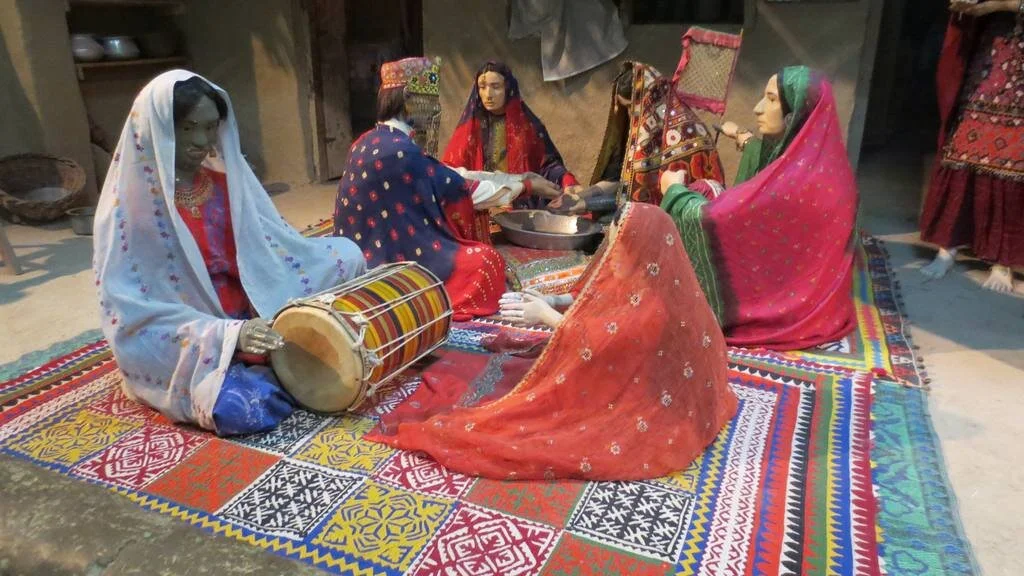
Workshop at Sindh University
Meeting artists and eating food in Jamshoro, Pakistan


I started the day by walking down the hill, across the freeway, to a shop to get some clothes washing detergent. I came back and hand washed my clothes. The hostel staff gave me a charpoy to dry them on. The staff are so kind, humble and hospitable.


Mangi sahib took me to the university, and I ran into Hisam, whom I had met while he was studying at CEAD and I was looking for musicians for my short film “Gul”. I did some work with the students at that time. It was good to hear about his artistic development since then. Now he teaches at Sindh University. I also met a sculptor who teaches there named Nadir Ali.I had set up a meeting with Ustad Amb Jogi, my good friend and leader of the Girnari Jogi Group. It was great to see him after several years. We sat down and I went over the animatic for “Risalo”. There are several things I am trying to figure out in terms of achieving the right balance between poetry and music in the film. Amb, being an excellent percussionist who plays with a wide variety of excellent musicians, is just who I need to figure this out. There was certainly a lot to cover, but this is the first time I have presented the whole animatic. His response was really positive. Also in the same office, was an older man, sitting across the room. He was following our discussion. I got to a the part where I discussed some changes I was making to the story of Beejal to put it more in line with what I am trying to communicate and was a bit worried what they would think of the change. They were both very supportive and appreciated why I had made those changes.A short while later, after Ustad Amb Jogi left, I spoke the the older gentleman for a bit. His name is Aslam Azad, and he gave me a book of his poetry. He said that he knew I could not read it as it is in Sindhi, but it has all his info on the back. The book is called Azad Khyal (Free/Independent Thoughts). I was so honored, that even before reading about him on the back of the book, I decided that I would have someone who reads Sindhi read it to me and translate. Once I read about him, I knew I had to do this even more. He has been an editor of newspapers and publications throughout his career and took part in the M.R.D. to restore democracy to Pakistan during Zia’s time. I am constantly amazed at the accomplishments of the people I meet at Sindhology and at Sindh University.Afterwards, I taught the first in a series of workshops at the art department at Sindh University. It was really fun to share my work and process with the students. The seemed eager to learn and we used every minute of time that we possibly could until it was time for them to leave. It was very tiring, but rewarding. I came back to the hostel and grabbed a nice meal prepared by the staff.


Afterwards I did a bit of editing and resting, before Hisam dropped by and we head out to a themed restaurant called Al Jazeera (which had a village theme), no relation to the channel. The food was great, and it was fun to talk art with Hisam. We visited Fatah sahib afterwards. Between him and Ustad Amb Jogi, if there are puppeteers left in Sindh, we should be able to find them. There are already several leads and it looks like we could make some visits, later next week.


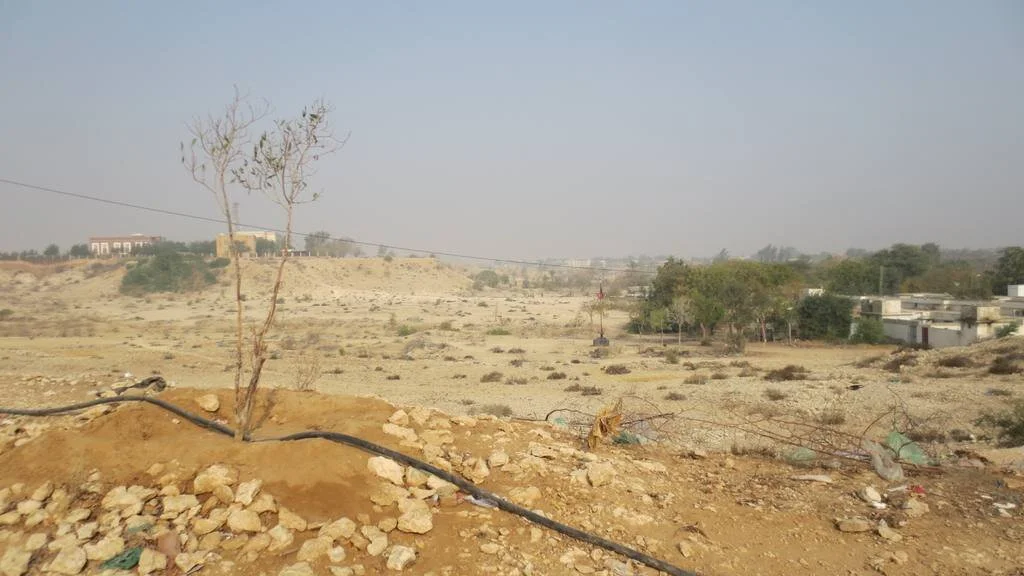
Jamshoro
My first day back in Jamshoro was interesting.


My first day back in Jamshoro was interesting. The kind staff of the hostel I am put up in made me a paratha and omelette for breakfast. I had my first chai of the day with it. There’s no internet here, so I’m just writing blog posts that I can upload later. The hostel is up a hill, surrounded by some homes and several girl’s hostels for universities in the area. There’s dirt and rocks all around, with bits of green and plastic bags and refuse. There are packs of wandering stray dogs, that leave well enough alone during the day, but at night, I wouldn’t walk here.


I waited a while, doing this and that in my room, before heading down to the Institute of Sindhology. I walked into the library and asked the staff if they had any books on puppetry. They said, I have chosen a difficult subject. There really wasn’t anything on that, particularly in relation to Sindh. I asked them to check on a book by an incredible illustrator named Akbar Soomro. He had created two illustrated books that I know of, on the poetry of Shah Abdul Latif Bhitai (upon whose work my puppet film “Risalo” will be based). I knew about them because I had them send to me from the Berkeley Library years ago. Over the years, I barely managed to find the color one he created at the end of his career. The little black and white one he created at the beginning was not to be found. They didn’t have it at the library either. This is a huge problem in a society either can’t afford books, and or does not purchase them. Akbar Soomro was a great illustrator who created these labors of love at his own expense and was unable to recoup the costs. His books are treasures, that should be reissued and sent around the world. I had the opportunity to see one of his original paintings when visiting his family years ago, long after his passing. I hope to do so again and take some steps towards realizing some kind of positive effort in this regards.I visited the audio library where I plan to do some research for “Risalo” once I get the necessary approvals. I walked through the beautiful Sindhology museum, which is as usual very accessible to the people whose culture it represents. I picked up a CD of Sur Kalyan, the first in a series on the verses of Shah Latif, recorded by Sindhology with the incredible voice of the late ______.There was a bit of a mixup in terms of where I was and where I needed to go, but the staff at the hostel helped get me to Naimatullah sahib at the Arts Department of Sindh University. We worked out the details of a series of workshops I will conduct with their students, and he worked on the necessary paperwork for my stay and the sessions. I really appreciate the opportunity to share with these students and the efforts of my friends to make it possible.We were joined by Mangi sahib at Naimatullah sahibs home for a delicious home cooked meal with daal, eggplant and chicken. I certainly was not shy about eating. By this point, I think I had about 4 cups of chai between breakfast, office visits and lunch. I really appreciate that these two friends take time out of what is a really demanding schedule, dealing with all manner of administrative tasks to make sure I’m well fed, and cared for.They dropped me back at the hostel and I got some rest. I woke up and did a bit of editing on “Risalo”. I made a bunch of calls, set up some meetings and listened to some Sindhi music recordings that I have set aside as research. The sun had gone down, and I thought I’d go out and do some long exposure photography tests of the stars. I was listening to some of Abida Parveen’s renditions of Sindhi poetry, and a good half an hour passed before I could wrestle myself away from the sublime beauty of her music and go out to do some work.I pointed the camera up at the sky and played around with different settings on the camera. I’m glad I picked up the camera remote, as that helped keep things more stable when I used bulb exposures which basically keeps the shutter open until you press the trigger a second time.Naimatullah sahib picked me up and we head over to his place again. This time I got to see more of his art in his garage studio. I’ve enjoyed his work in past visits, but had not seen these beautiful relief sculptures. I have never created fiber glass pieces before, so it was really interesting to learn a bit about his process. He sculpts the works in clay, sometimes from a references for portraits of incredibly straight in the clay, without any planning for some of the other pieces. His level of skill and artistic vision is evident in these beautiful story pieces. After the initial sculpt, he creates a plaster mold, then applies the fiberglass in the mold. It is a meticulous process that yields beautiful, resilient results. We discussed some ideas on how to get this work out into the world.After another wonderful home cooked meal (there is so much more variety to home cooked food than restaurant faire) and chai, Mangi sahib took me to Najib sahib’s home again. I needed to send a few emails. Najeebullah Rashdi sahib had been curious about my short film “Gul”, so I gave him a DVD of it along with the Girnari Jogi Group album. He showed me a beautiful short film that he had created based around the them of a young girl’s desire for education. There was no dialogue and the pacing was very slow and serene, yet I was completely transfixed by it. Each shot was beautifully composed using the natural landscape of Sindh, along with traditional mud homes and a ramshackle abandoned building.


In addition to that, I got to see some of his sketch books drawings. Besides being a talented filmmaker, he is also an excellent cartoonist. I am truly humbled and amazed by the quality of these artists. It’s really fun to share art. They are so gracious and kind towards my efforts to incorporate Sindhi culture in fresh ways that I know would not be possible without the warm welcome and support that I have always received here. These projects are still a big challenge, and there are many times during the process where I wonder what madness compelled me to think I could pull this stuff off, but these projects, the stories of each person I share along the way and the effort to support and invigorate culture make them something priceless to me. That the people who have helped me, feel good about what I have done, is appreciated beyond words.
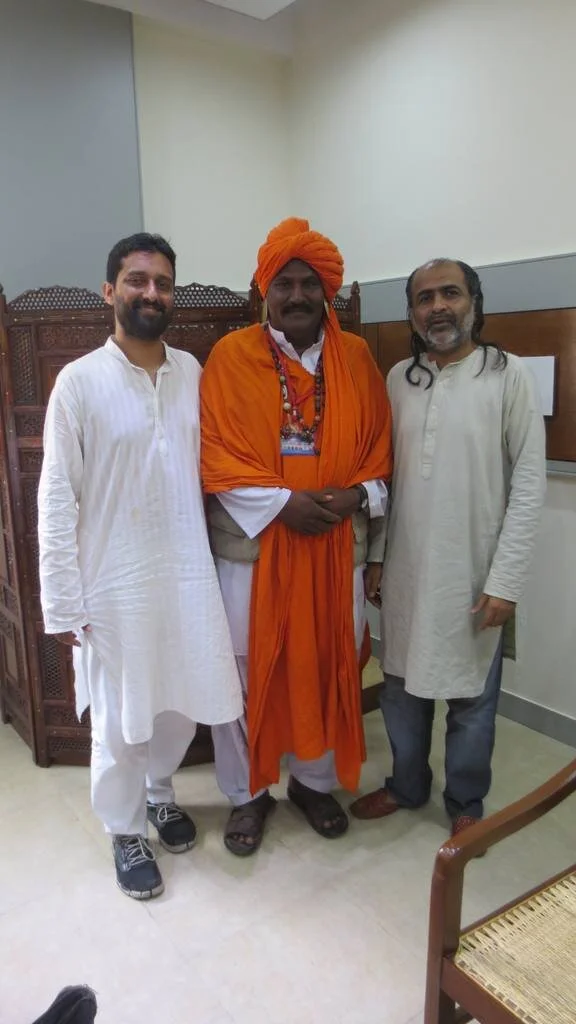
Department of Culture, Sindh

I stayed the night at the Department Culture of Sindh. I spent the morning editing Phool Patti interviews and the “Risalo” animatic. Every decision to cut out a line of poetry, where two lines are too similar in meaning, opens up the edit to allow music to come in more and gives more weight to the words that remain.


During the day, a Jogi named Gulab Jogi, who lives in Bhitshah, Shah Latin’s town, happened to drop by. We talked for a while and I asked him a bit about how Jogis travel. He showed me a photo album of his many travels and meetings with various dignitaries, dancers and artists from around the world. He was a really jovial and friendly person. He clearly has a deep love of his culture, which he enjoys sharing with people.He shared a geedar sing and hatta jori with us. The geedar singh is removed from a geedar and used for protection. He emphasized the the geedar is not killed during this process. The hatta jori is a sort of dried root that becomes hard and somewhat bone like.I got his card and will likely visit him in Bhitshah as I search for puppeteers in Sindh. After that, we took a few photos and he was on his way. My friend Ali Salman Anchal of Phool Patti dropped by with some of my luggage. I said goodbye to Muhammed Ghulam who had woken up and driven with Ali through crazy traffic at a moment’s notice to get me the night I arrived in Karachi. There are some interesting new collaborations in the works thanks to all of these meetings. I hope to share more when they bear fruit.After that, the kind people at the Department of Culture dropped me at the bus station, from where I hopped on a coaster for Jamshoro. The ride took a while, but it was interesting to see the variety of vendors that would pop on and off the bus to offer their wares. There were the perfume guys that had their pitch down who invited people to test out the perfume for free, then proceeded to walk up and down the aisle and spray some cologne just above our heads. There’s a lot of clever wordplay and a particularly honed style of delivery for these pitches. It’s hard work jumping on a bus and hawking wares by delivering your pitch and just walking up and down, watching for any kind of interest in someone’s eyes and then hopping off, into a sea of chaos outside as the bus starts to leave.

People were selling egg burgers, spiced cucumbers, peanut brittle, chenna snacks, hats, kid’s clothes, cell chargers and covers, juice, soda, plastic light up toys etc. There were children and women who came aboard asking for alms, as they made their pitch for doing so to be rewarded for your good deeds and getting an opportunity to visit the holy city of Medina.

We stopped at a rest area for a bit to gather more passengers. The conductor went out and brought people aboard, as passengers went out to get pakoras, samosas and other snacks. Once on the highway, we passed a lot of petrol stands and restaurants along the way. It’s pretty crazy how these huge buses and trucks honk like mad men when passing each other while these little cars are nuts enough to weave around them.


Eventually I reached the Jamshoro stop. There are a ton of rickshaws there, waiting to take people further. I called up my friend Saeed Mangi, and he sent Shehzad sahib out with a car. I took some long exposures as I waited. It is quite dark out there, with only streaks of light from passing vehicles. It could be a very creepy place, but no one really bothered me. Drivers asked me if I needed a ride a few times, and when I said no, they went back to chatting with each other.


I settled into the room with campus housing, then Mangi sahib took me out to meet other art faculty and dinner. It was really great to see him again after several years. His kids have grown quite a bit in that time, and have no recollection of me whatsoever, but I certainly remember them. I enjoyed a delicious dinner of chicken karhai, but was left out of most of the conversation as the group was speaking in Sindhi instead of Urdu. I watched stray dogs mill about, as I scarfed down food and fended off mosquitos. I enjoy the sound of Sindhi. Like Punjabi, it has a beautiful flow and there’s a particular way that people connect words and blend them together. Also like Punjabi, it can be beautiful when it is used as such, and not so much in the way that some people speak in a sort of gutteral way. I’ve been working from a wonderful Urdu translation to adapt “Risalo” and look forward to recording the corresponding lines in their original Sindhi so that I can share this poetry that exemplifies the beauty of this language and its people.
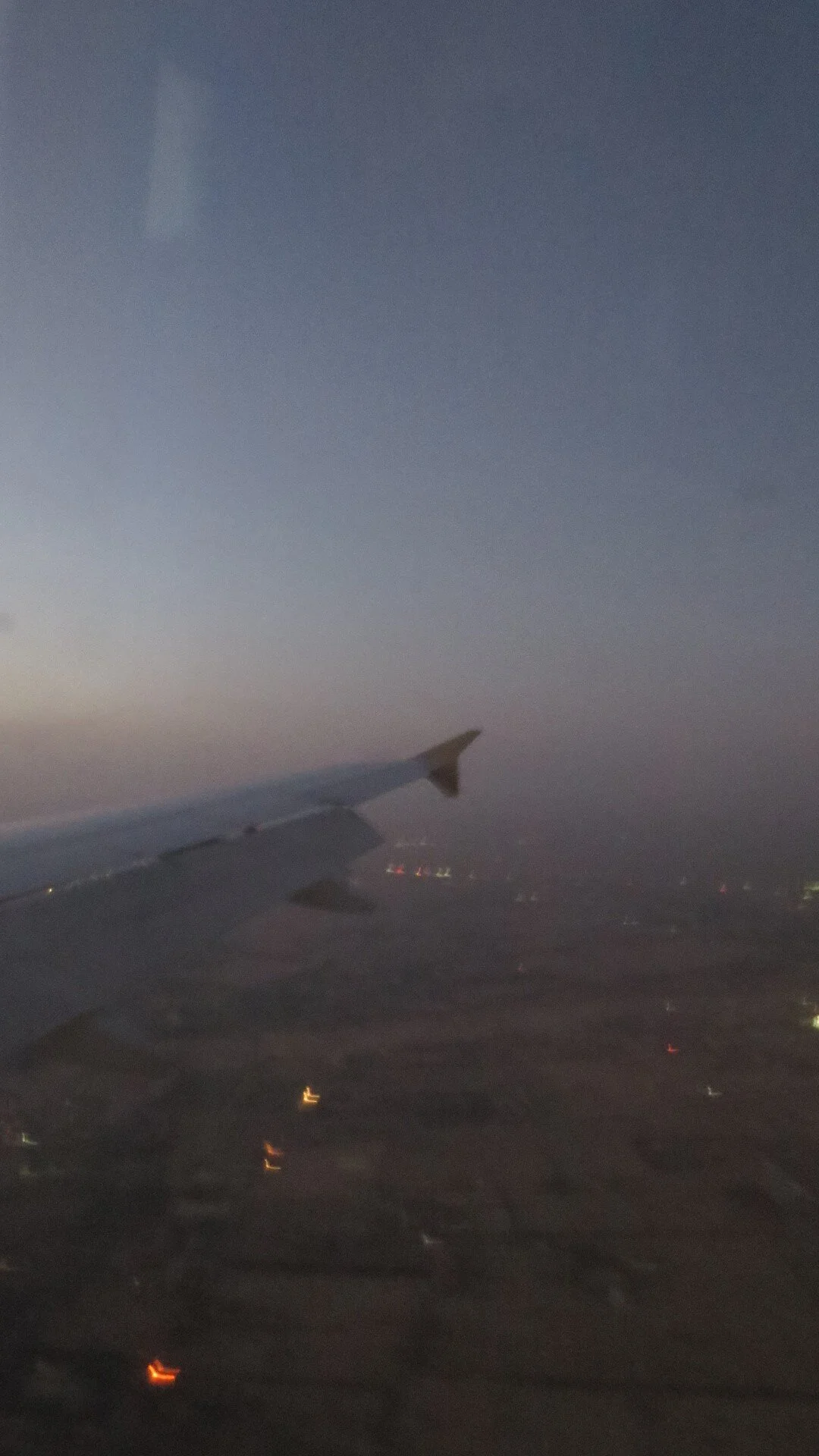
Descending into Karachi
After months of working out logistics, waiting, wondering and struggling, I arrived in Karachi, Pakistan.

After months of working out logistics, waiting, wondering and struggling, I arrived in Karachi, Pakistan.


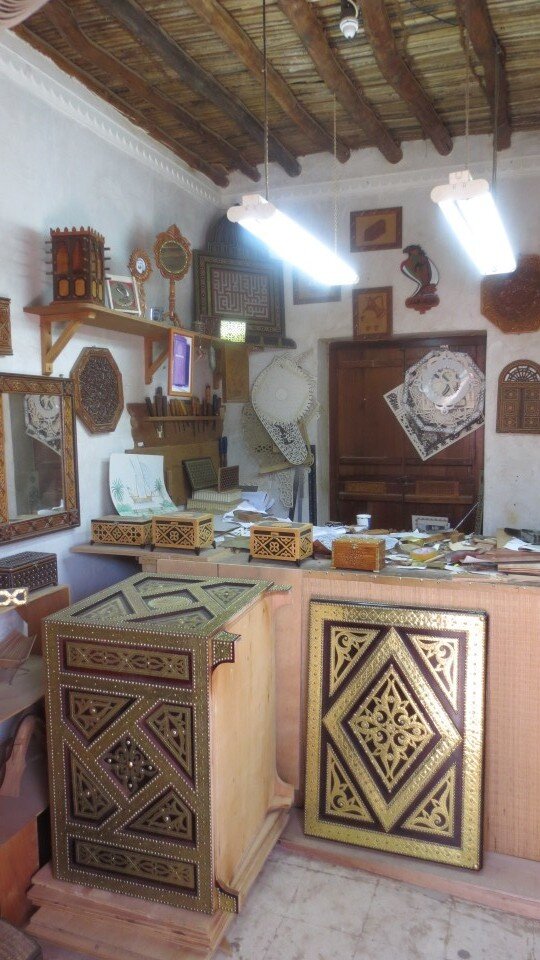


After a short jaunt around Abu Dhabi, my wife and I went our separate ways to work on our projects. I walked over to the gate for my flight to Karachi, and there were several elderly, world worn people sitting, squatting, lying down as I might see waiting for a train in Pakistan, with bundles and bags.

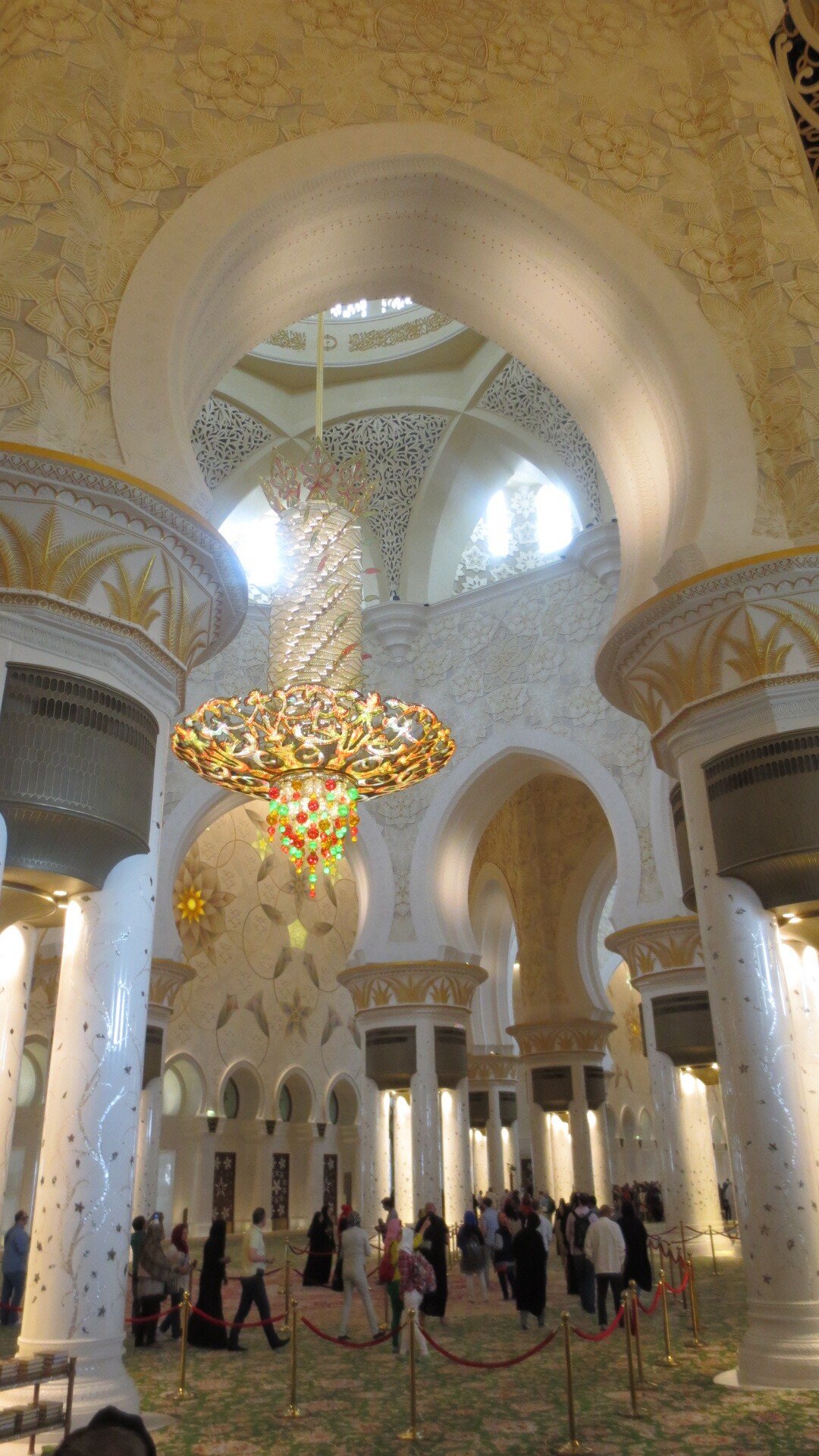

I thought about how beat down we are right now with all that's going on in Pakistan. I watched as people at an adjacent gate filed into buses to a flight to Bangalore, India.Our flight started boarding a while later, and we seemed like cattle herded into the bus to the plane. We reached the plane, yet the doors remained shut as we stared at the stairs leading to our ride home without a complaint.I fell asleep on the flight, came to in time to scarf down a meal, then watched the sunset along the wing of the plane, fade into darkness as we descend into Karachi.


Passengers scrambled off the plane. I walked down long corridors. A tiny, hunched over elderly woman winced in pain, struggling to keep up with her ragged group that was far ahead of her. I looked at her, then the standing people mover. I asked if I could hold her bag as her group moved further. I helped her fearfully step on the conveyer, with her bag in my hand. She was exhausted.I ran back up the escalator as she stood frozen crying "Man dar lagda ai" ( I'm afraid) before I coaxed her into stepping on.I left her and the bag with her group. She gasped prayers for my successes as we parted.I stood in line at immigration. An old bearded man and his incredibly aged mother, blind in one eye, barely holding on to her cane, elbowed past me to the counter. I didn't care. I waited and watched as the woman collapsed in a bundle, as paperwork was processed. As the immigration officer did his job without favoritism, but never made the poor, exhausted woman get up. He checked what he needed and sent them on their way.The immigration officer mentioned how these elderly people had just returned from that once in a lifetime opportunity to perform Umra, the off season pilgrimage to Mecca.I got my bags and strolled out past eager faces with nothing but excitement to receive their loved ones. My friend was nowhere to be seen.I stood on one side, looking at the sea of people walking past at night. Someone brought me a cart and let me use his cel phone. No answer.I tried again from the local security booth. They invited me in and helped me figure out what to do. They are very busy dealing with securing this airport. It was brutally attacked by militants not too long ago. The bus kiosk was closed. No reply on the phone. I waited some more.I saw a group of men holding flower garlands looking around, waiting for an arrival. One wore an ajrak. I asked who they were waiting for. They mentioned a friend from Iran, and looked a bit cautious. I reassured them, it was nothing negative, knowing of recent murders of Shias. I mentioned none of that, but we understood. Without missing a beat, one of them offered me a soda. I declined, but appreciated the kindness, not at all uncommon.Then I thought to connect to Wi-Fi, as my sim along with all other unverified Pakistani sims have been deactivated prior to my arrival as the nation struggles against violence.I found another number, called a friend of a friend I had not met, but trust. WiFi was weak so another stranger at a cel phone stall let me call again with his phone. My friend's friend dropped everything to fight through traffic. Not one complaint from his companion behind the wheel, who drove to pick up some random person, through a mass of cars inches from one another, honking and twisting in so much madness.A home was opened to me at a moments notice based off a mutual friendship. New friends are made. A delicious meal was shared and plans are adjusted. I'm reading about 4 or 5 hate crimes, beatings and murders of south asians and muslims on my facebook feed from the US as I sit here in Karachi waiting for the sun to come up, grateful that I'm greeted with so much kindness by people I have never met before today, knowing that this is Pakistan, and this is how it is.
Sahara Drawing Workshop
I had the privilege of conducting a drawing workshop for a conversational English class at Sahara.
I had the privilege of conducting a drawing workshop for a conversational English class at Sahara. Sahara is a wonderful organization that specializes in helping domestic violence victims in the South Asian community as well as offering classes to the community at large in computers, English and more. Our friend Mala invited Kristeen and I to give a workshop with her class.


For the lesson, I modified a session I had done in Bangalore to suit the conversational needs of these women. I thought we could share stories on moments we were proud of, achievements or other significant events, to help remind us all that we each hold stories worth telling. As I went around the room, and each woman gave her name and how she was feeling, it became clear that there were many stories to tell. Some women were deeply moved by stories on the news, such as the garment factory collapse in Bangladesh, or the brutal violence against a prisoner named Sarabjeet Singh, one of many innocents to inadvertently wander across the border and be imprisoned like so many others on both sides of the border.I drew some simple figures and objects and gave some ideas on how they can be used to express a variety of emotions. With that, the women took to drawing, and I walked around to help encourage or give ideas on how they could use drawing to express a particular idea if they needed it. After drawing, each woman shared their work and spoke to the class about it in english. It was hugely gratifying to feel the warmth and humor of these women, and to get a little glimpse of the depth of thought and wisdom they had to share with the world.Afterwards, one of the wonderful women treated us to some delicious Khandvi and a dish simply called Veggie Delight (Gujrati snacks). Kristeen and I felt humbled and just full of joy at having spent time sharing with these women. Thank you.
Art of Music Night 3: Pakistan
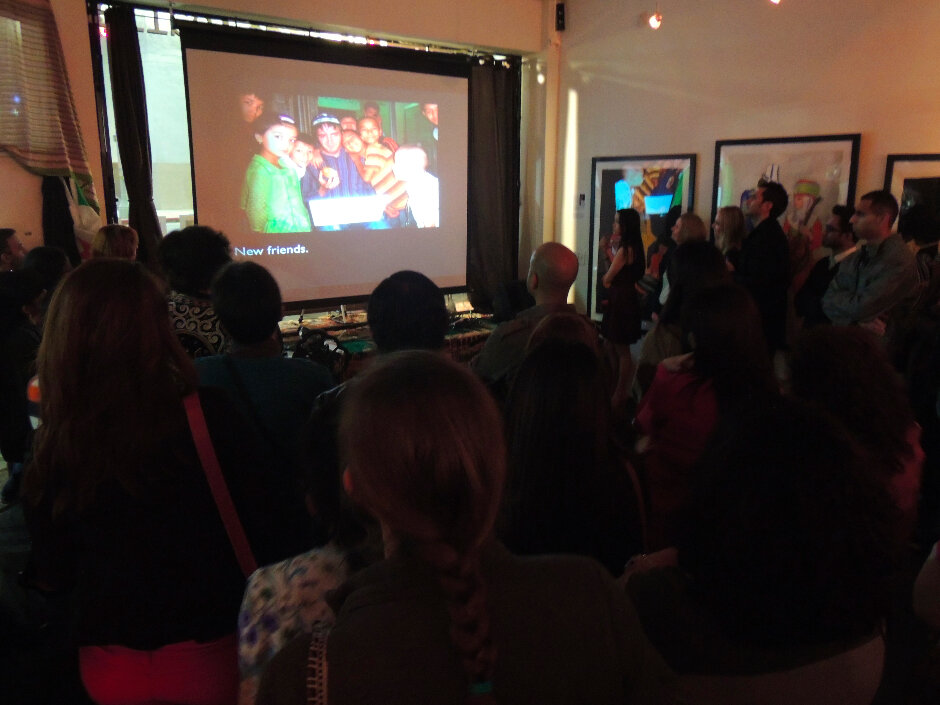
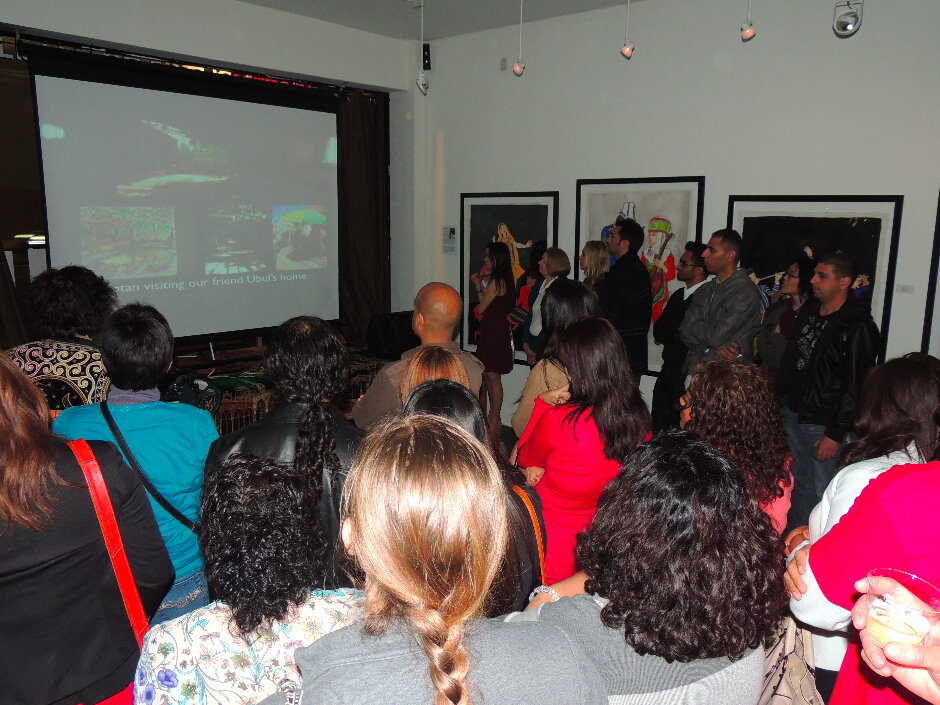
Two weeks after the last Art of Music event, we held our third night time event in the series at the Levantine Cultural Center. This time, I focused on Pakistan. The story turned from traveling in countries and connecting to cultures I had never met before, to going home.


Two weeks after the last Art of Music event, we held our third night time event in the series at the Levantine Cultural Center. This time, I focused on Pakistan. The story turned from traveling in countries and connecting to cultures I had never met before, to going home. I shared my short animated film Gul, featuring the music of the Girnari Jogi Group as well as the story behind both. I felt very grateful to have an opportunity to share the story of these fantastic Sindhi musicians across the globe for an audience that respected what they do and supported my efforts to benefit them. Once again, I met with many new faces and enjoyed the warm company of many old friends as well.My good friend Robin Sukhadia, Tablapusher kept the crowd going with his DJing and a live tabla performance in which he share the story of this beautiful instrument.
Art of Music Night 1: Kyrgyzstan and Uyghurs of China
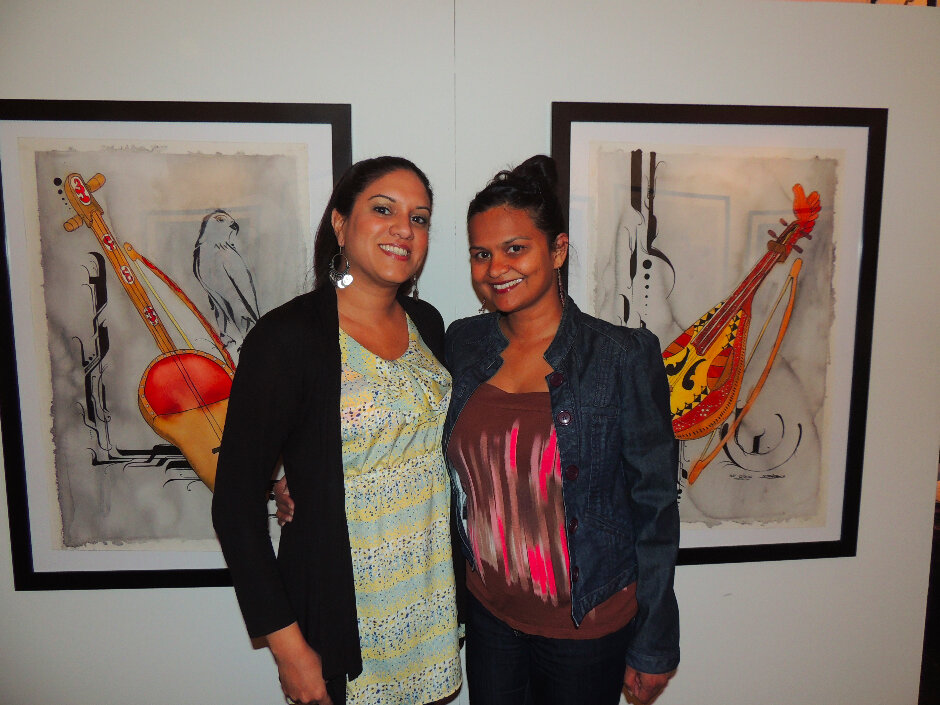
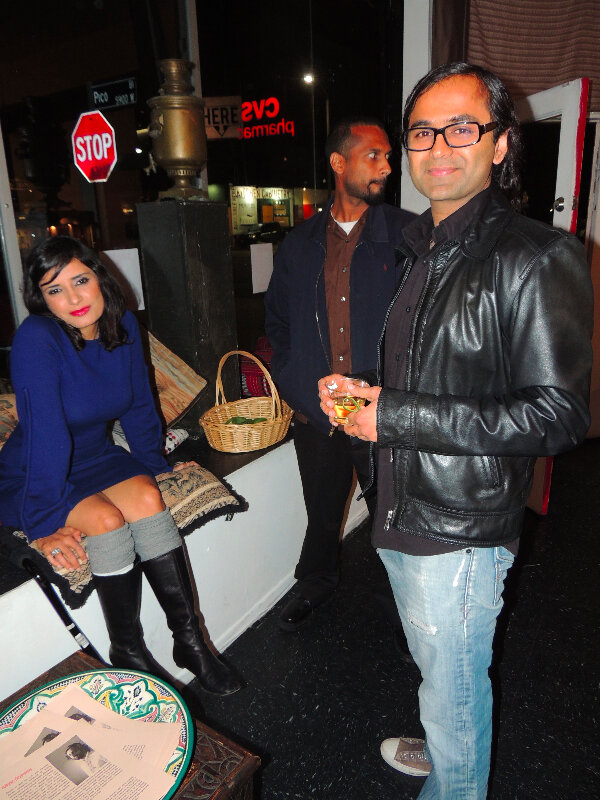
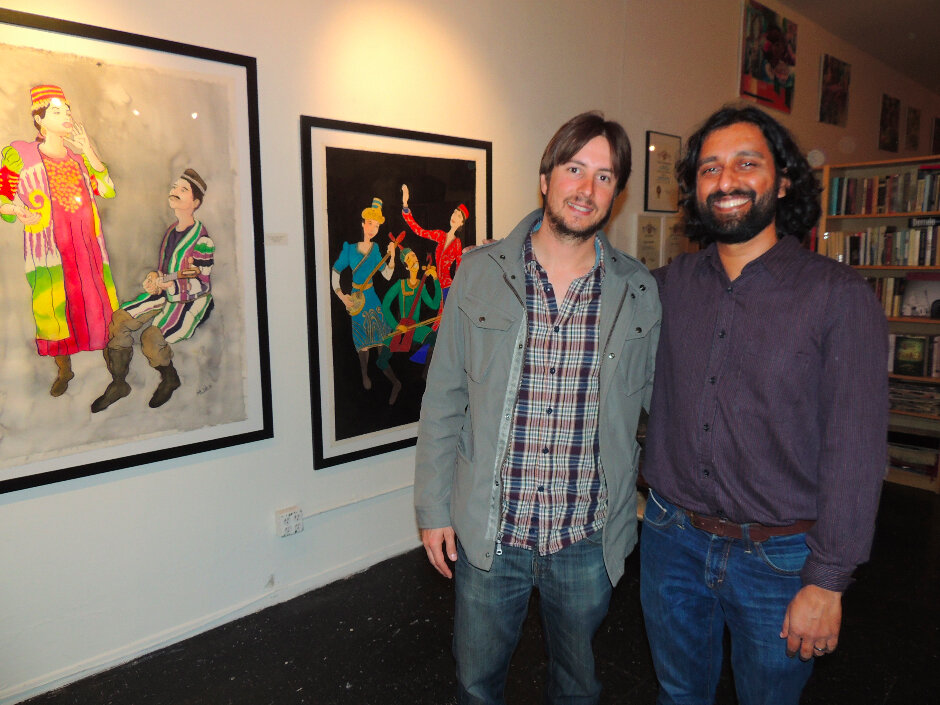
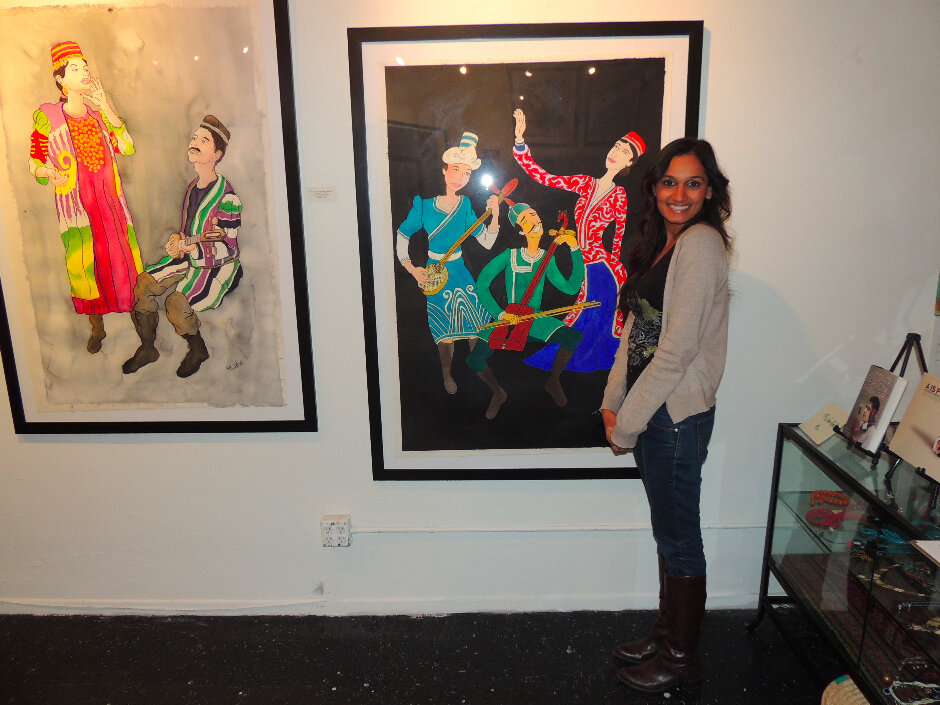
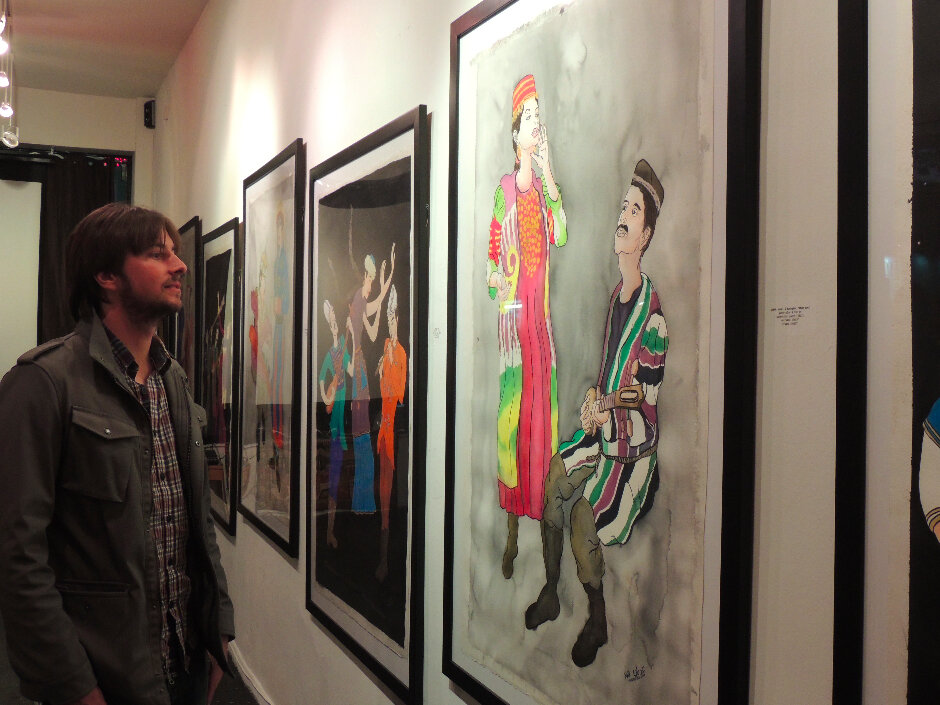
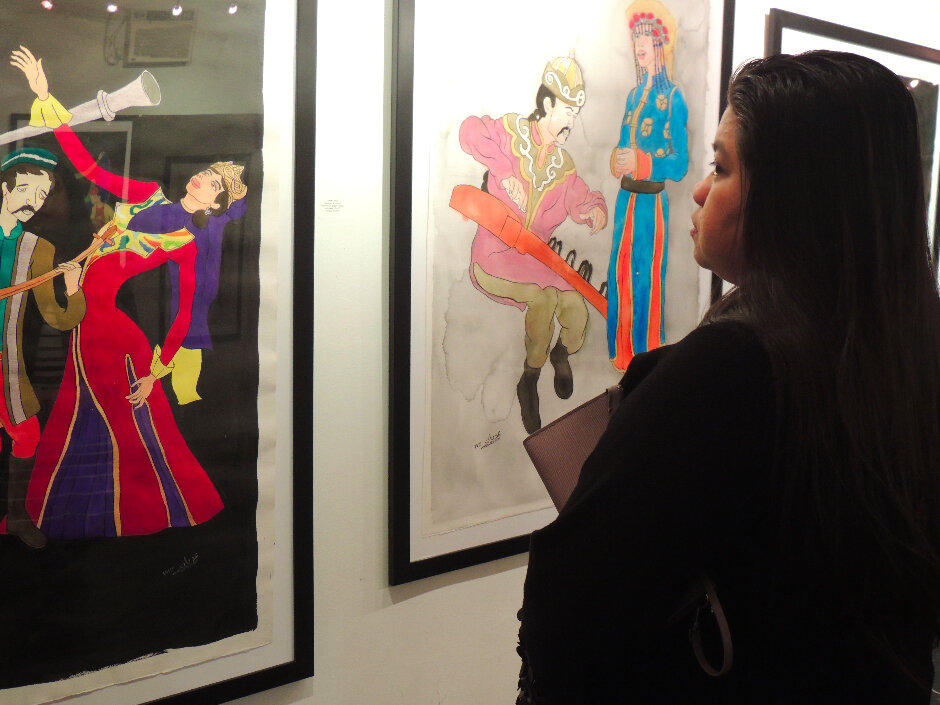
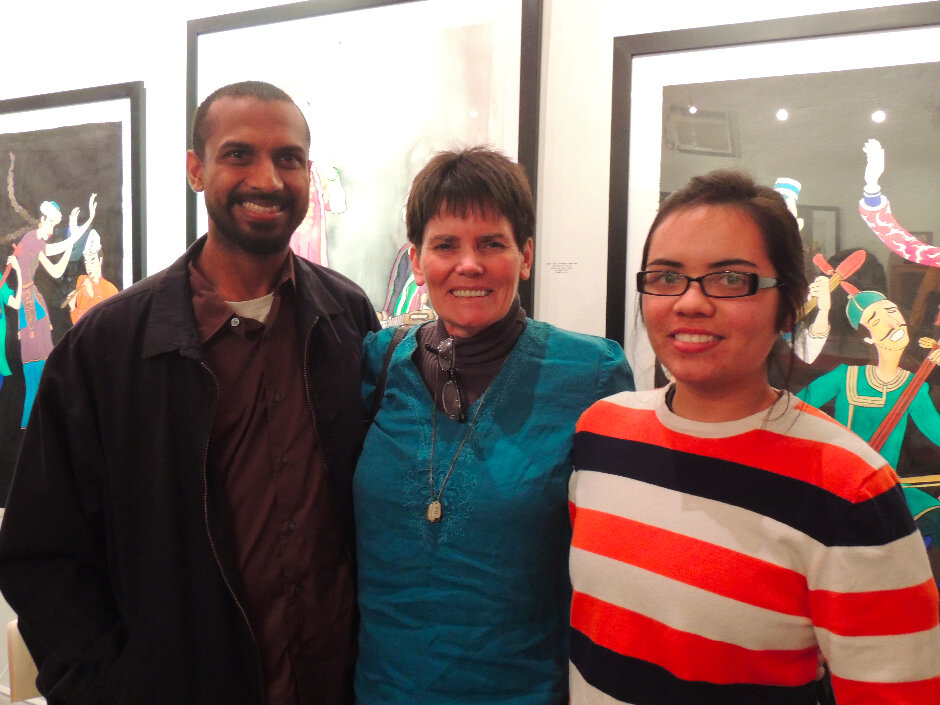
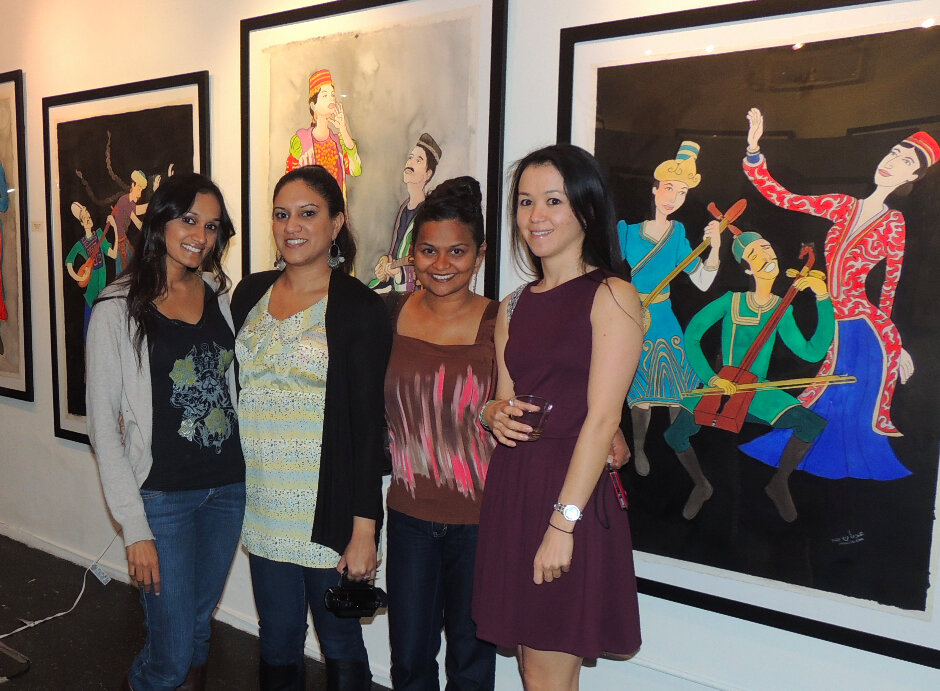
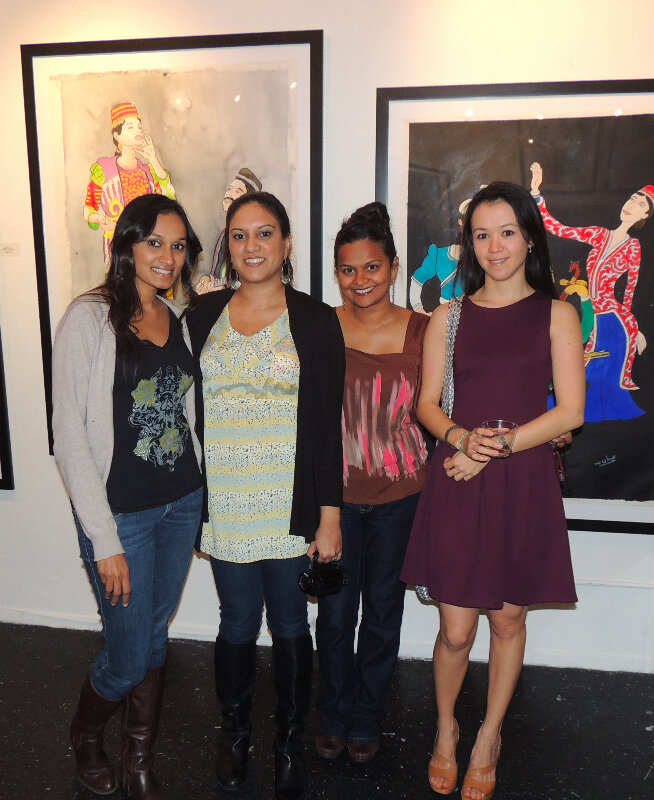
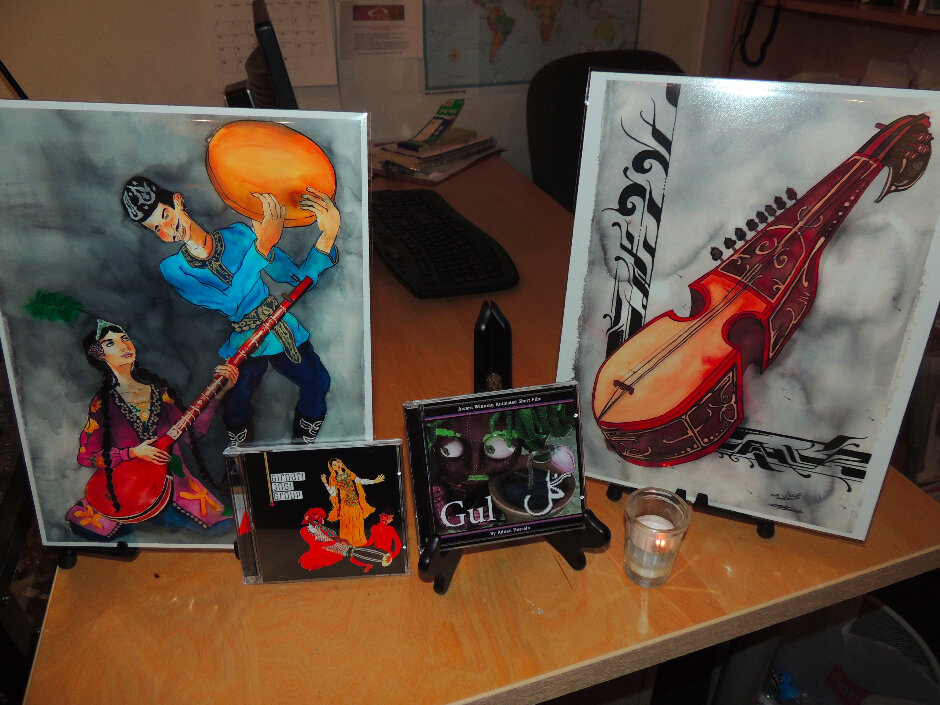
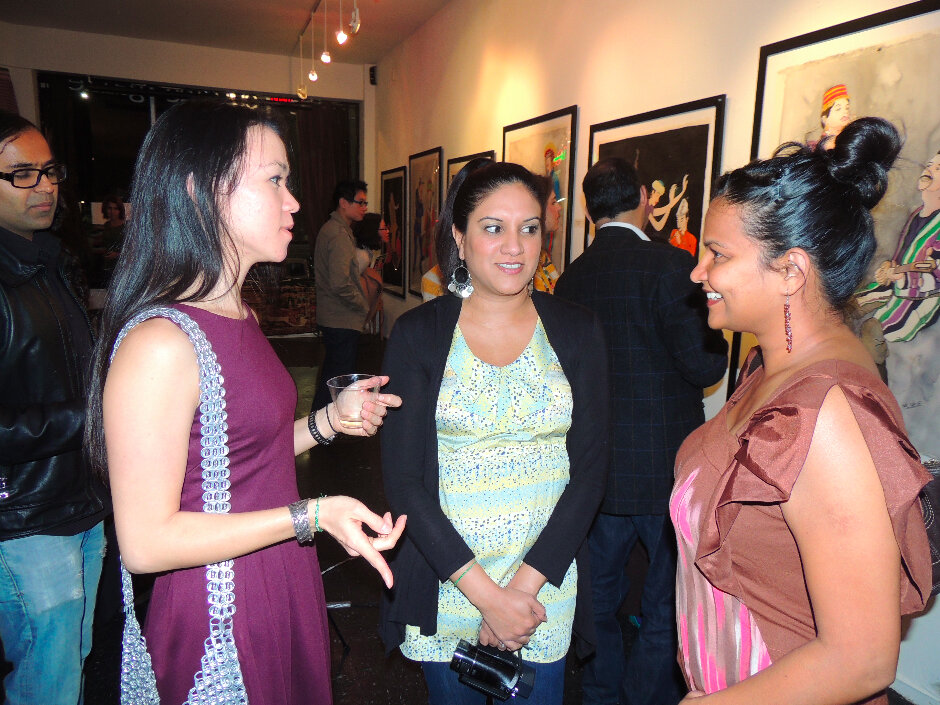
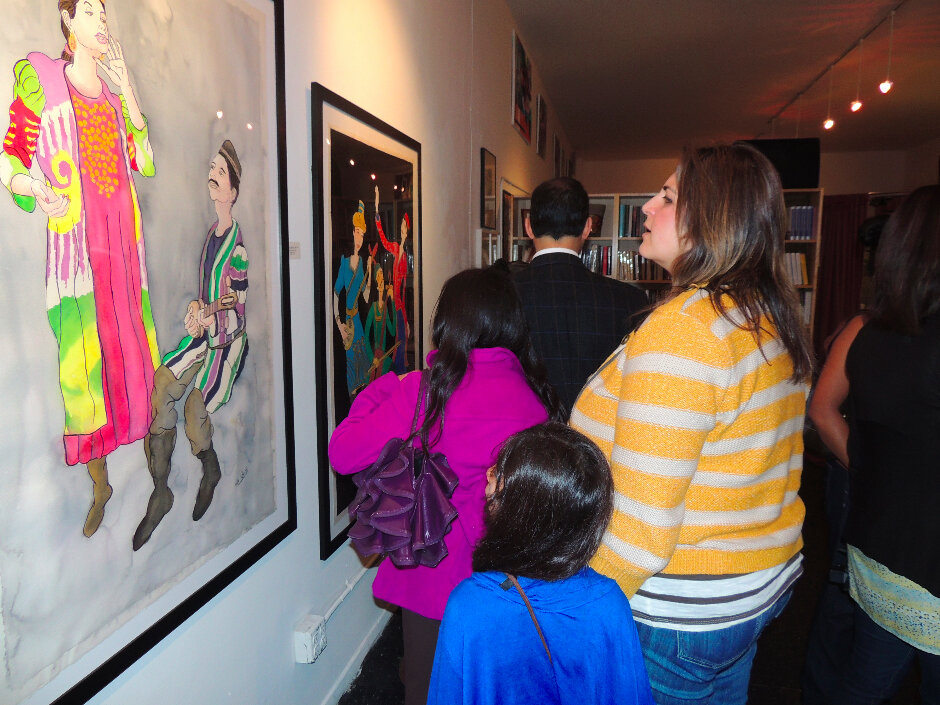
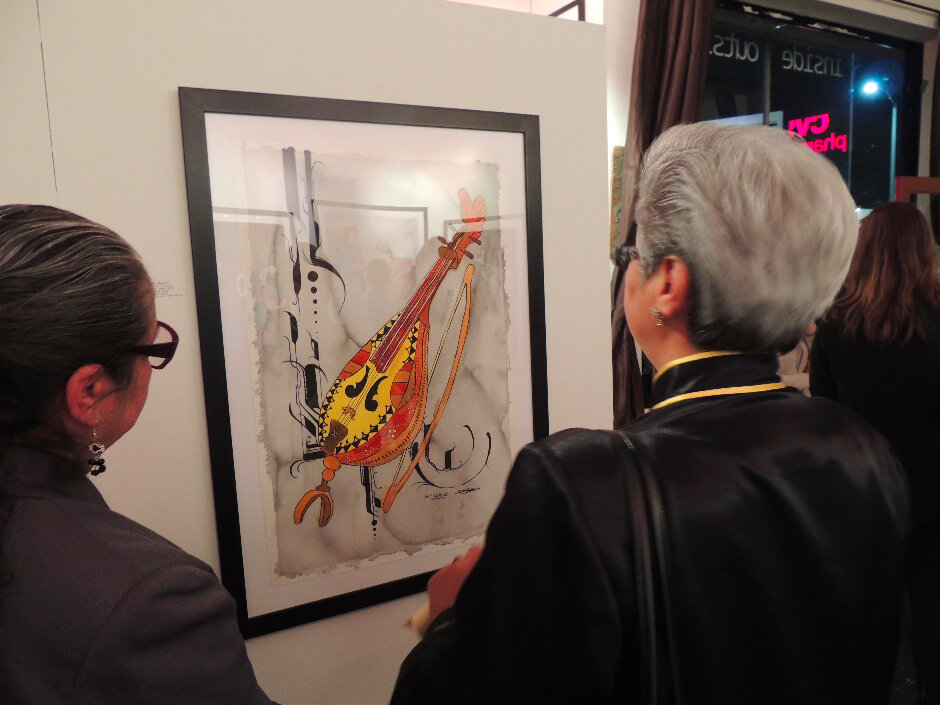
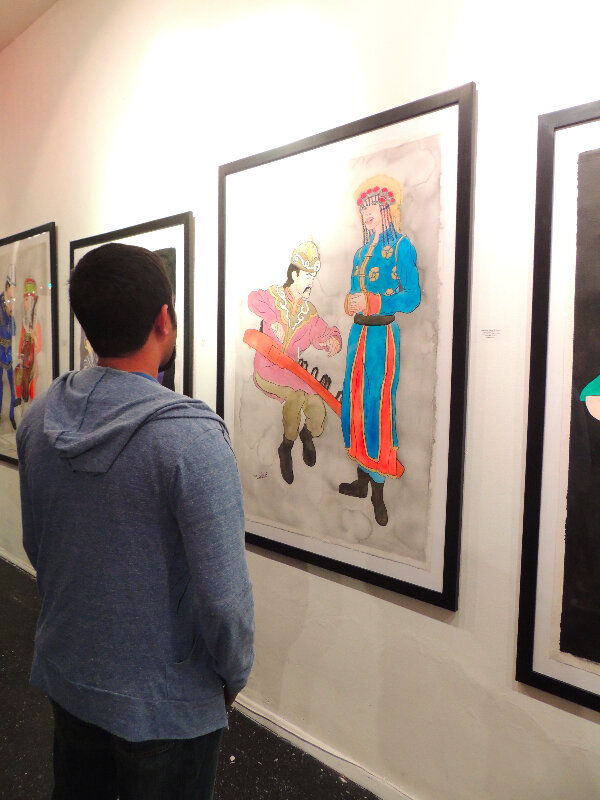
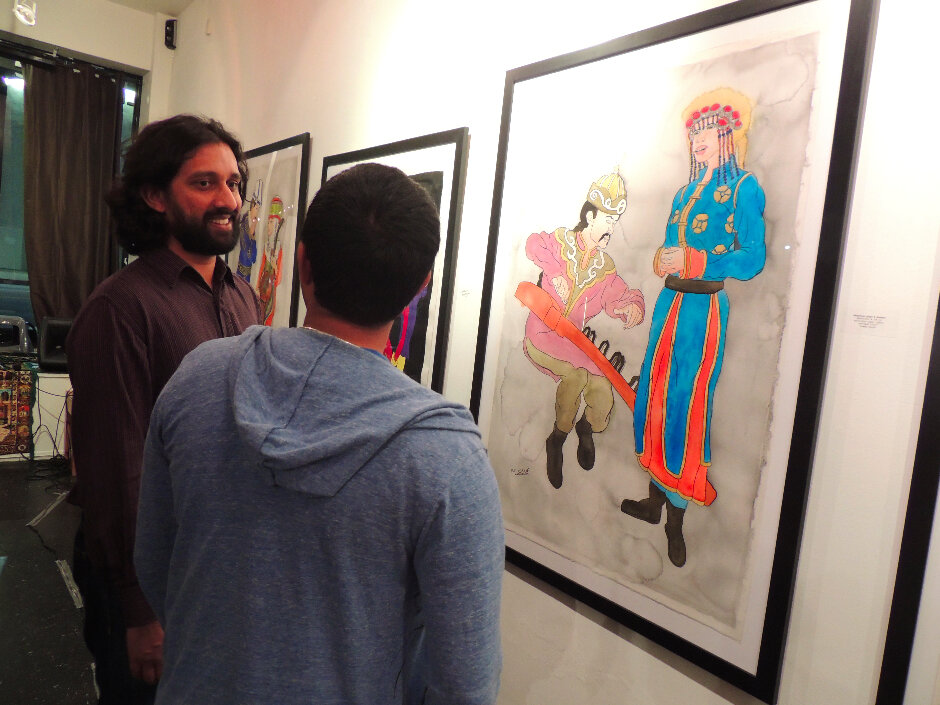
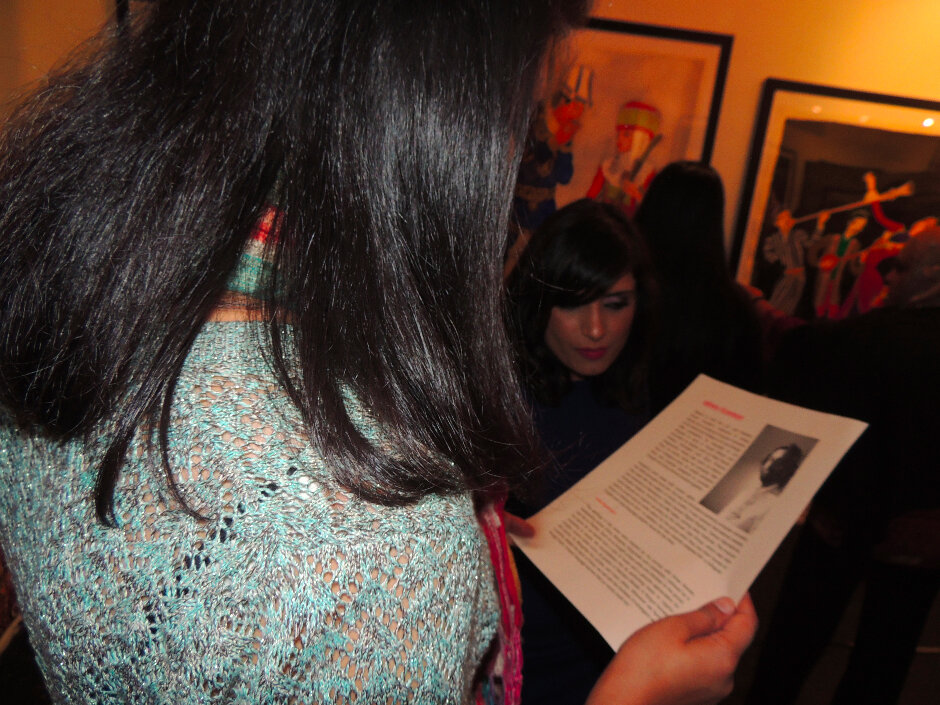
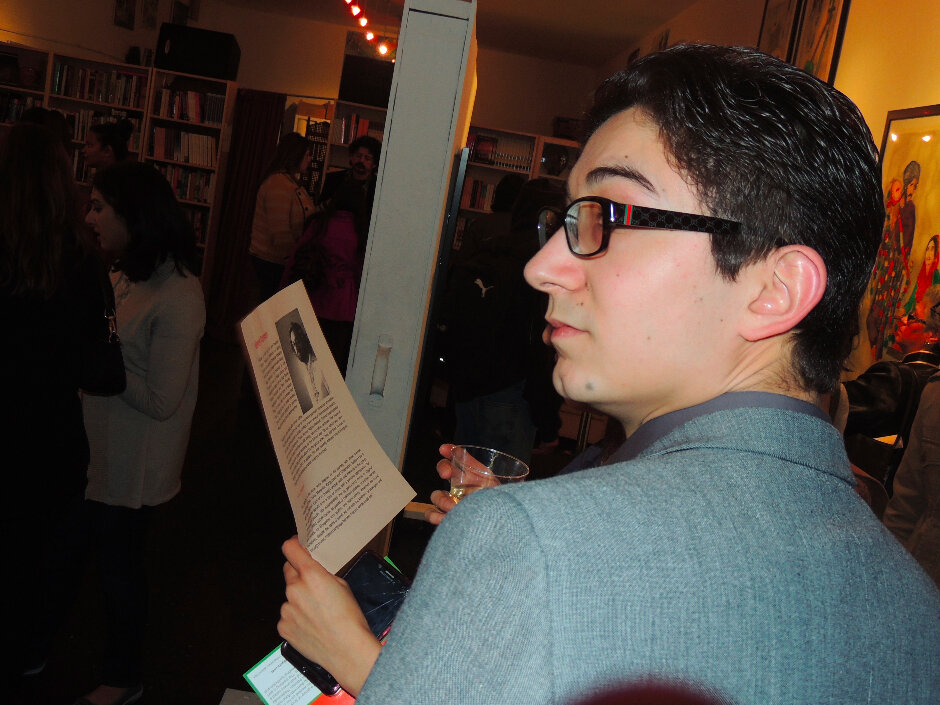
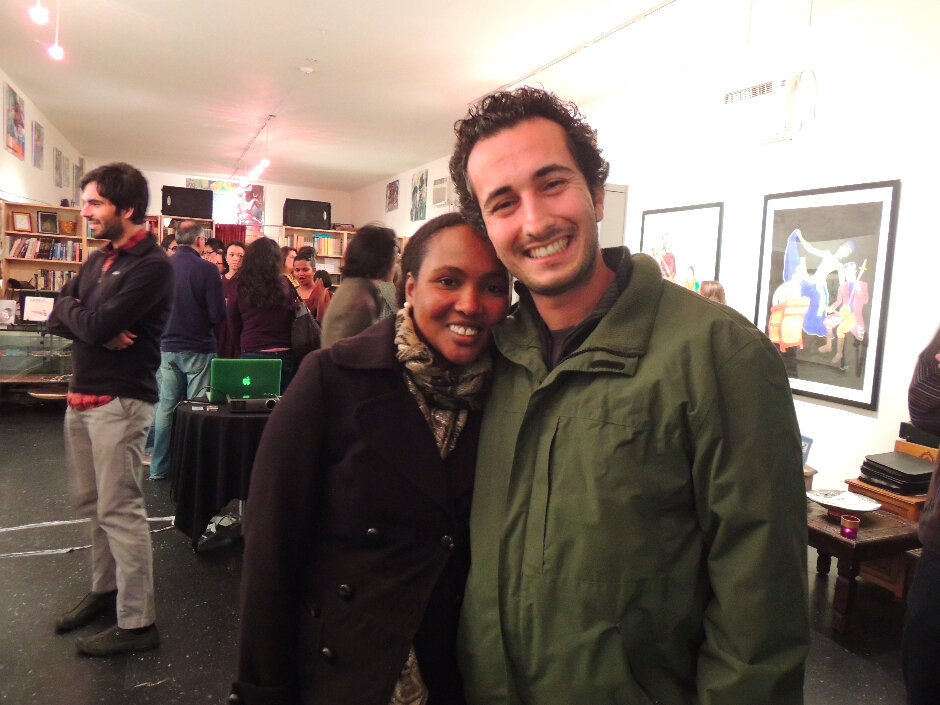
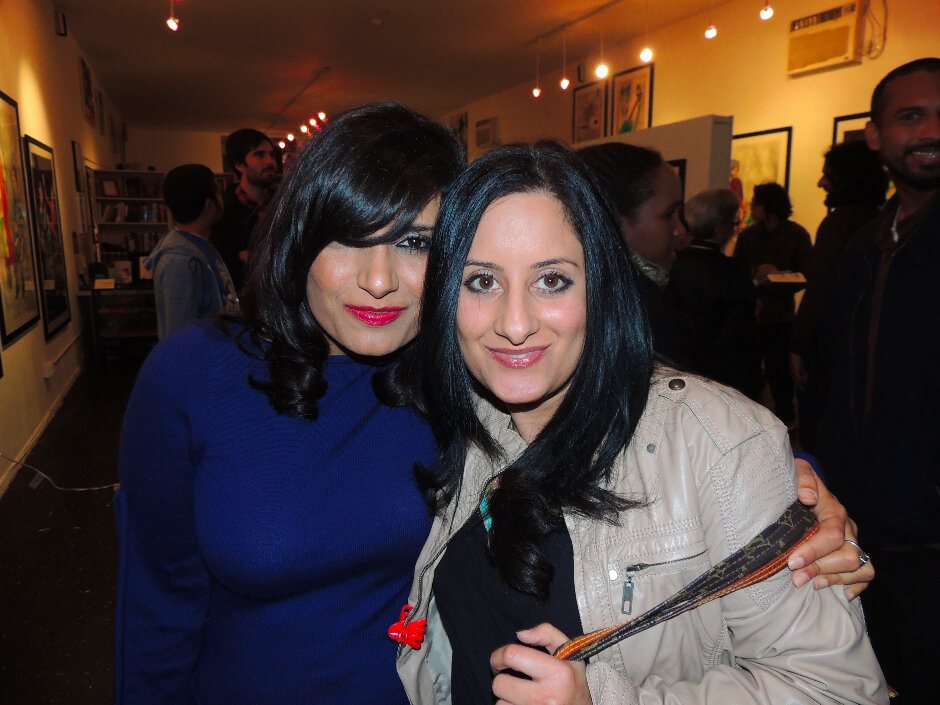
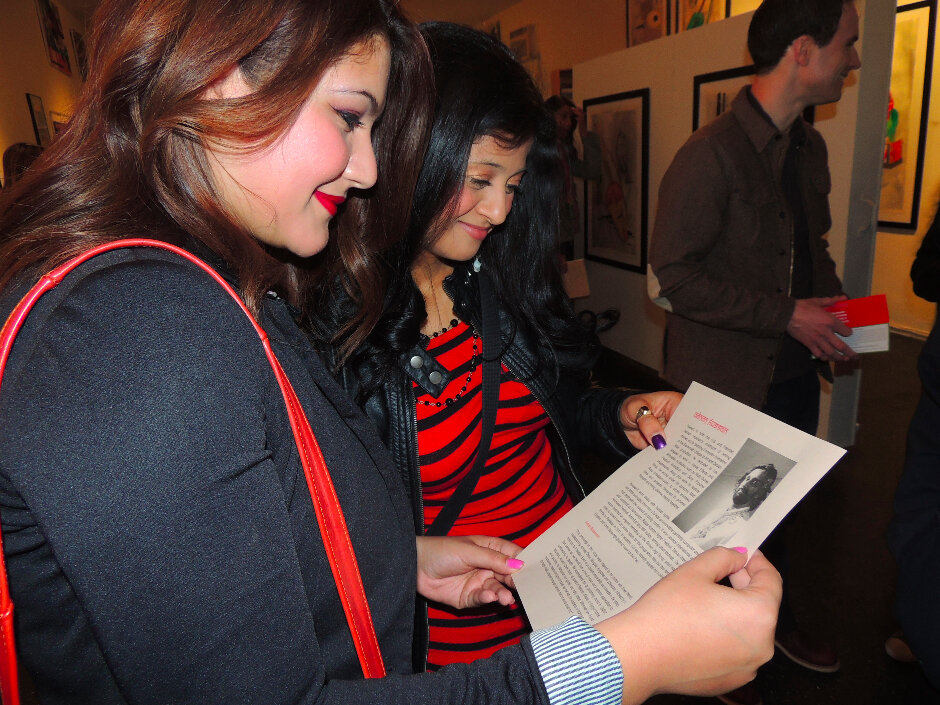
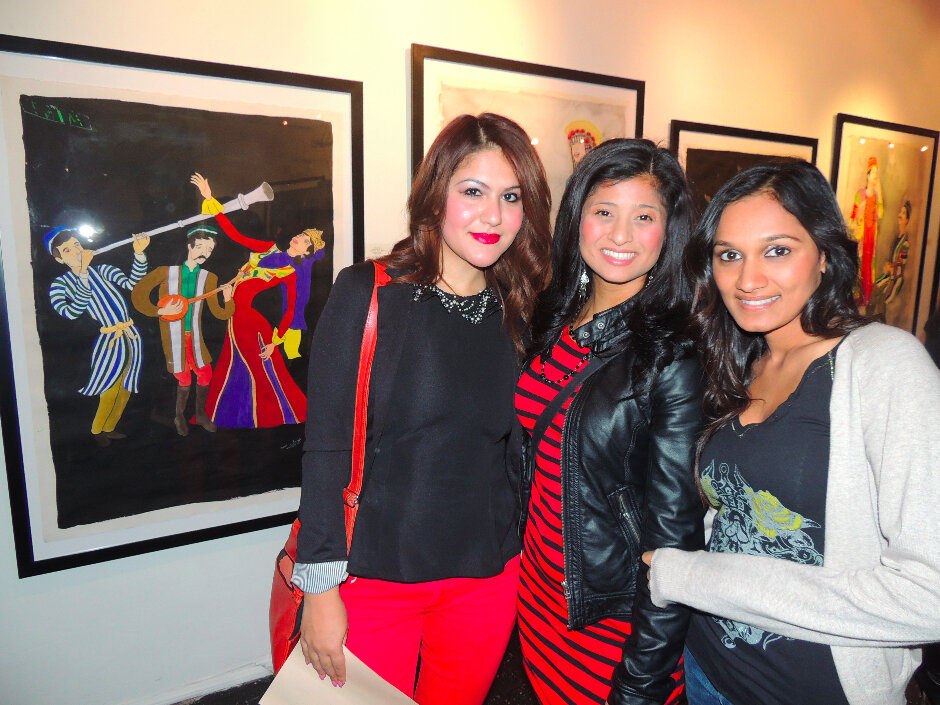
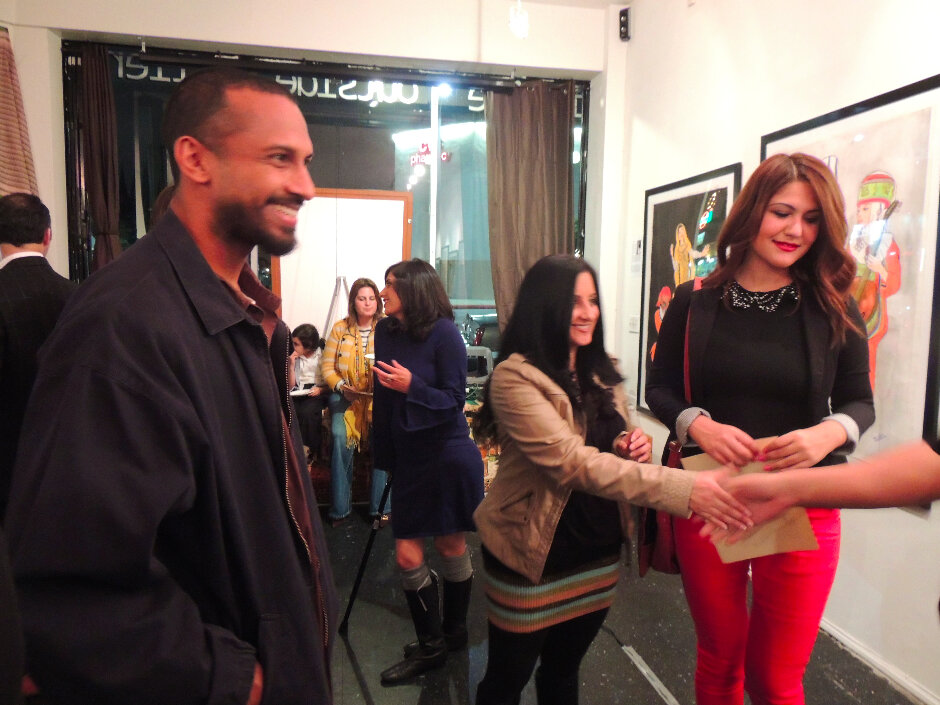
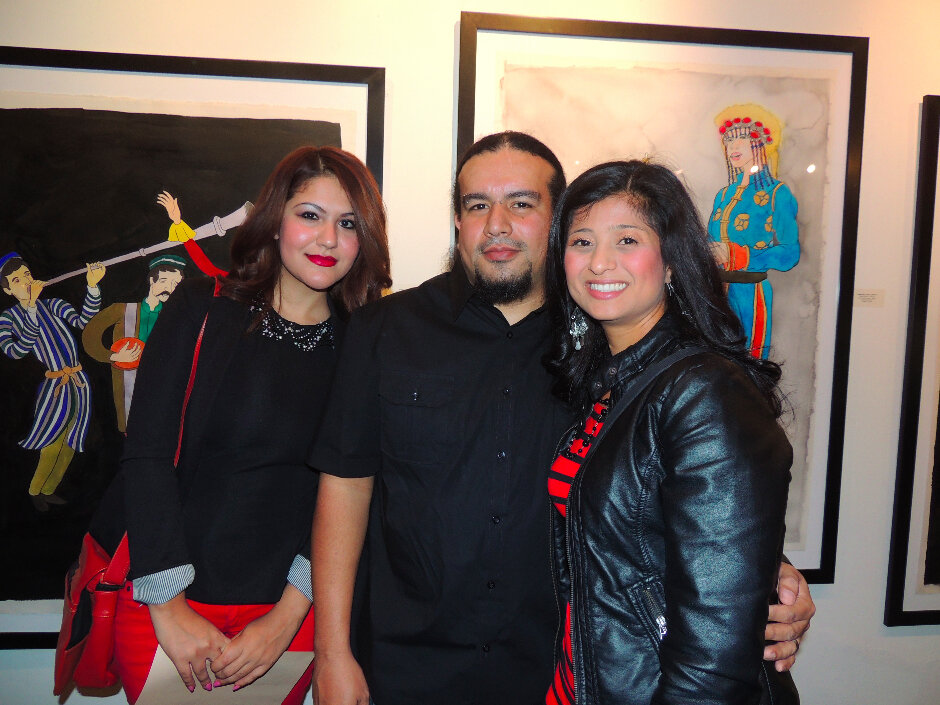
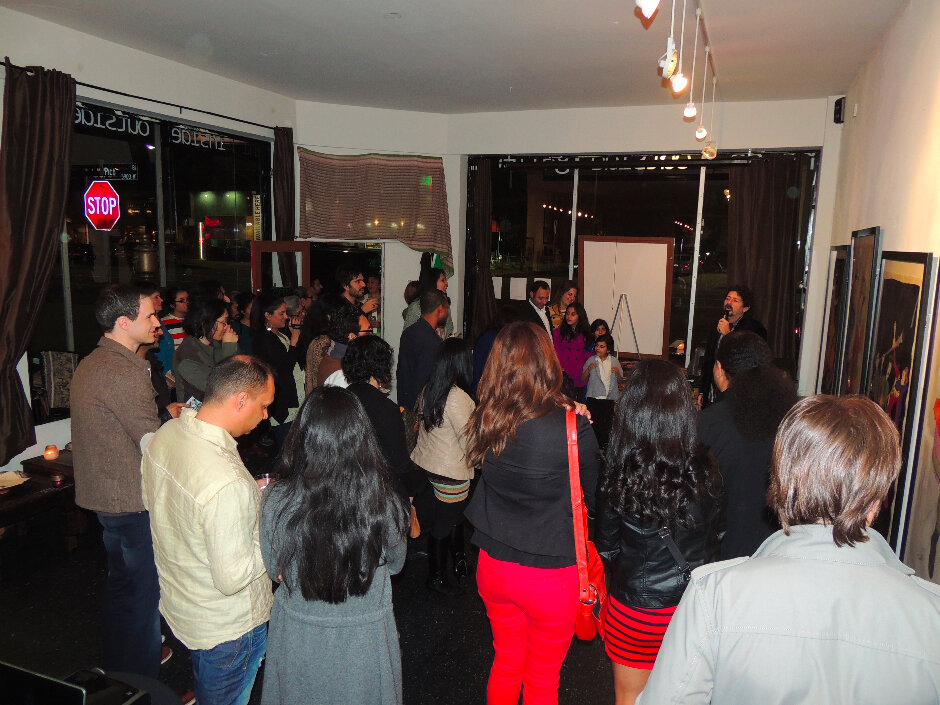
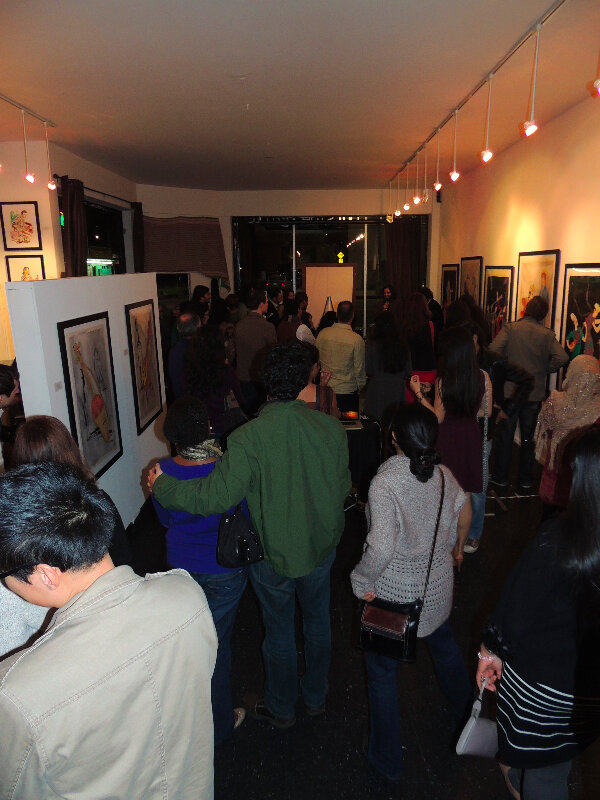
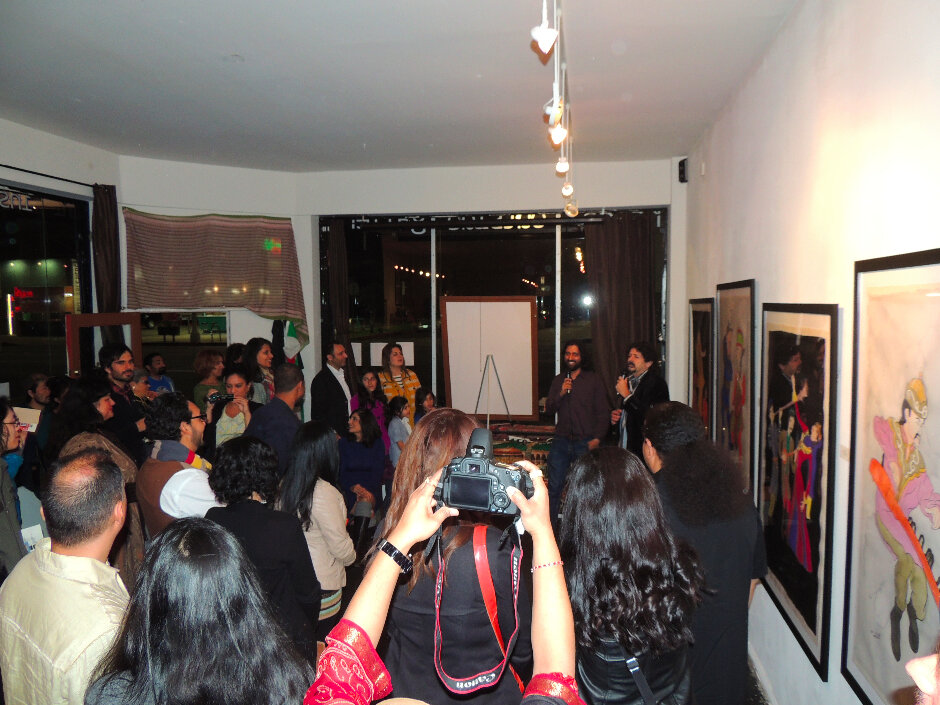
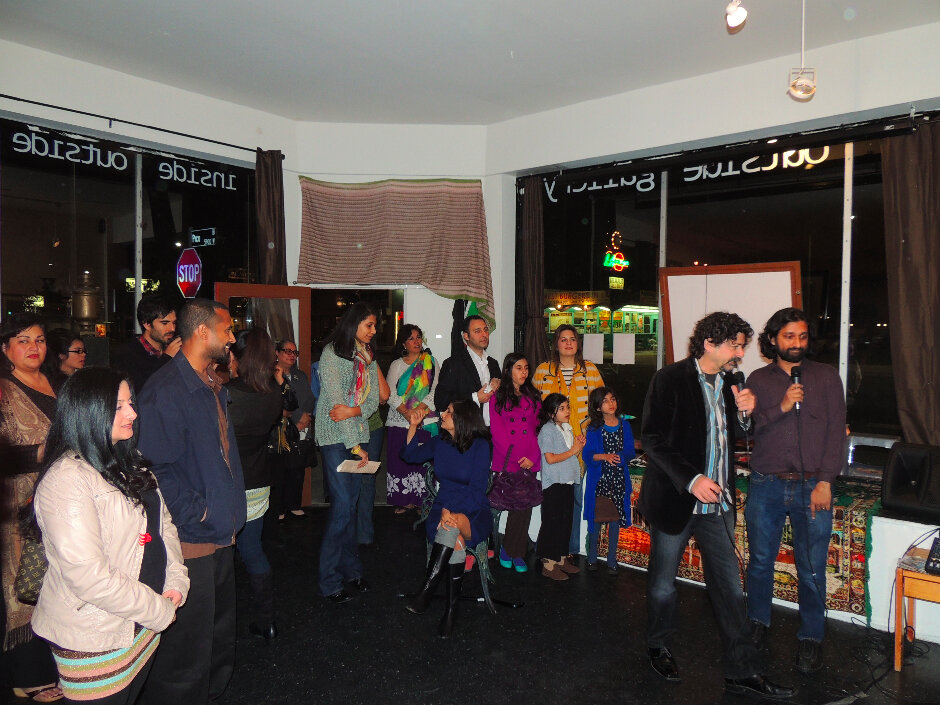
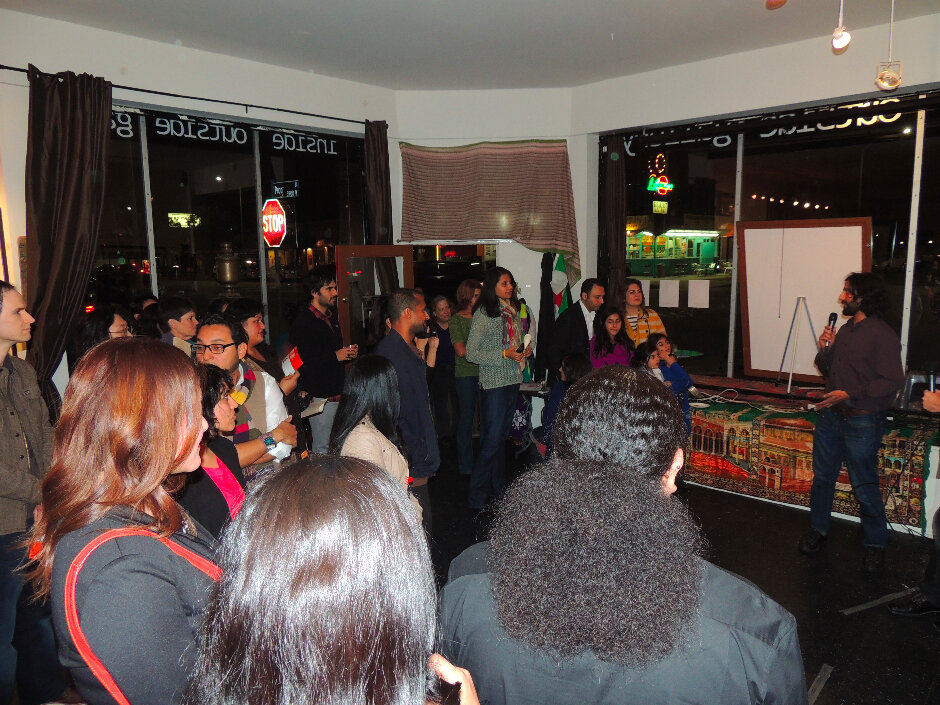
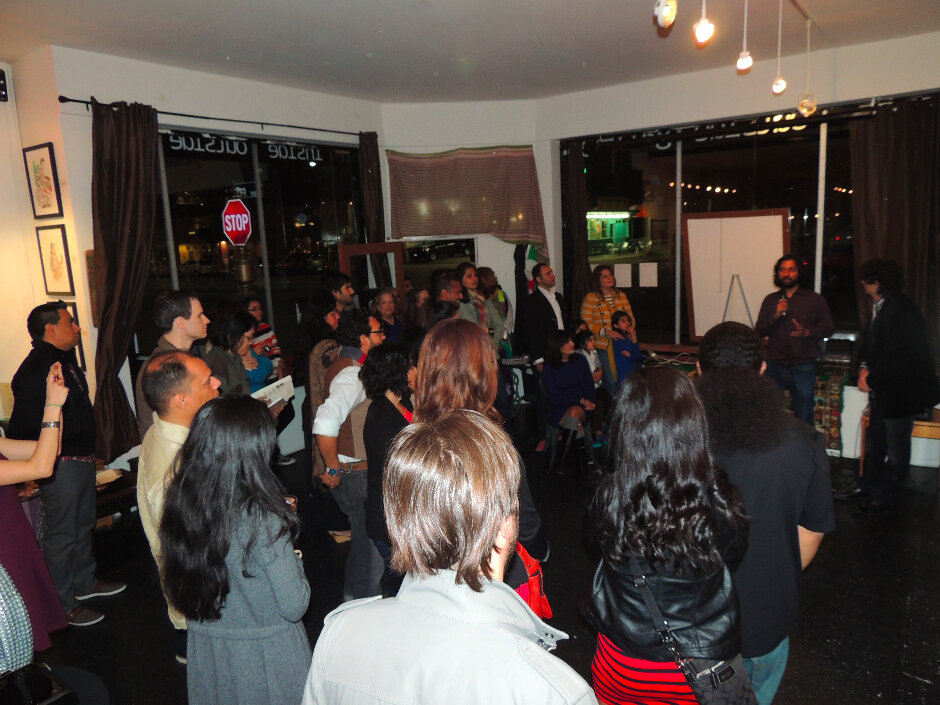
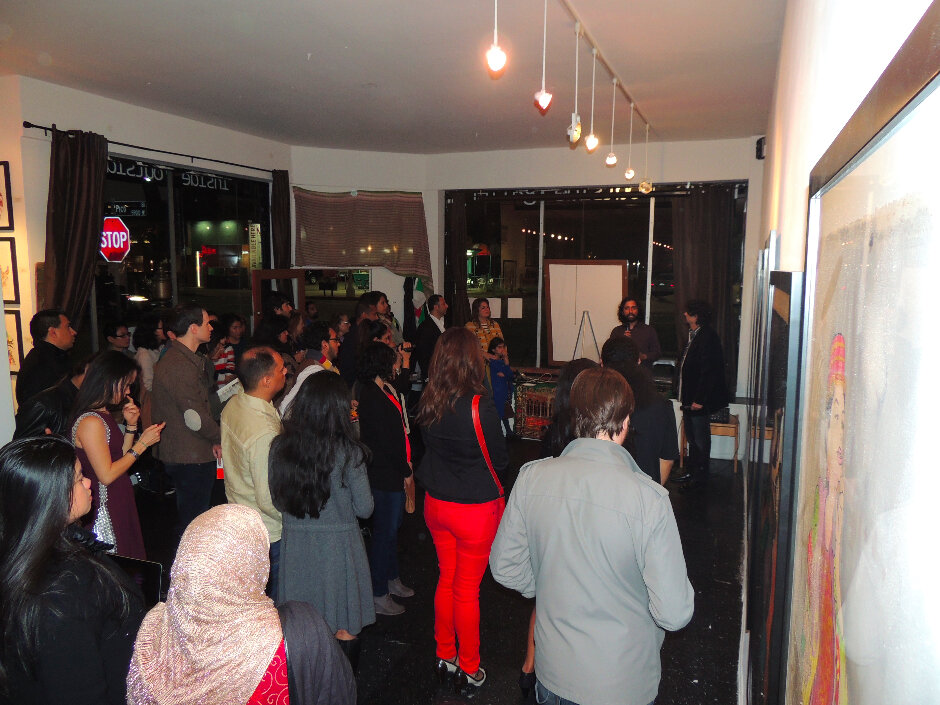
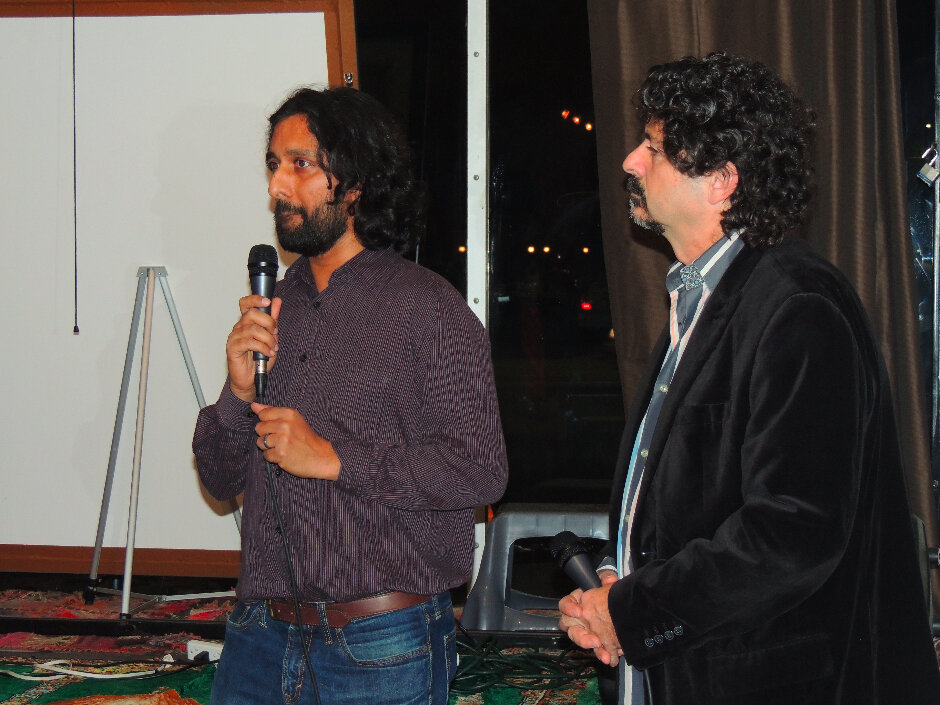
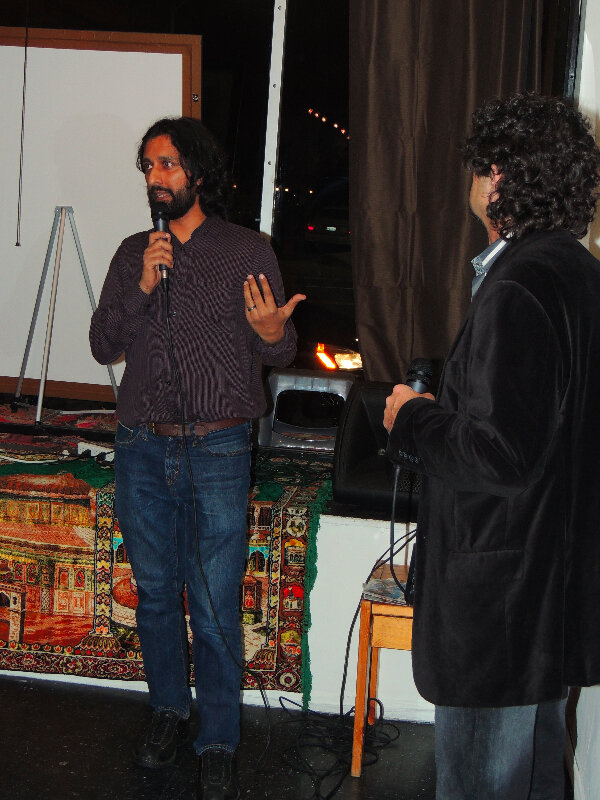
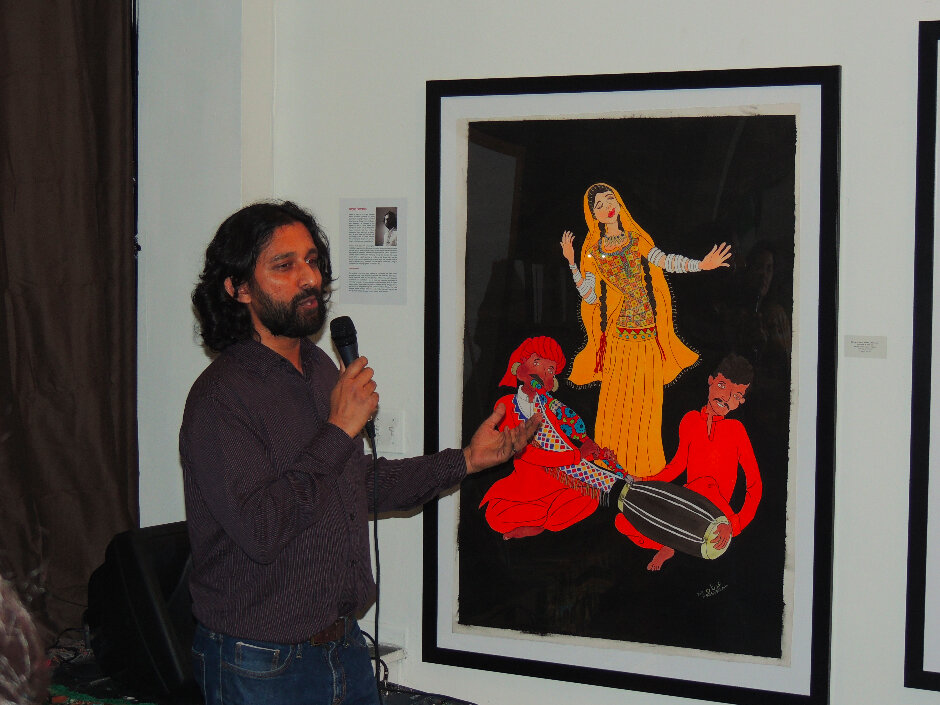

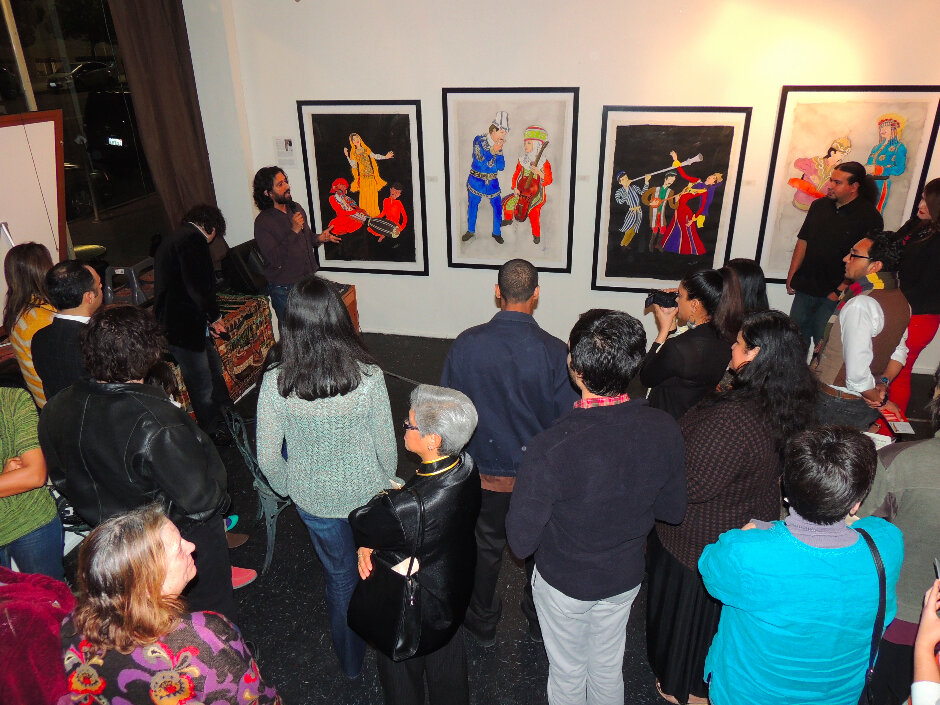
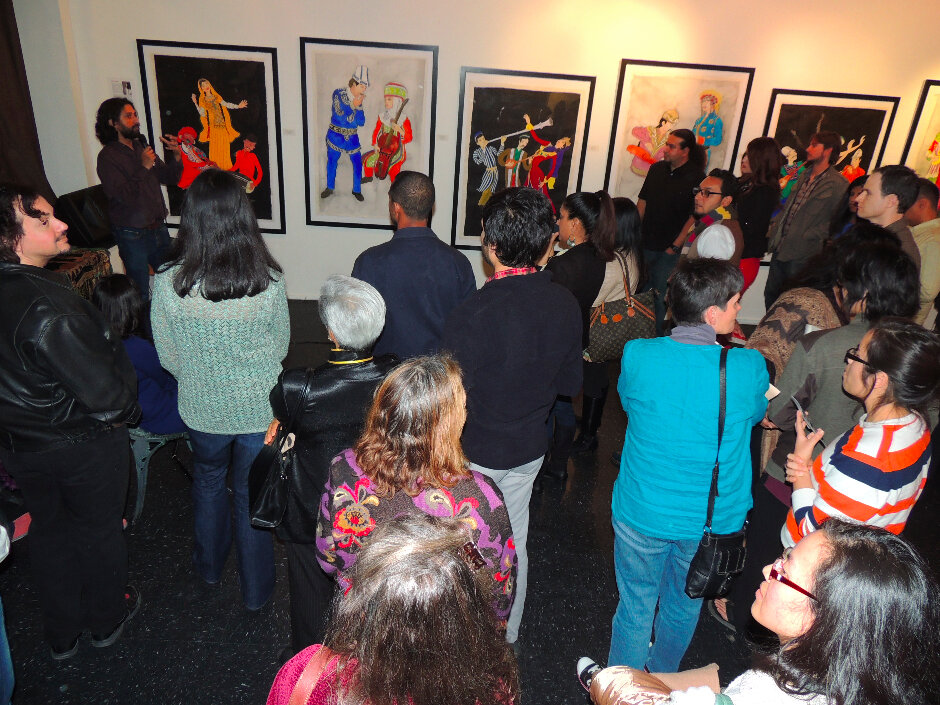
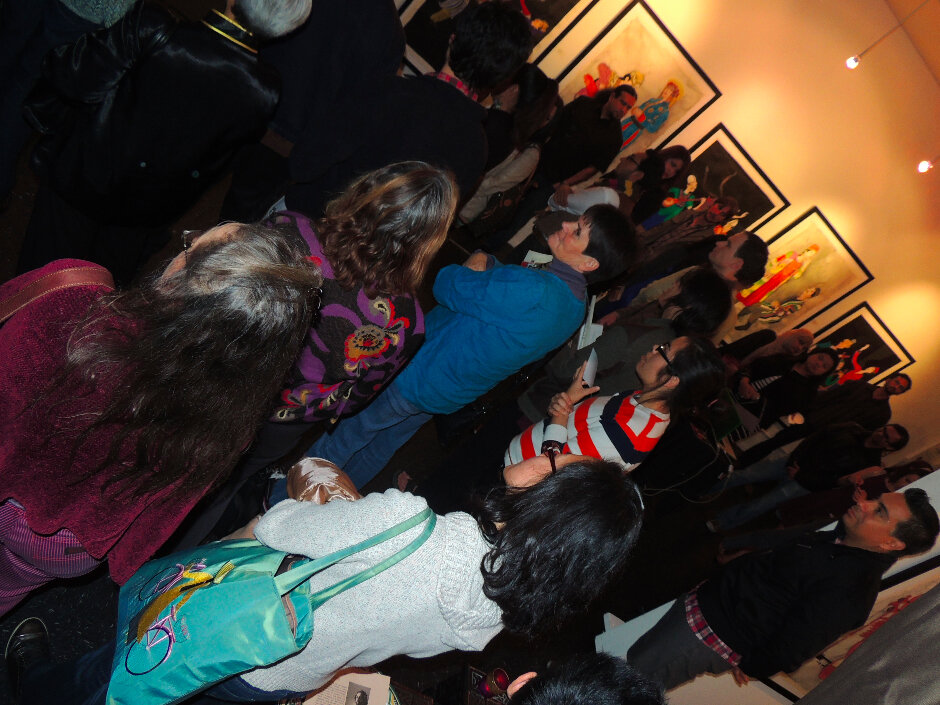
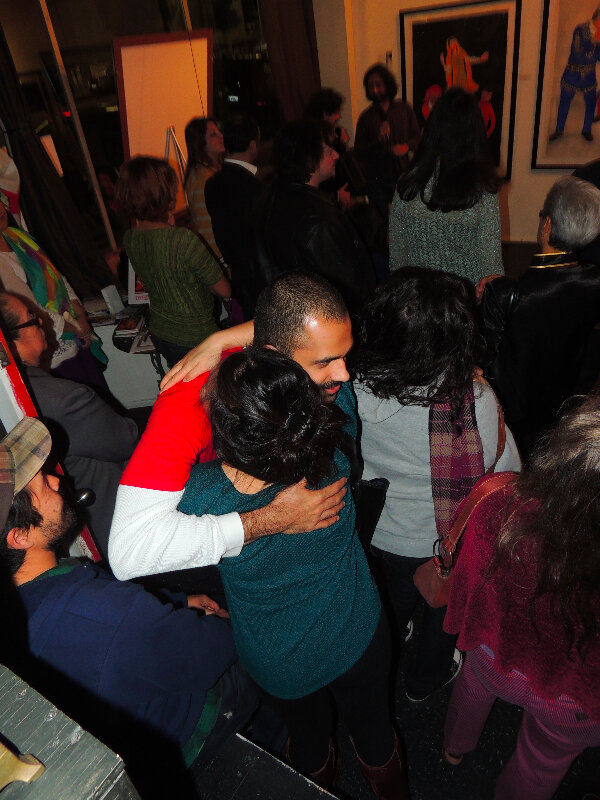

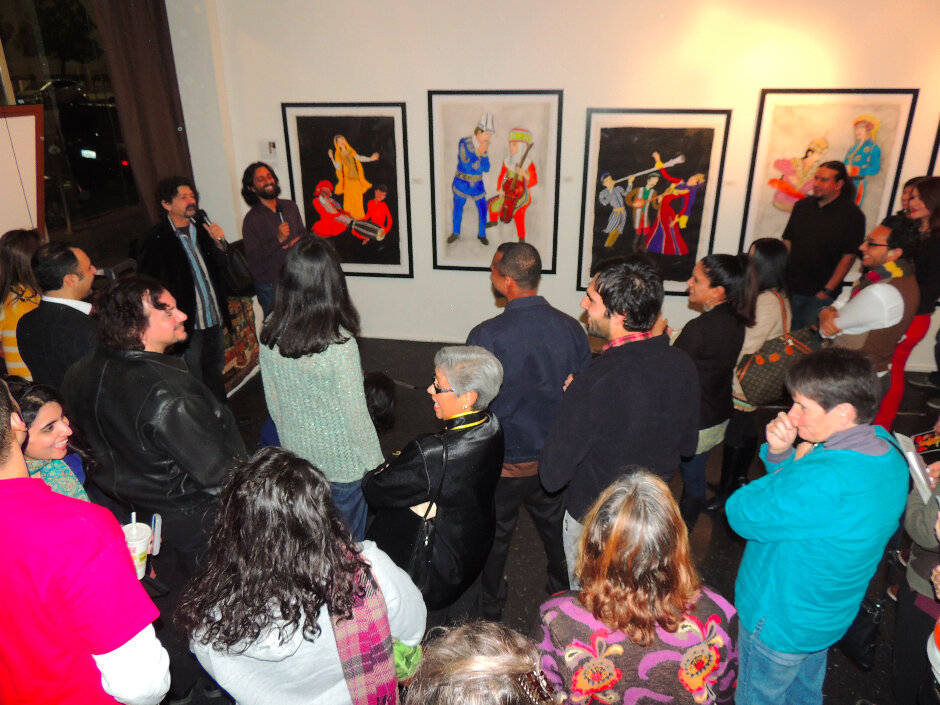
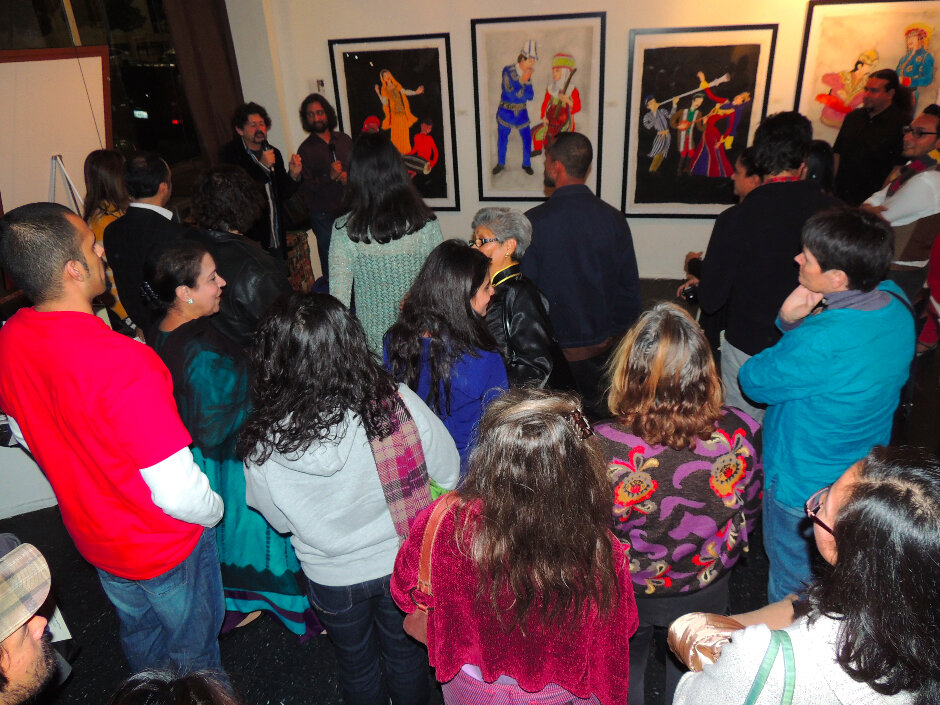
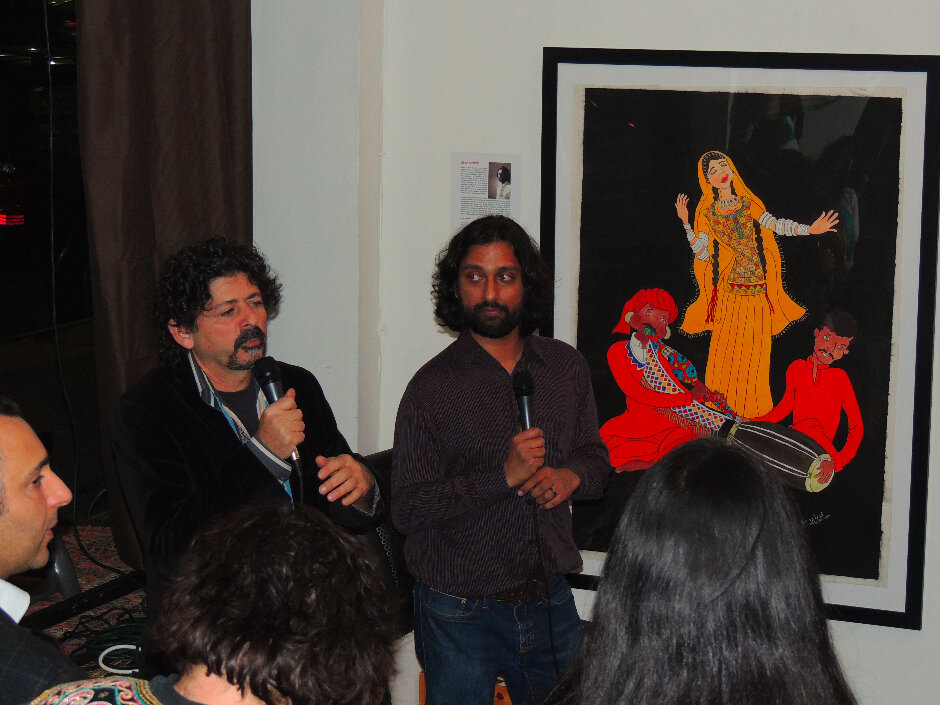
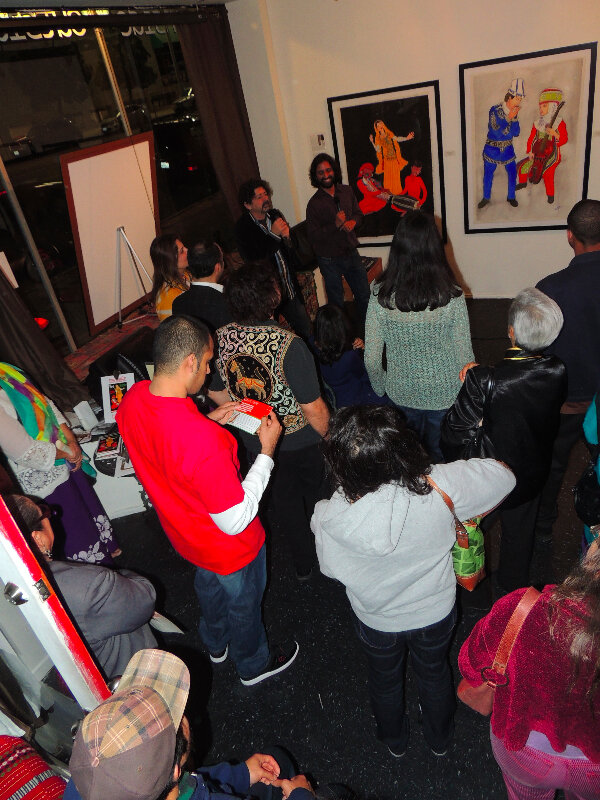
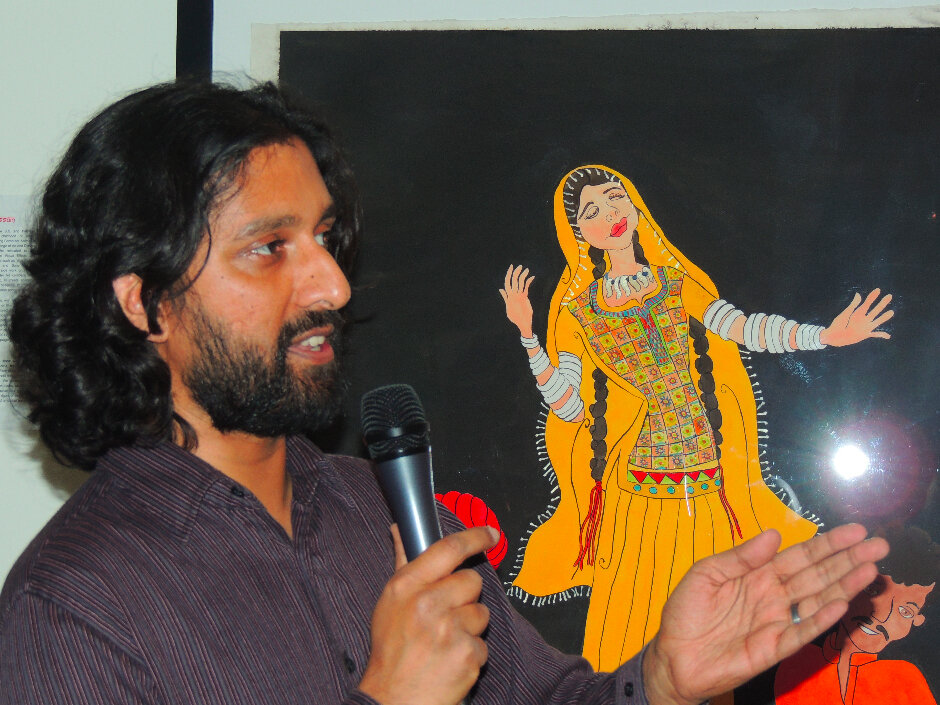
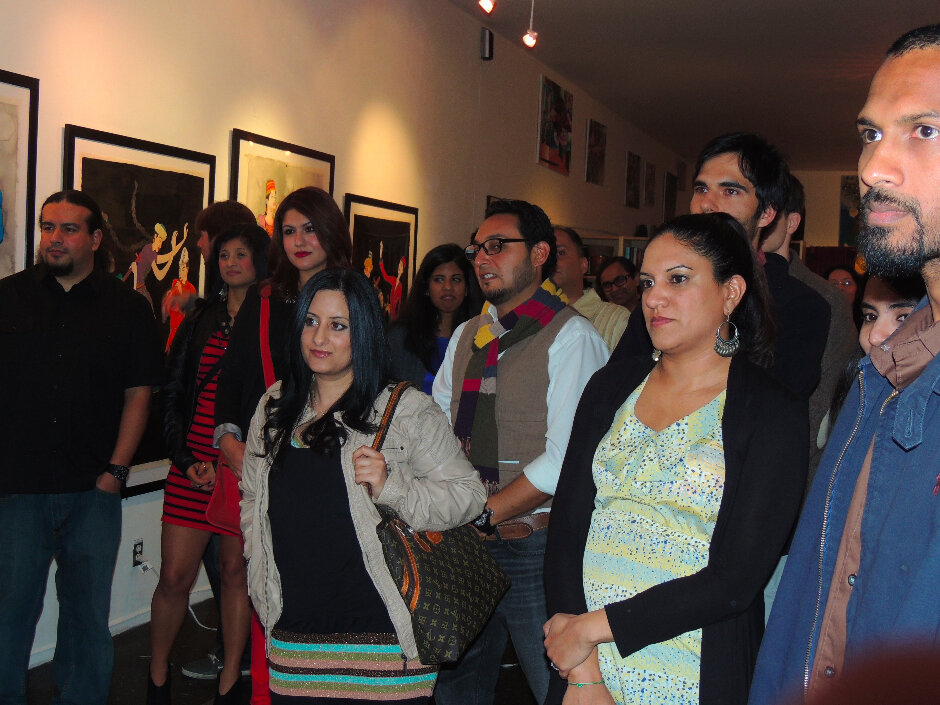

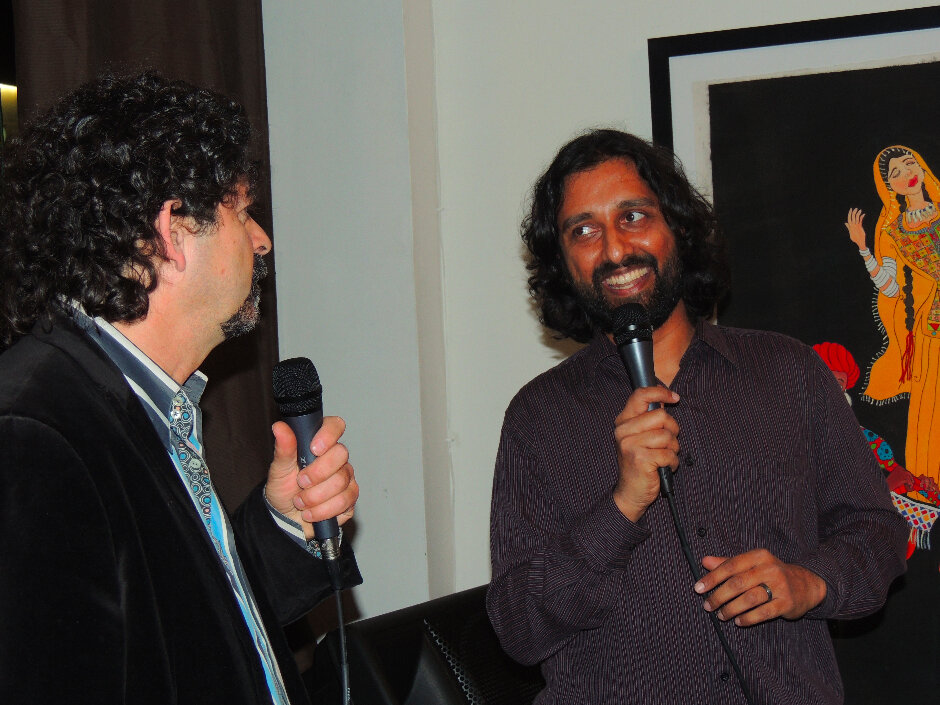
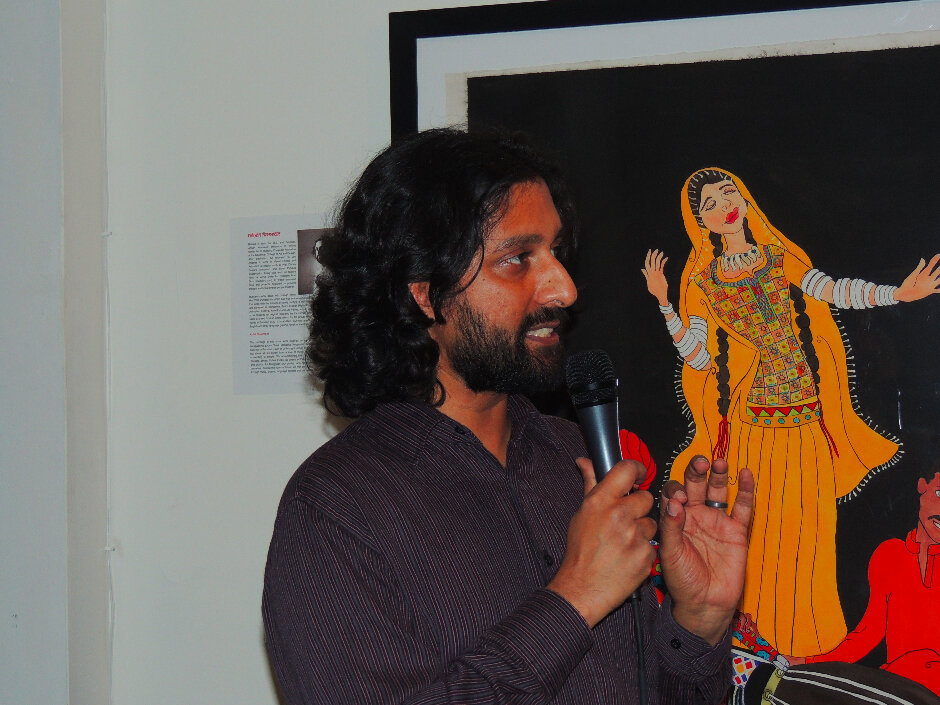
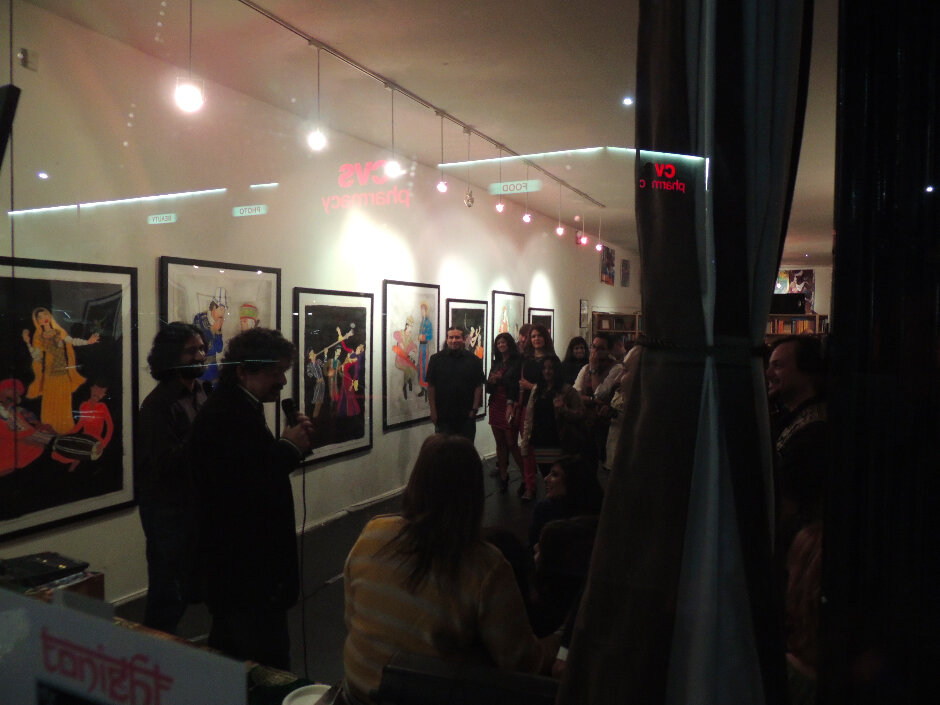
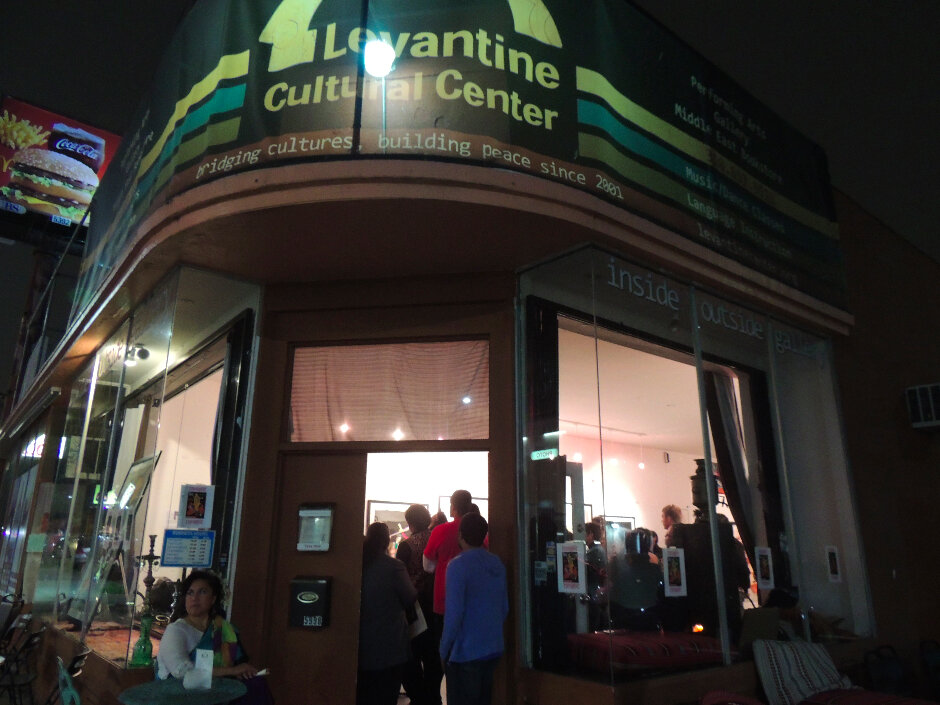
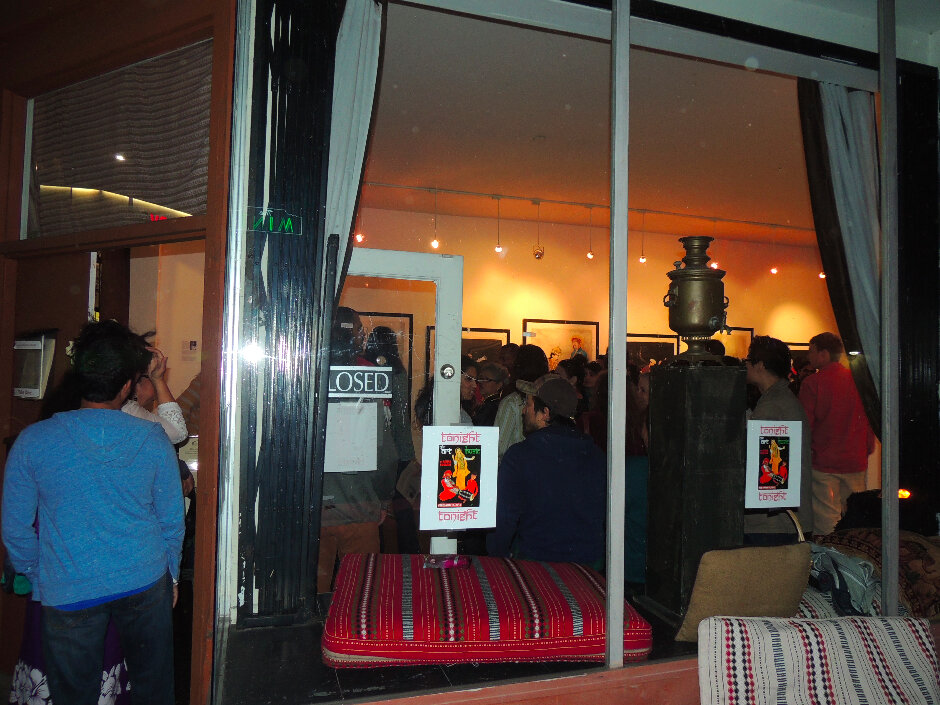
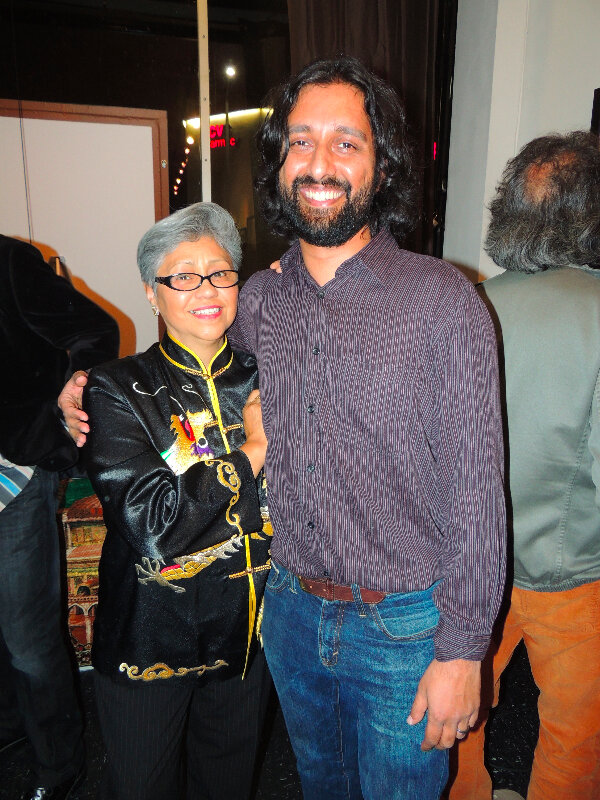
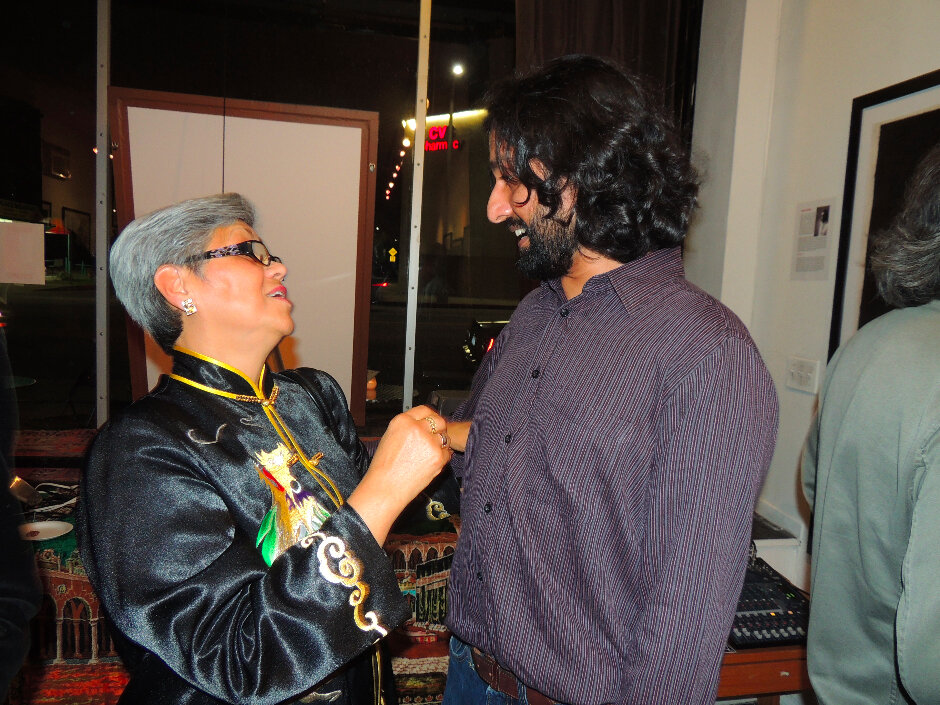
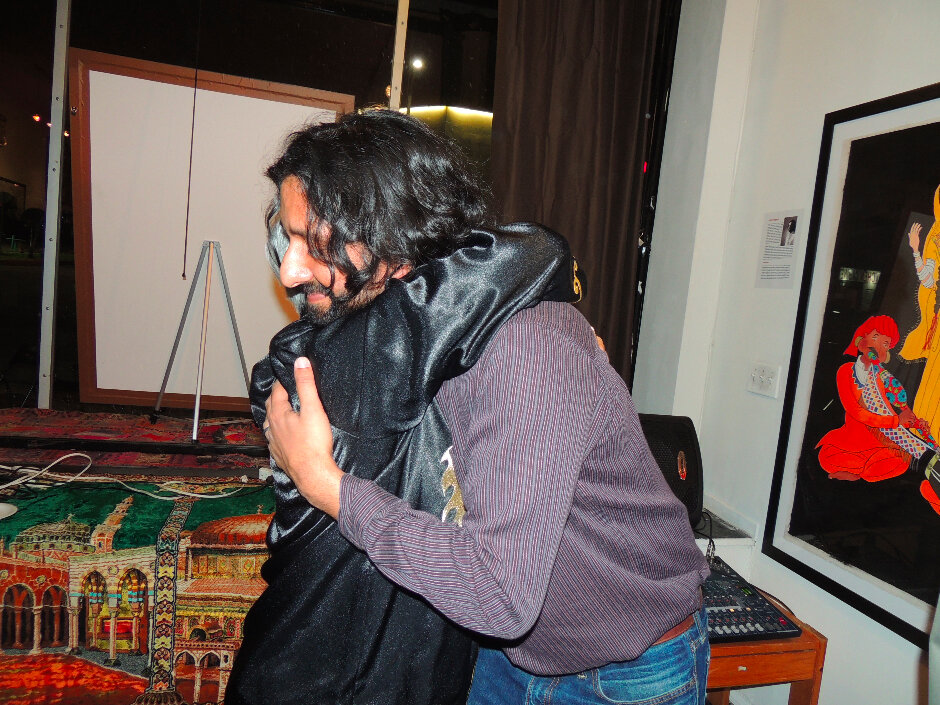
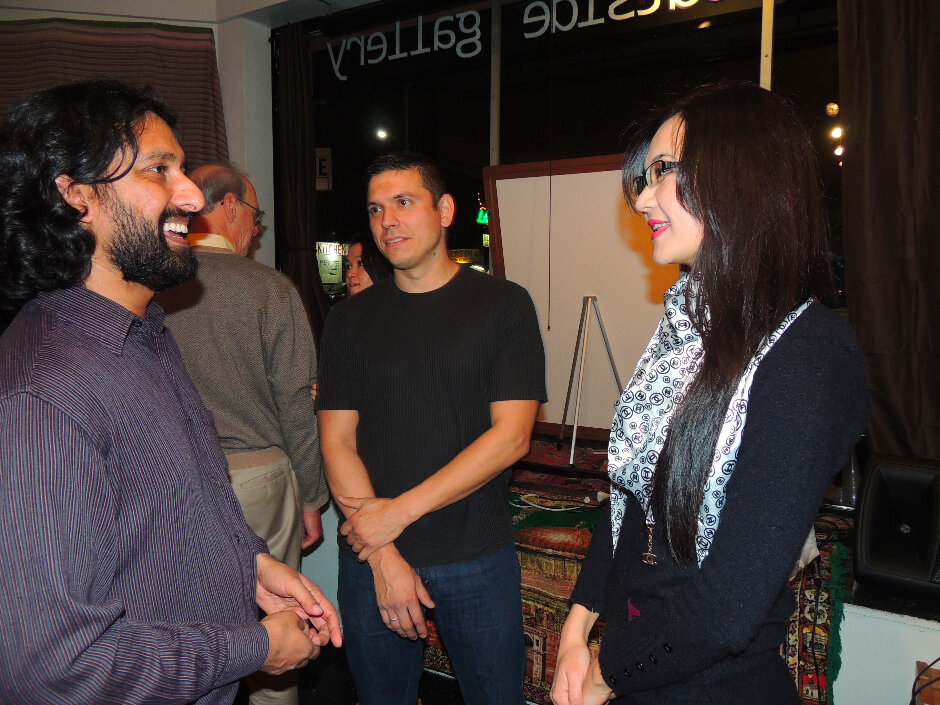
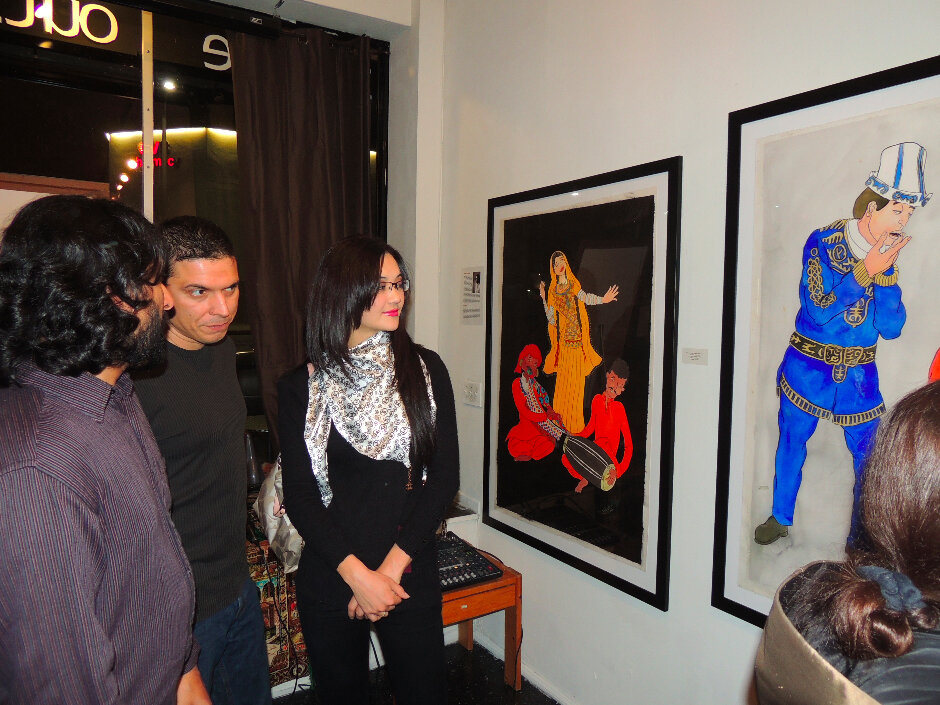
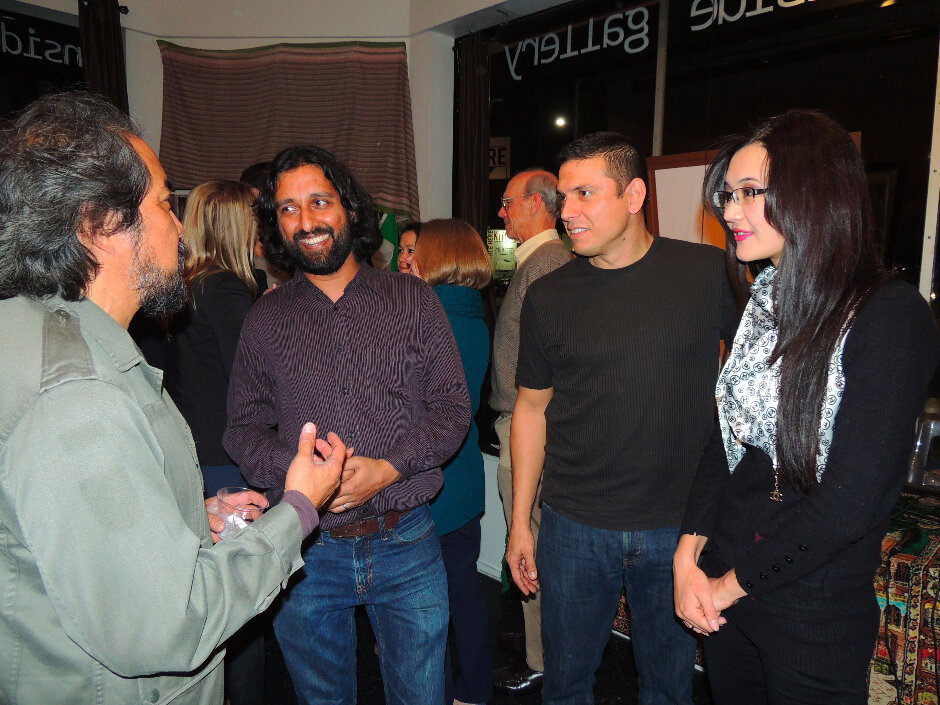
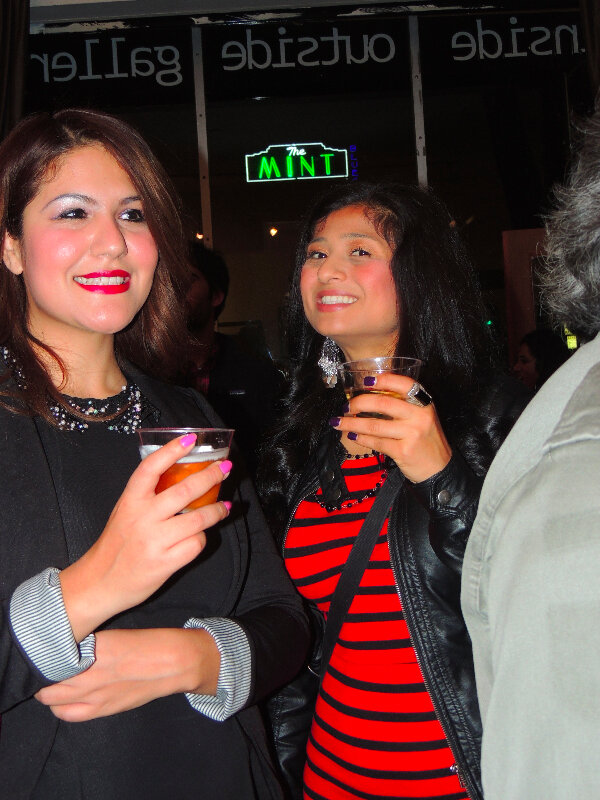
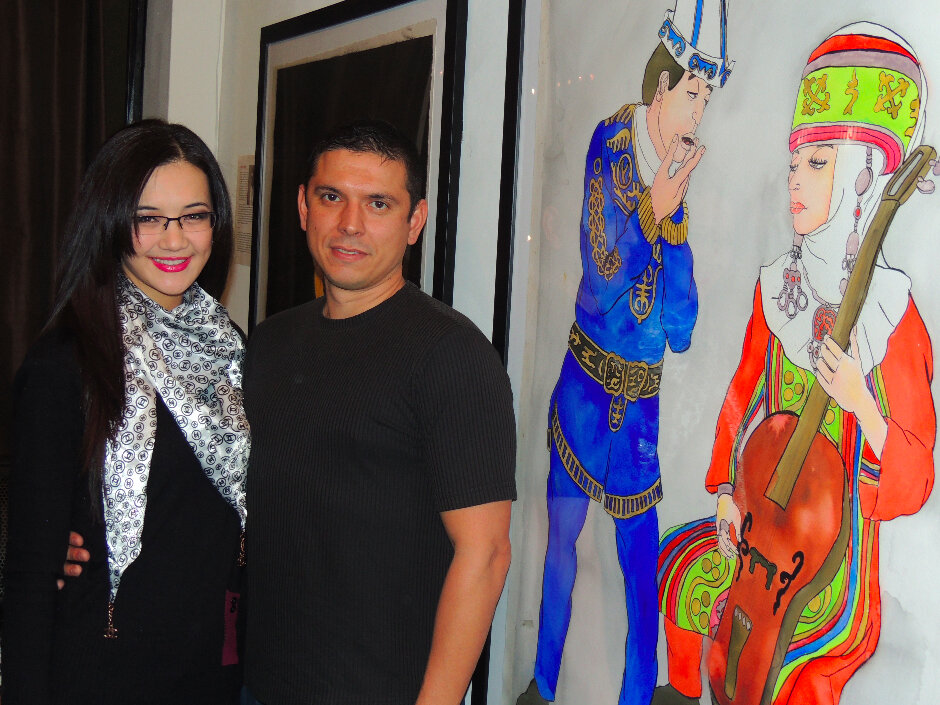
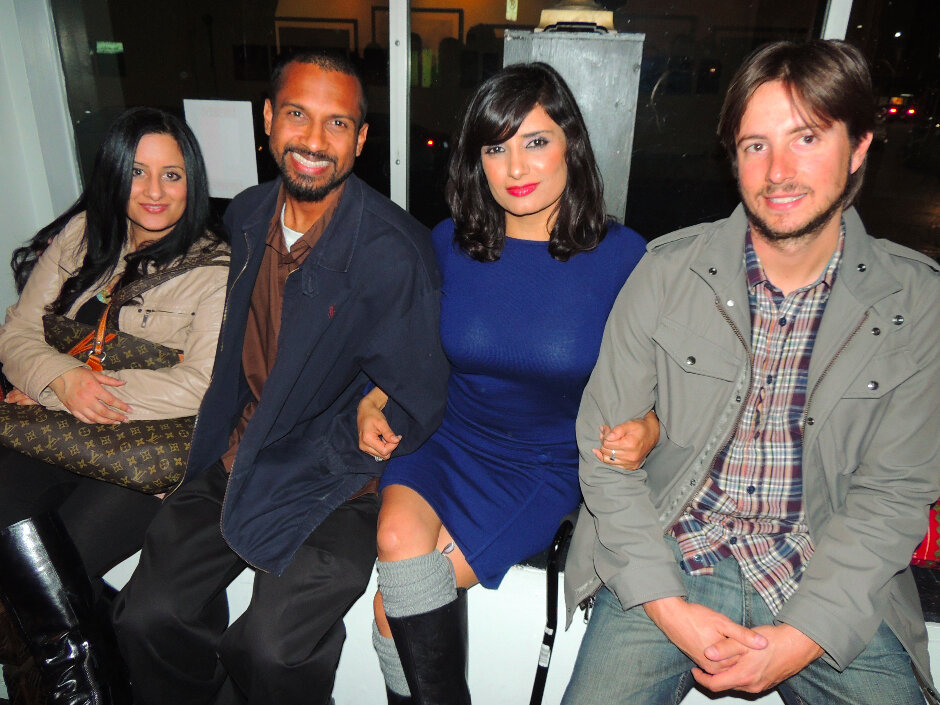
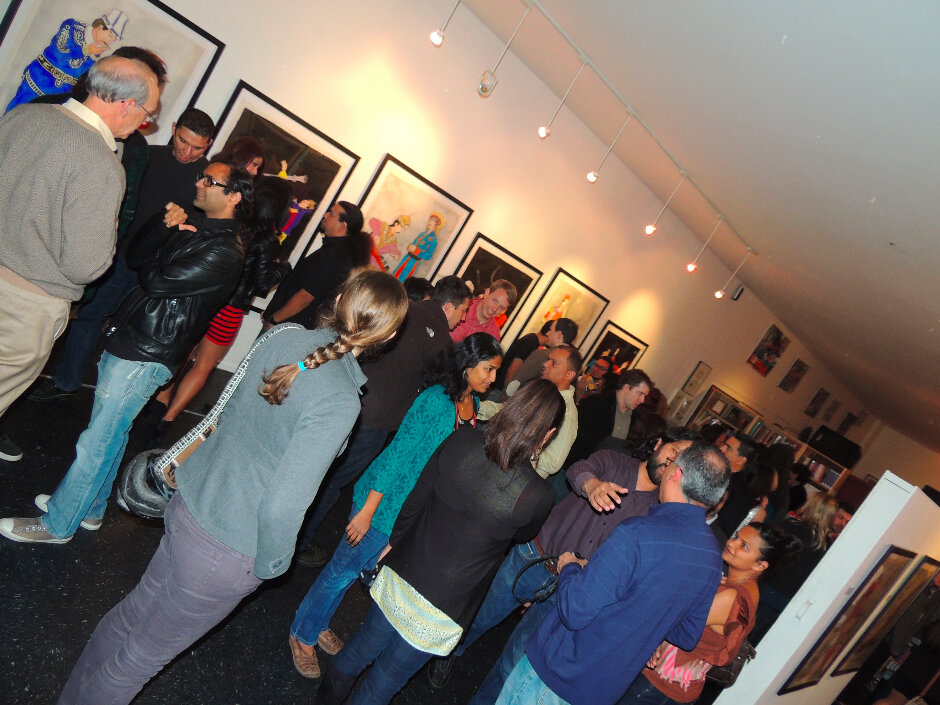
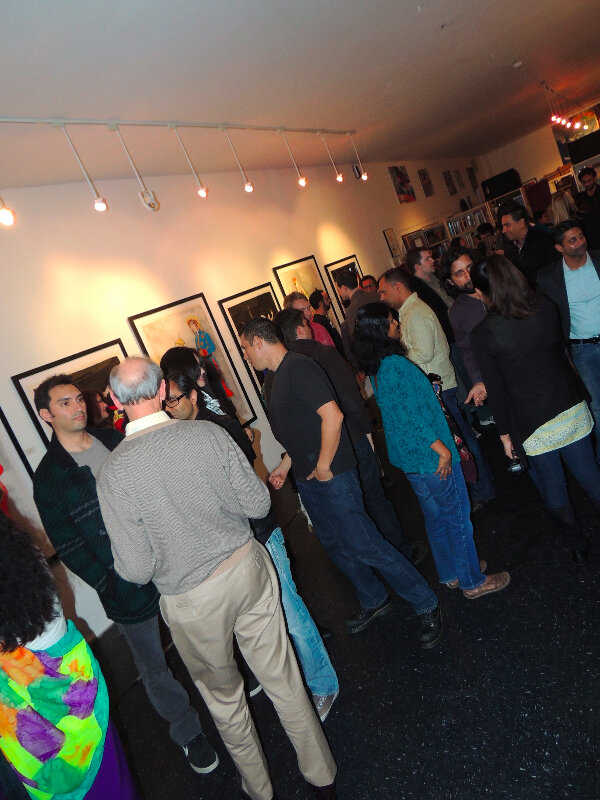
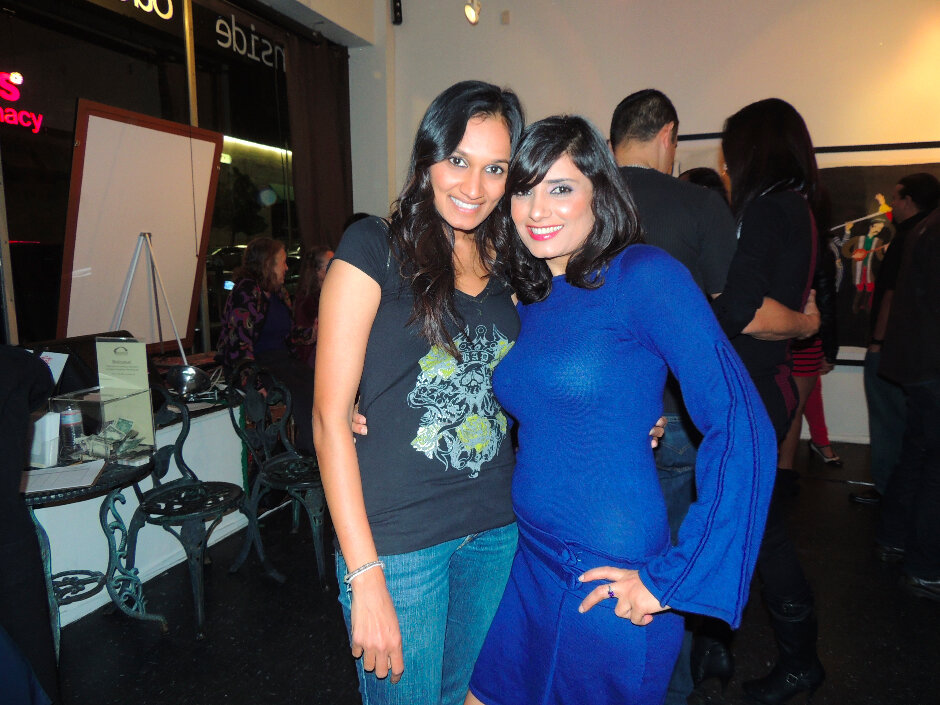
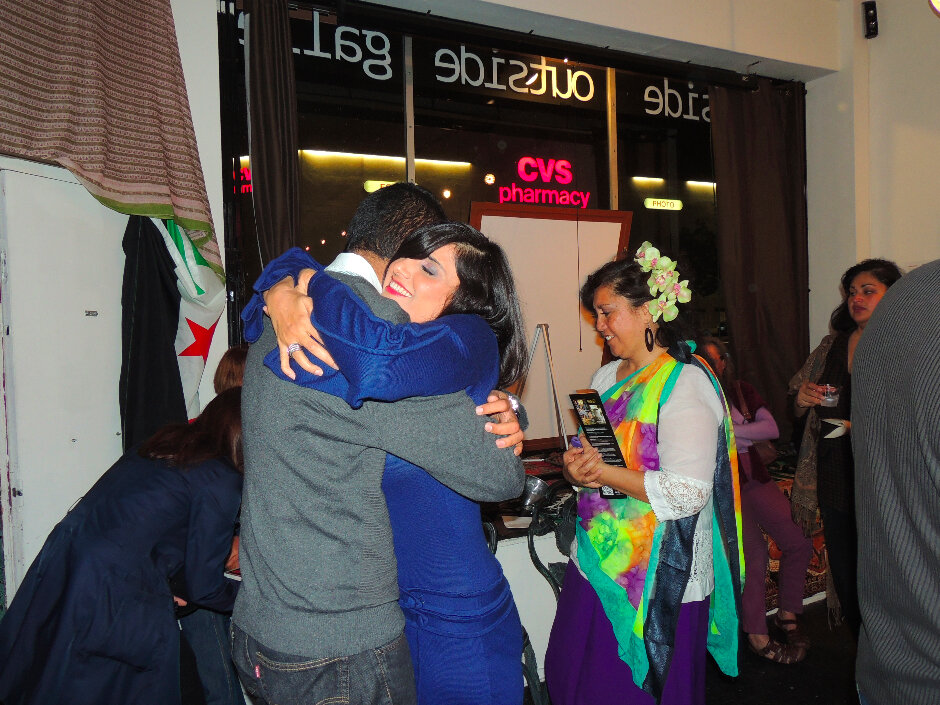
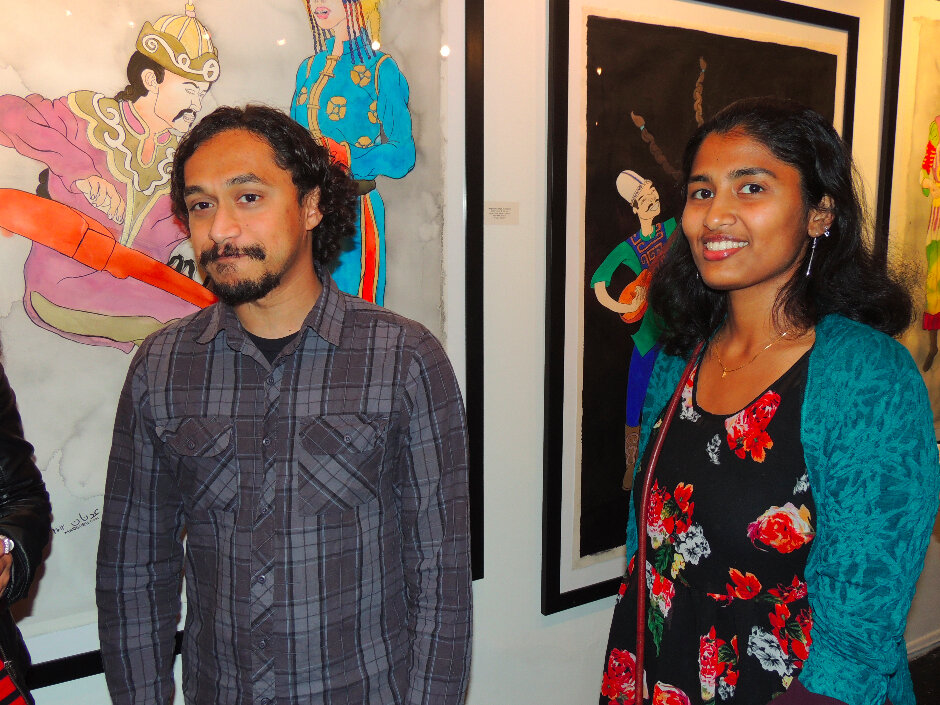
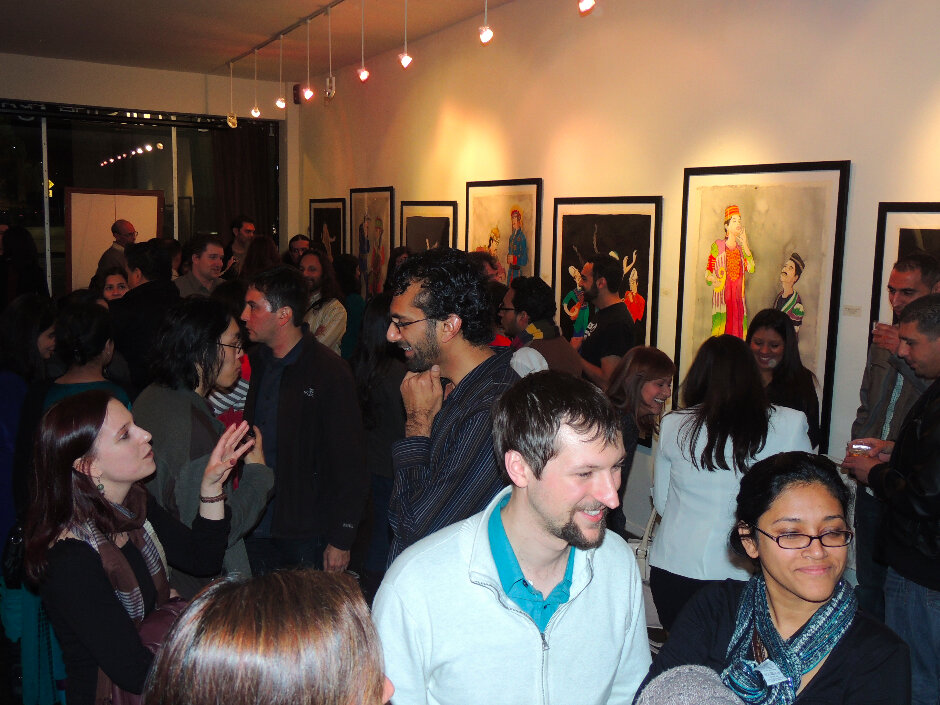
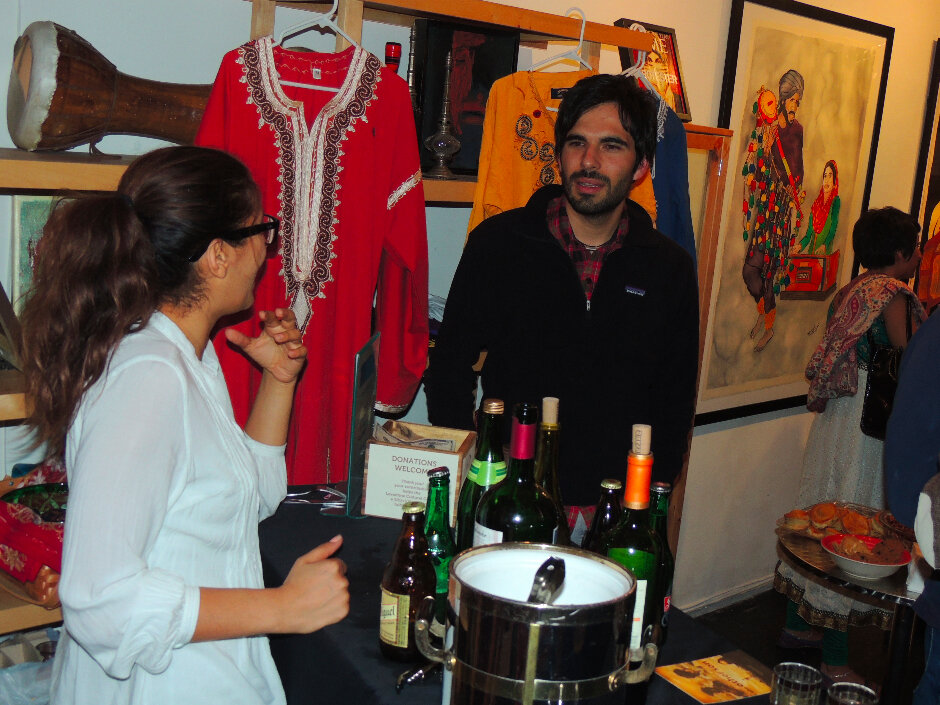
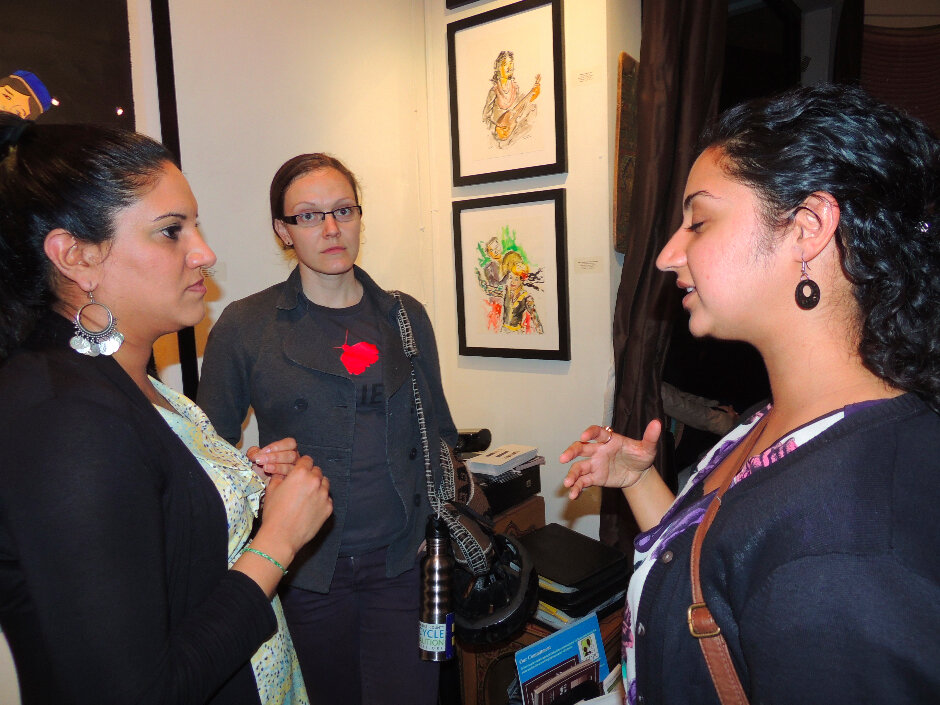
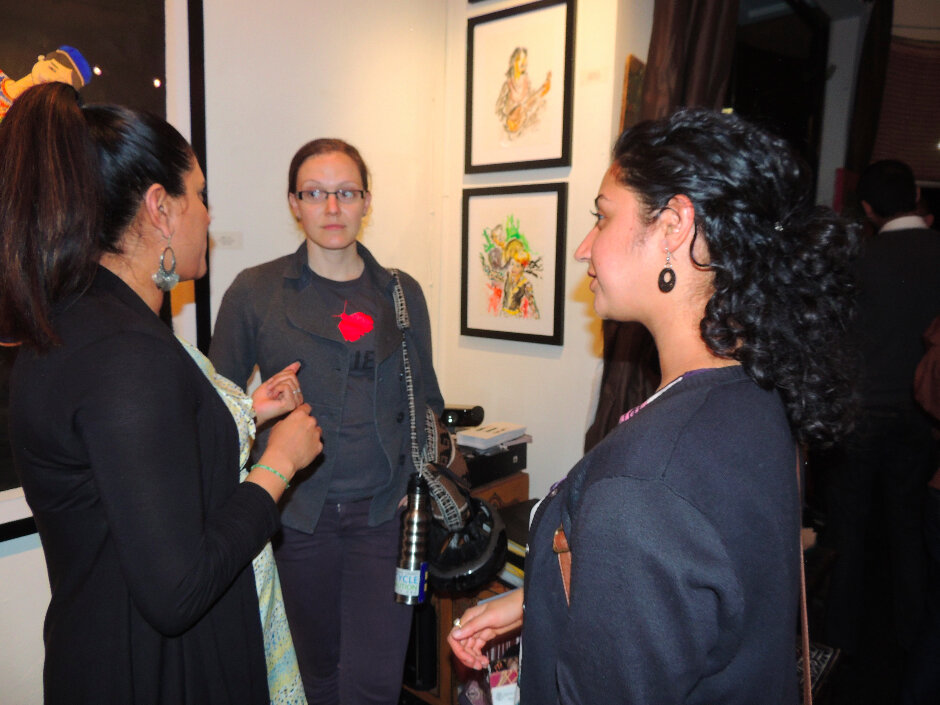

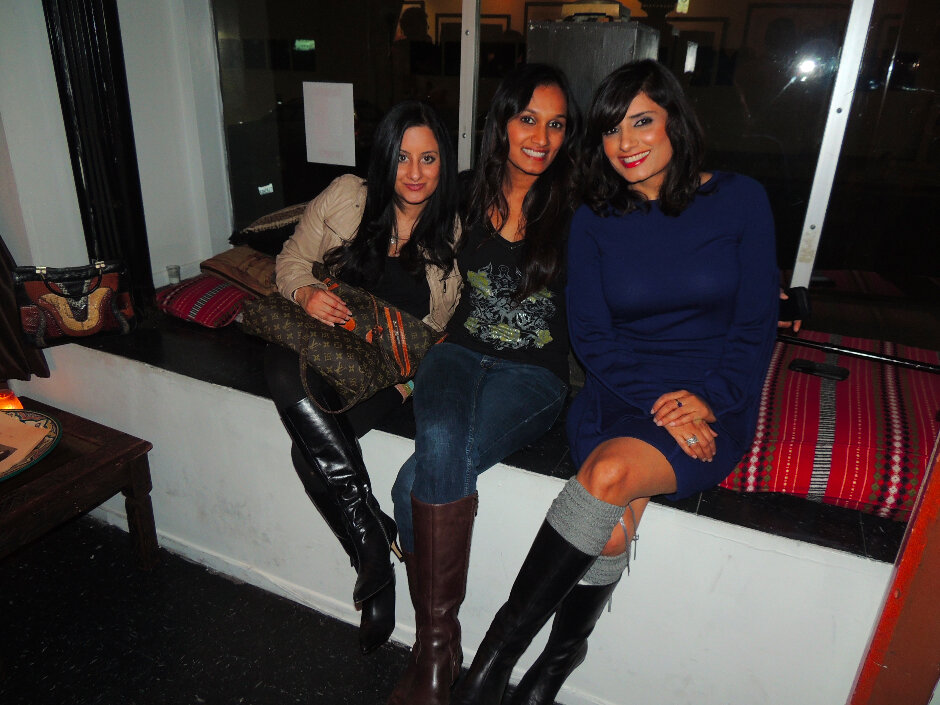
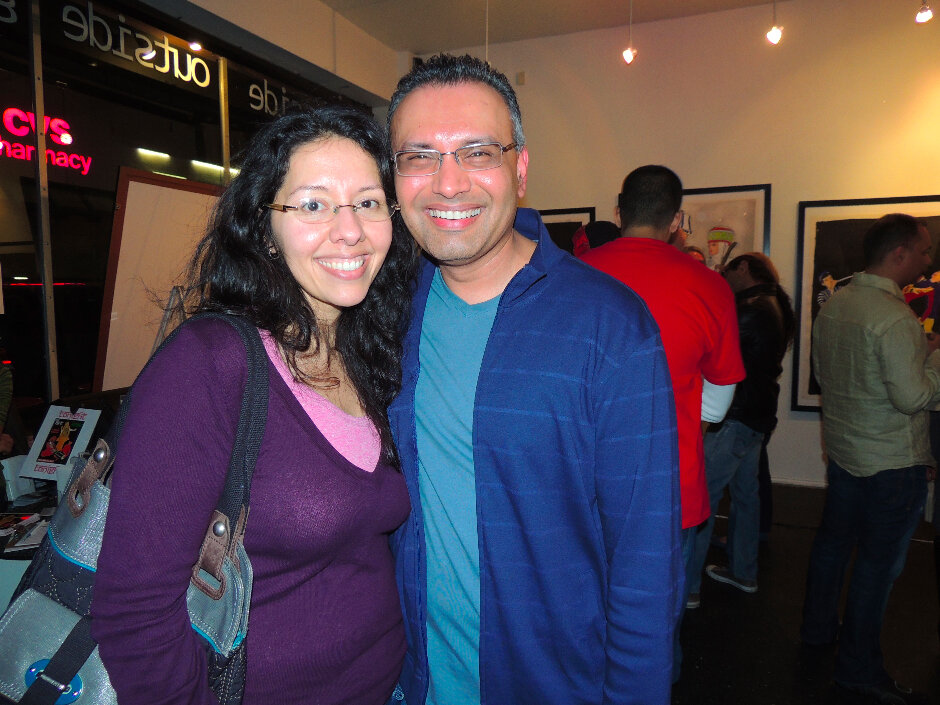

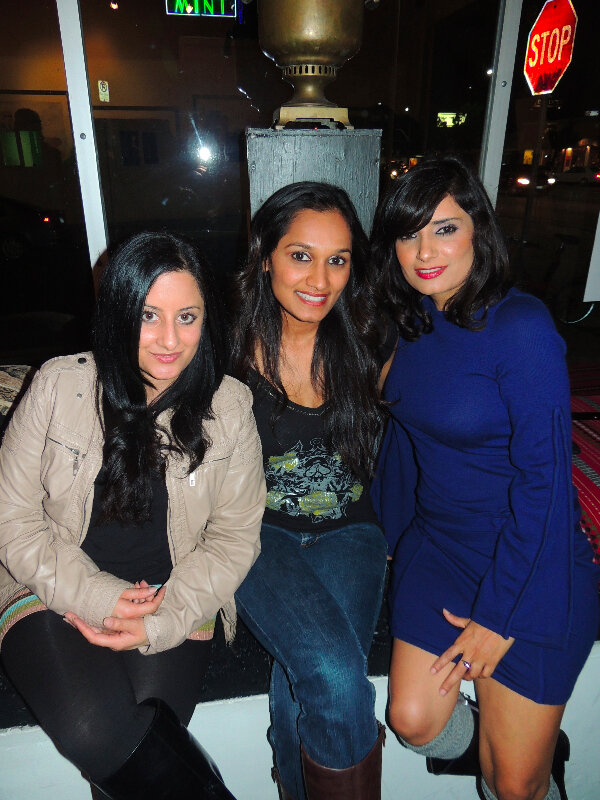
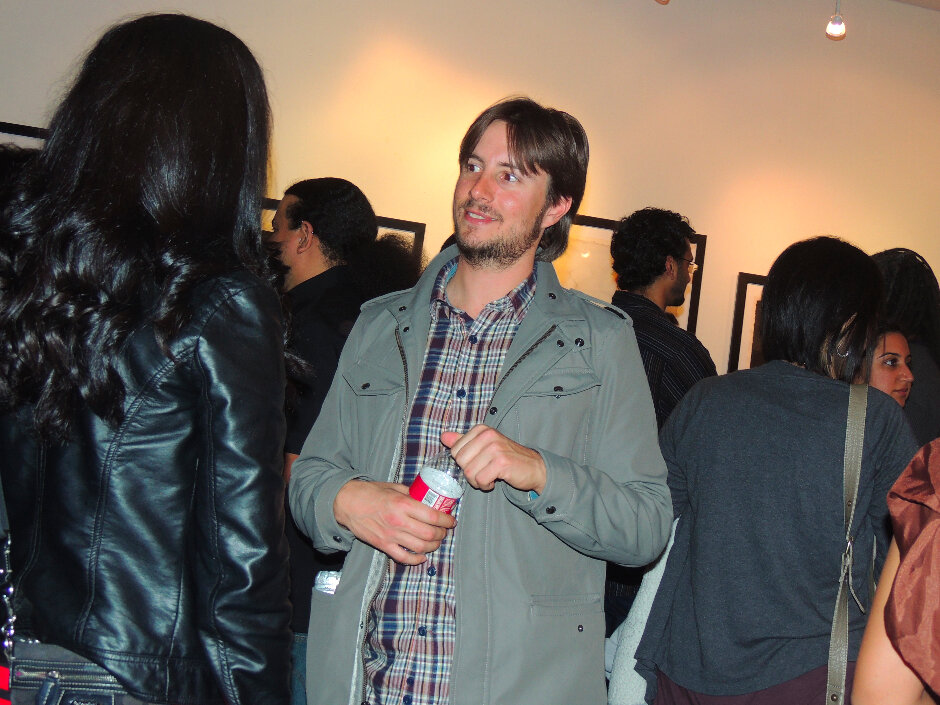
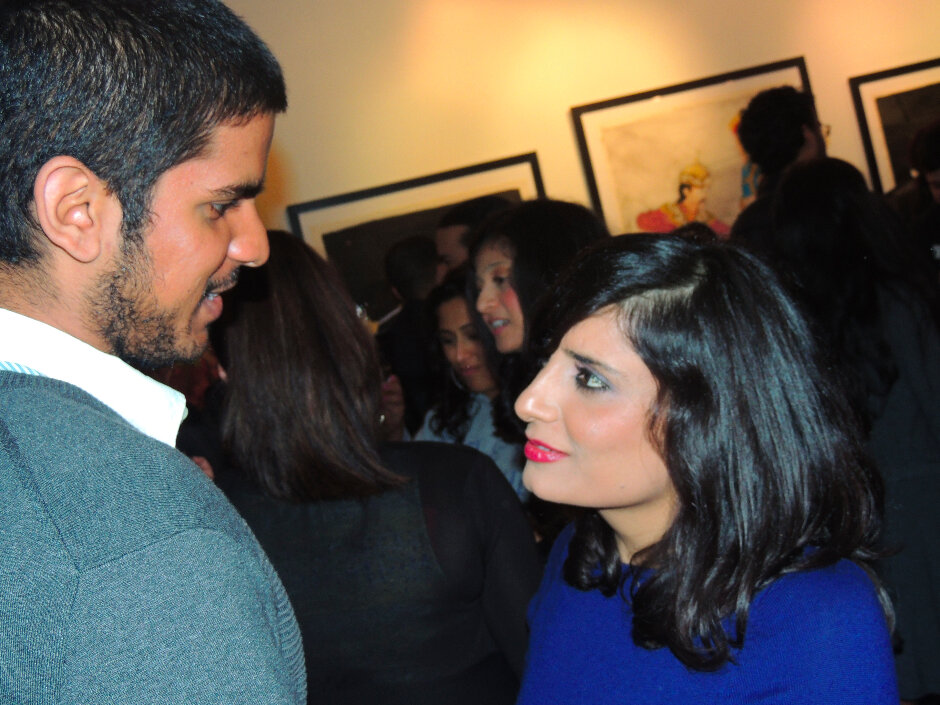
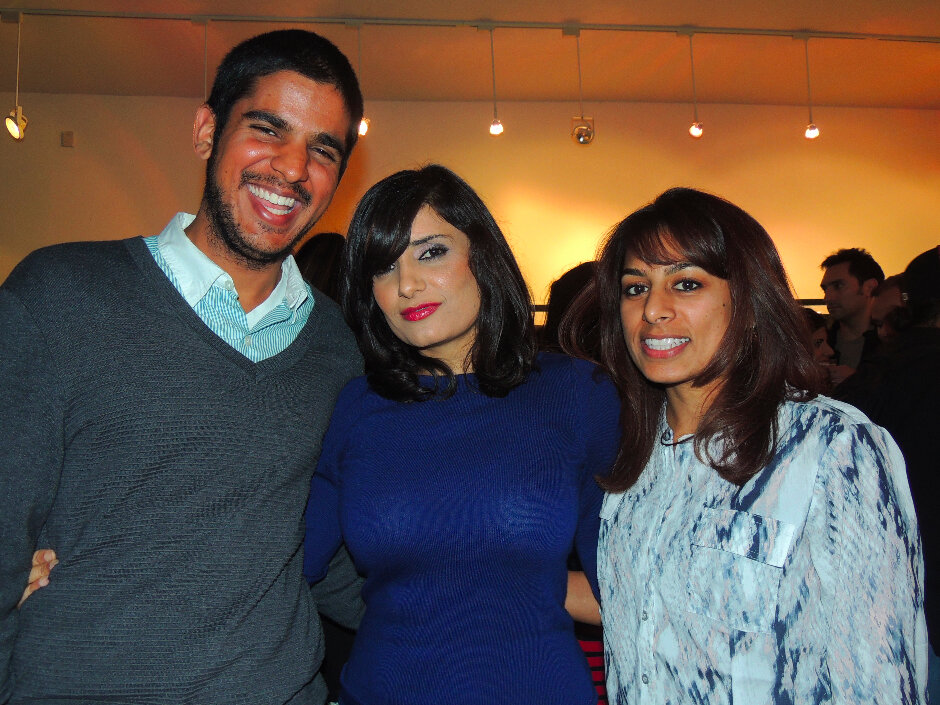
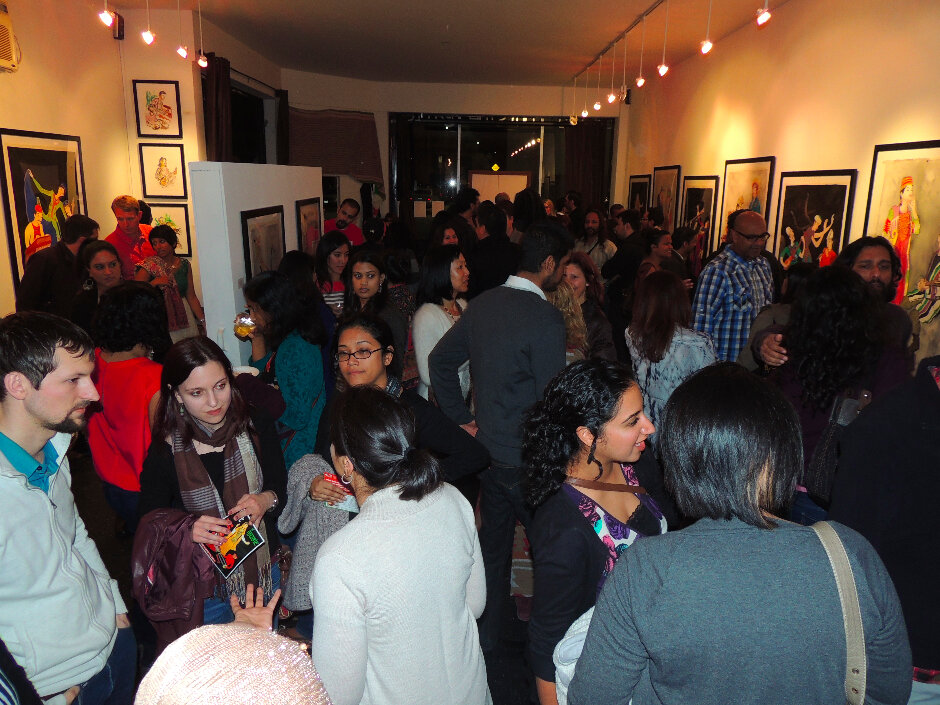
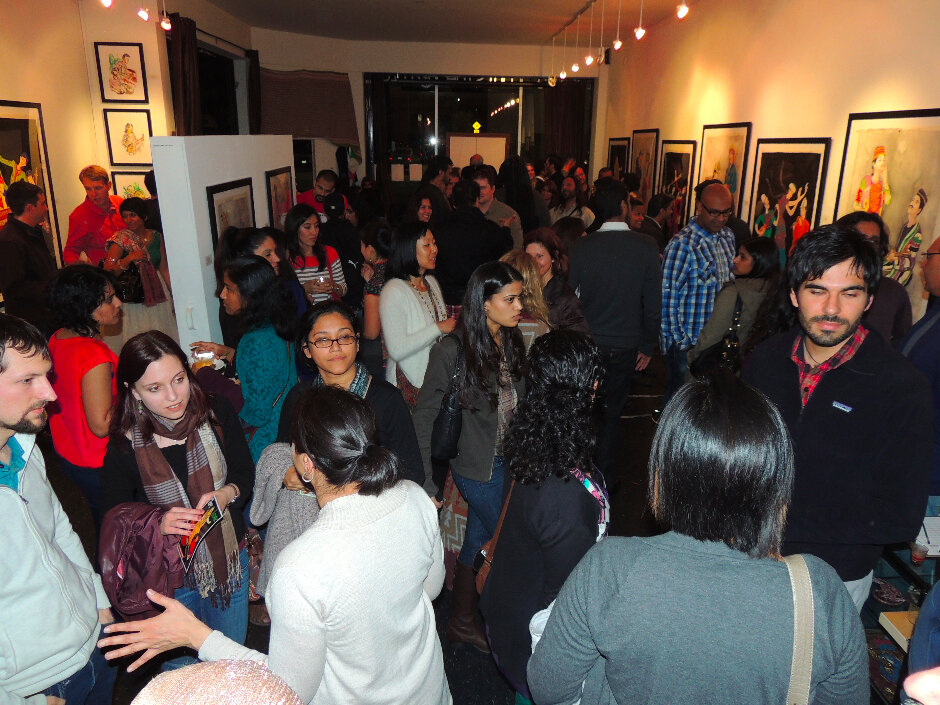
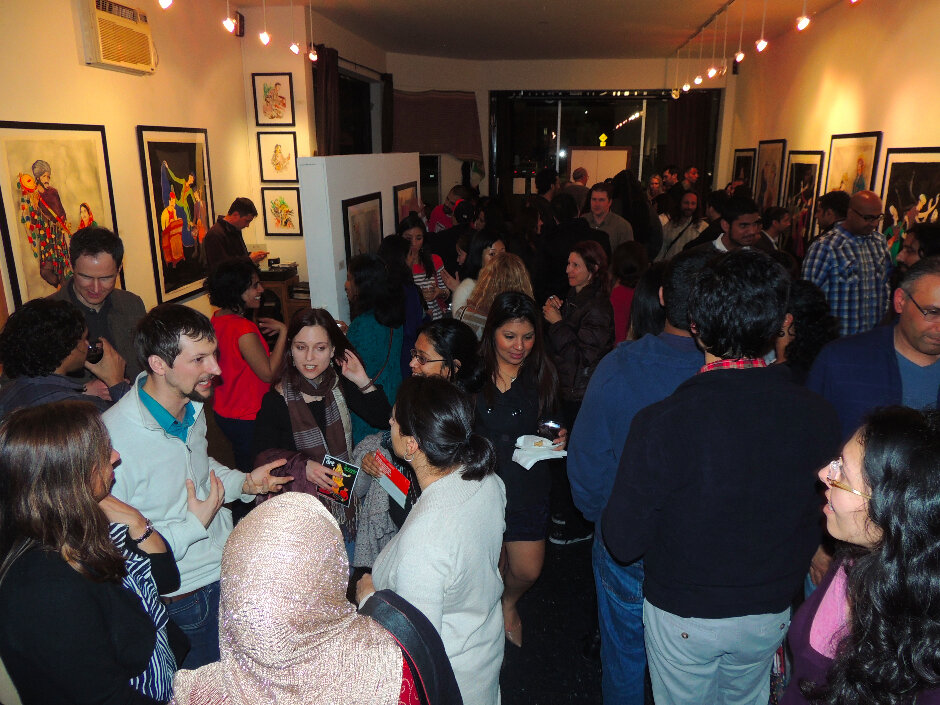
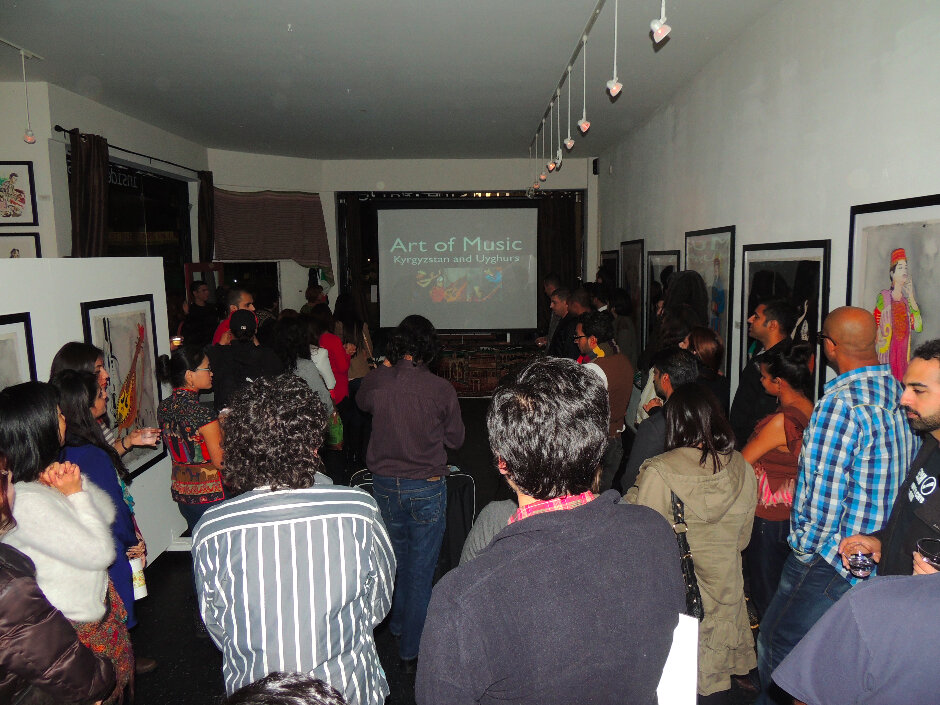
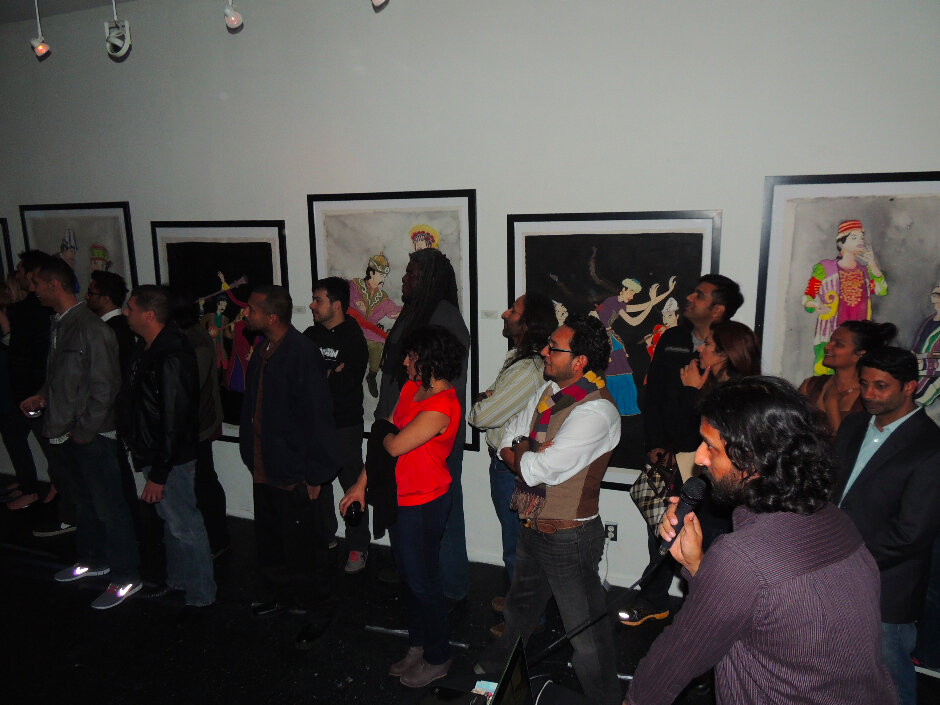
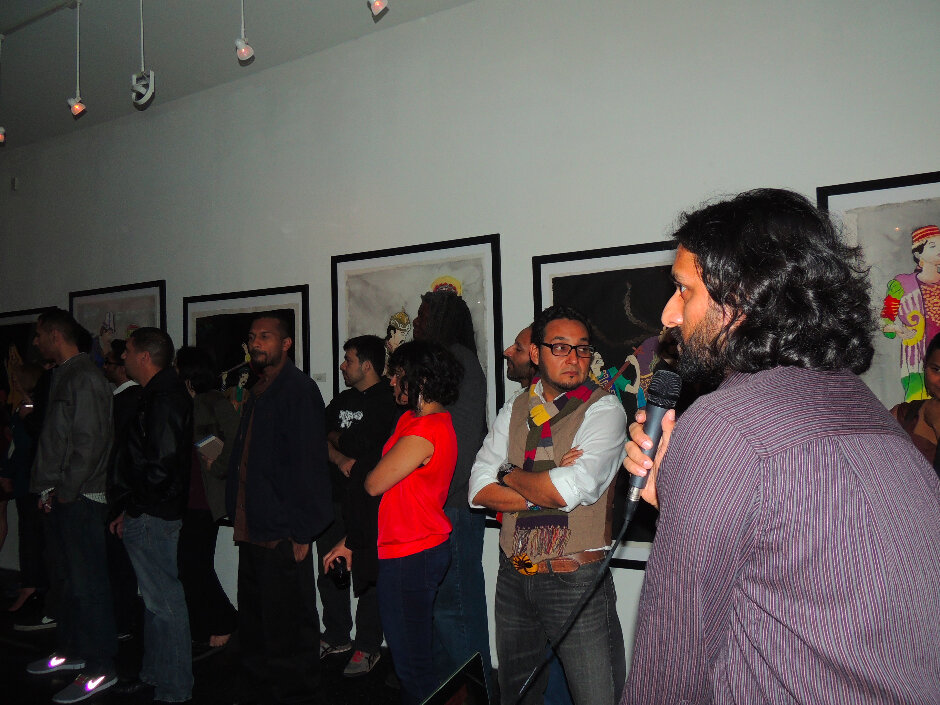
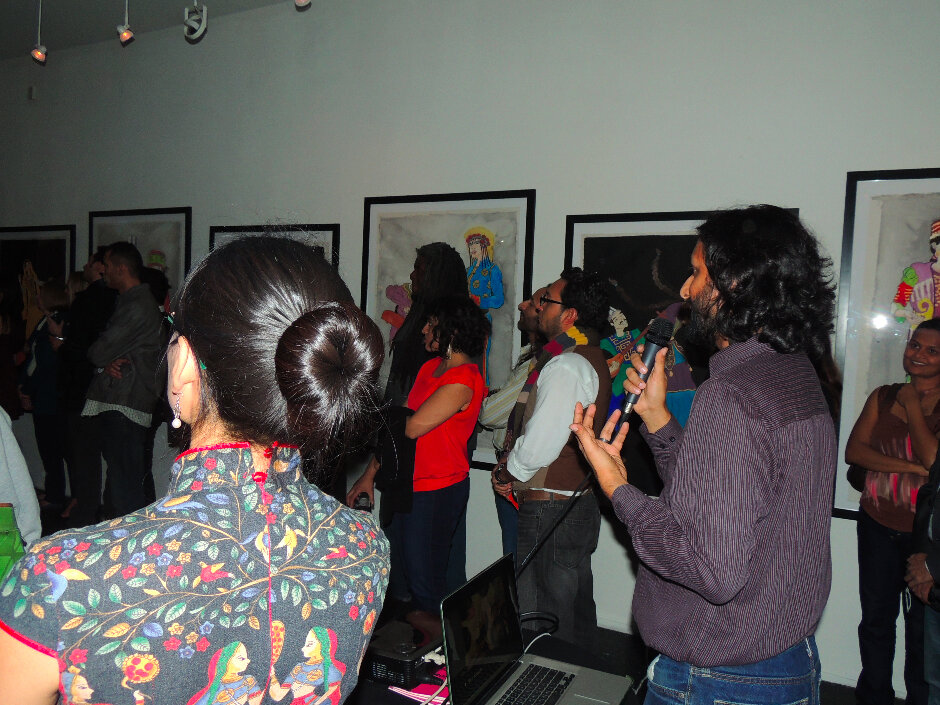
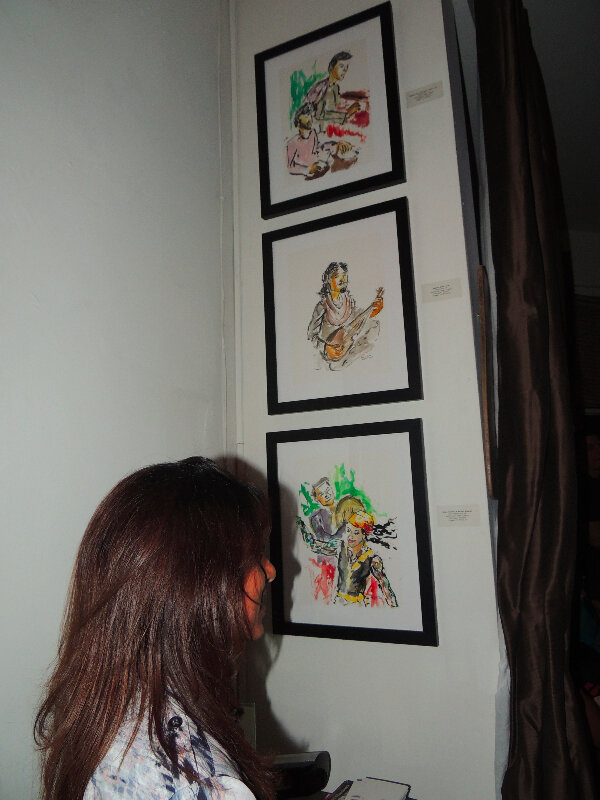
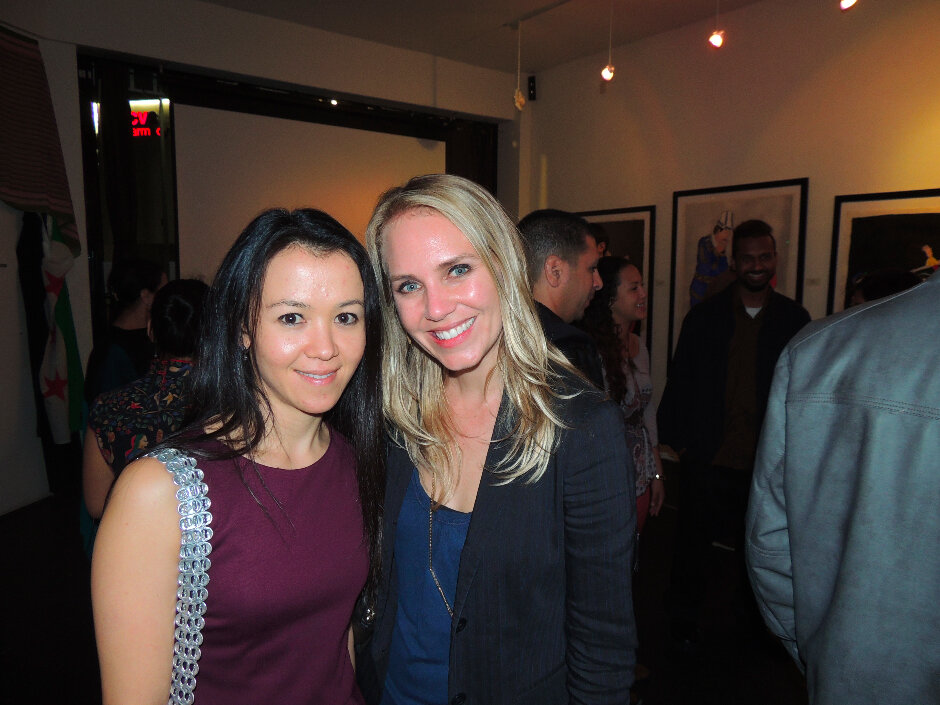
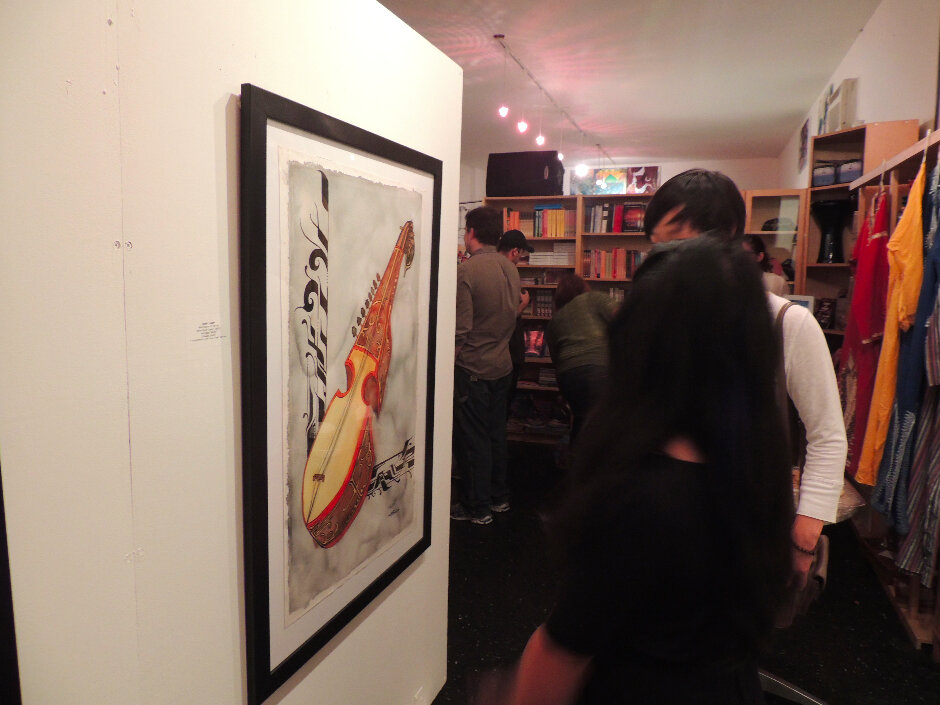
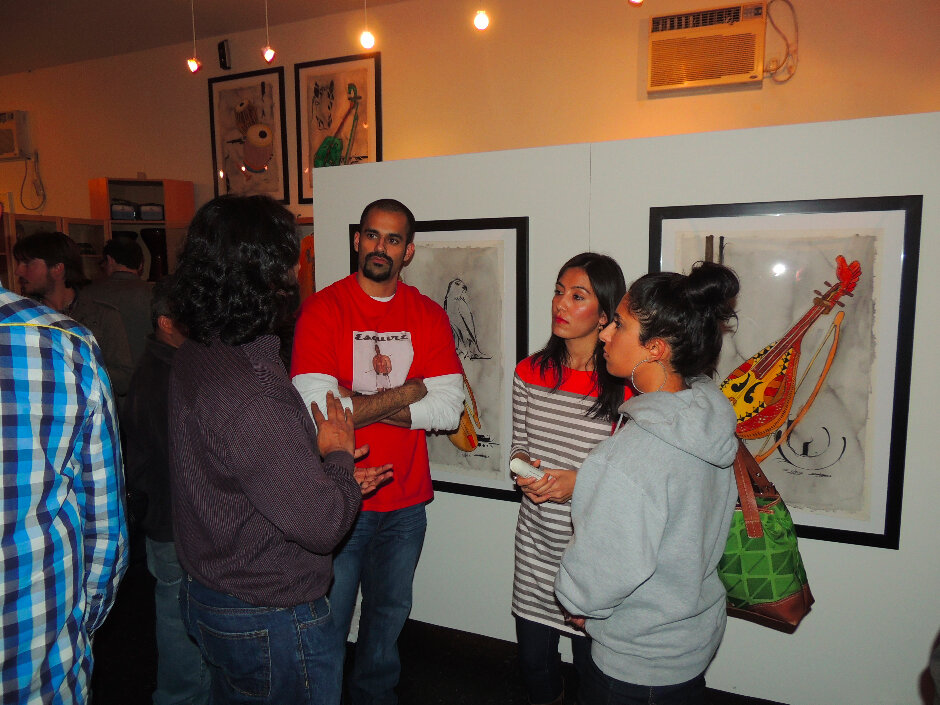
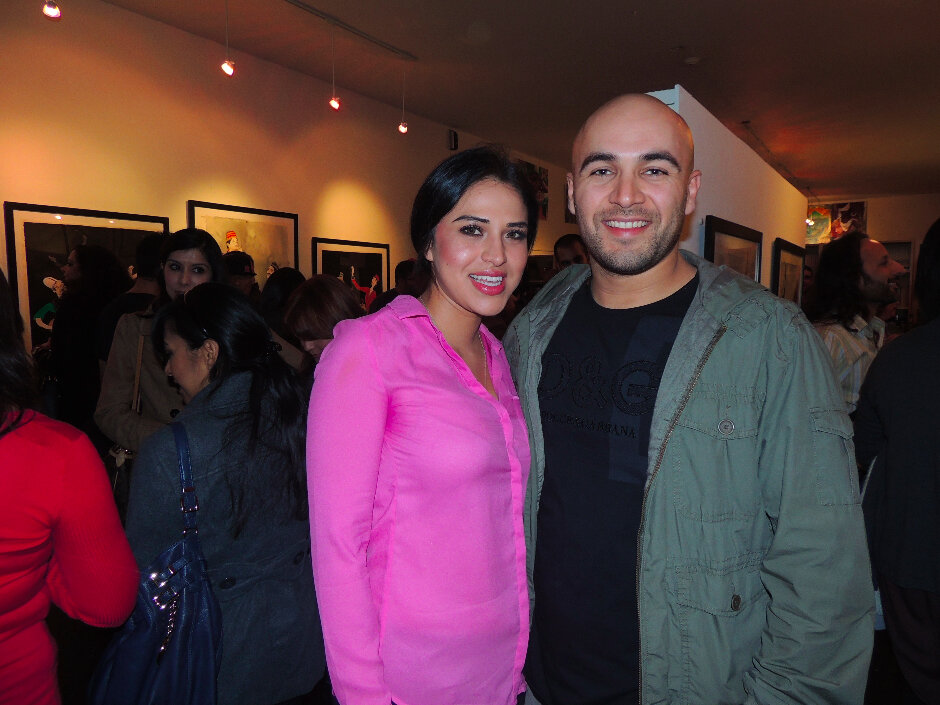
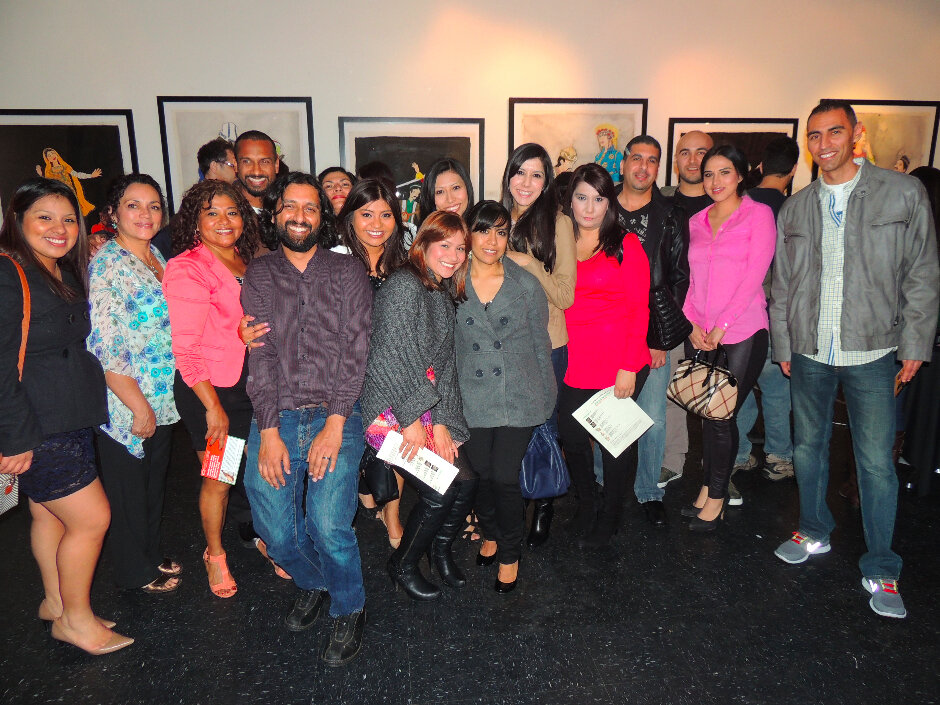
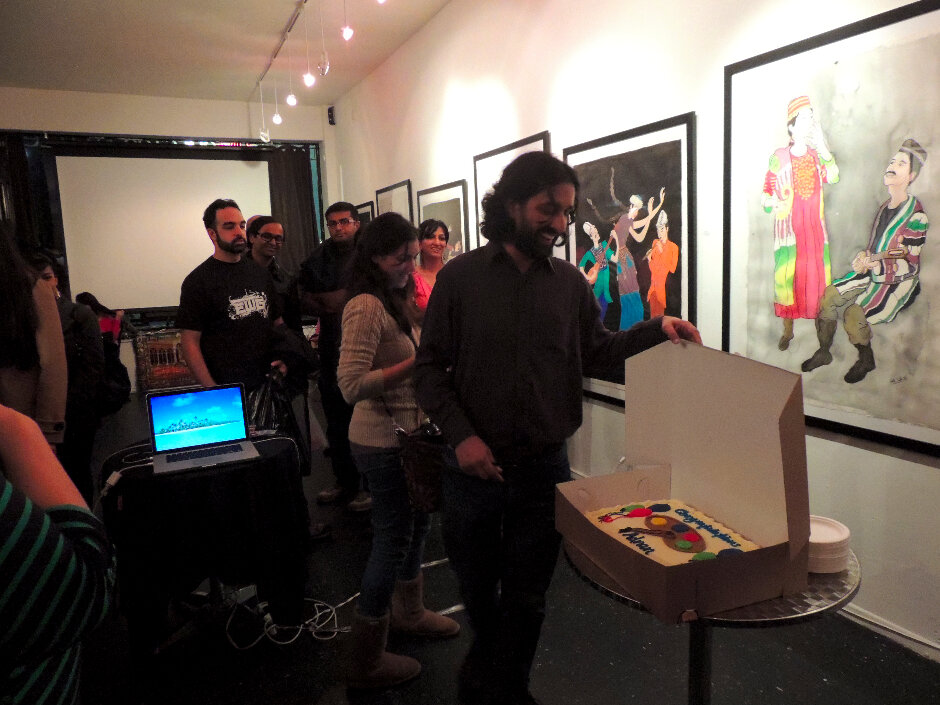
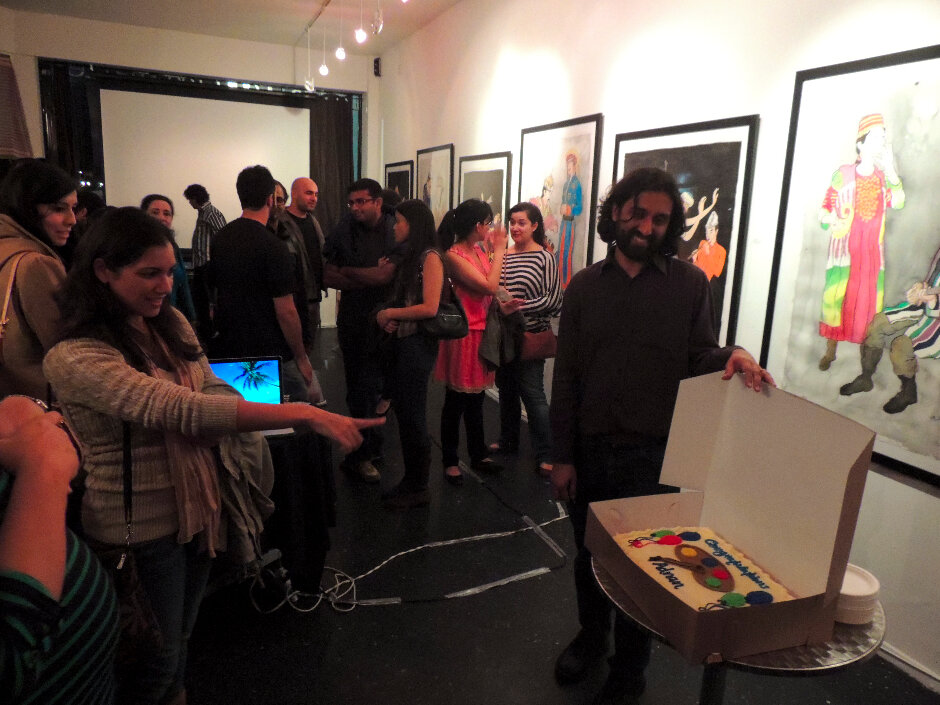
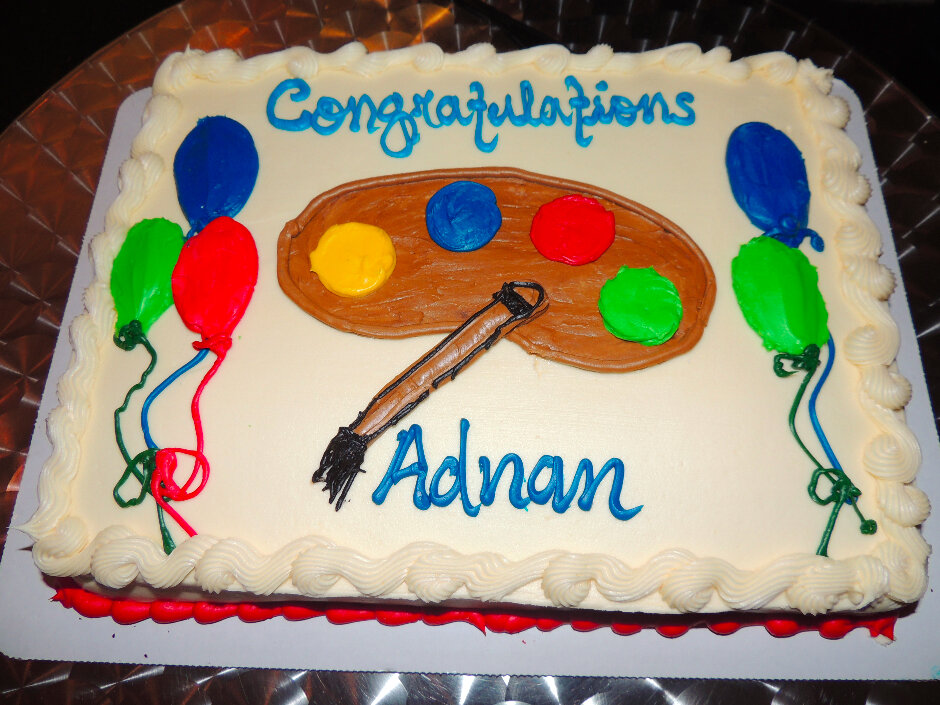
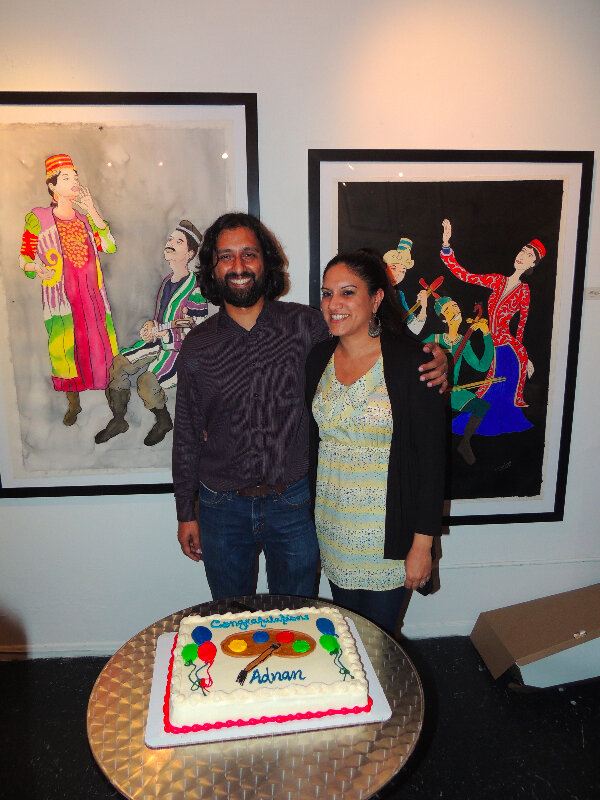
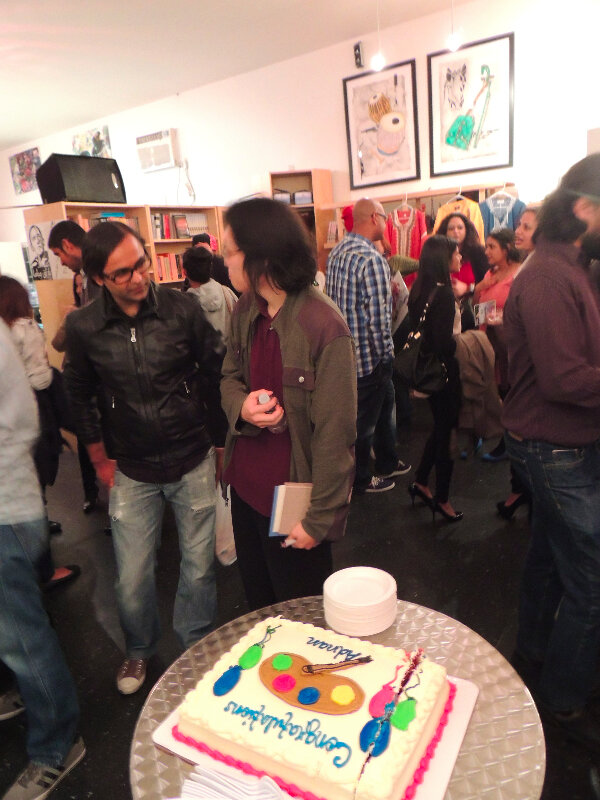
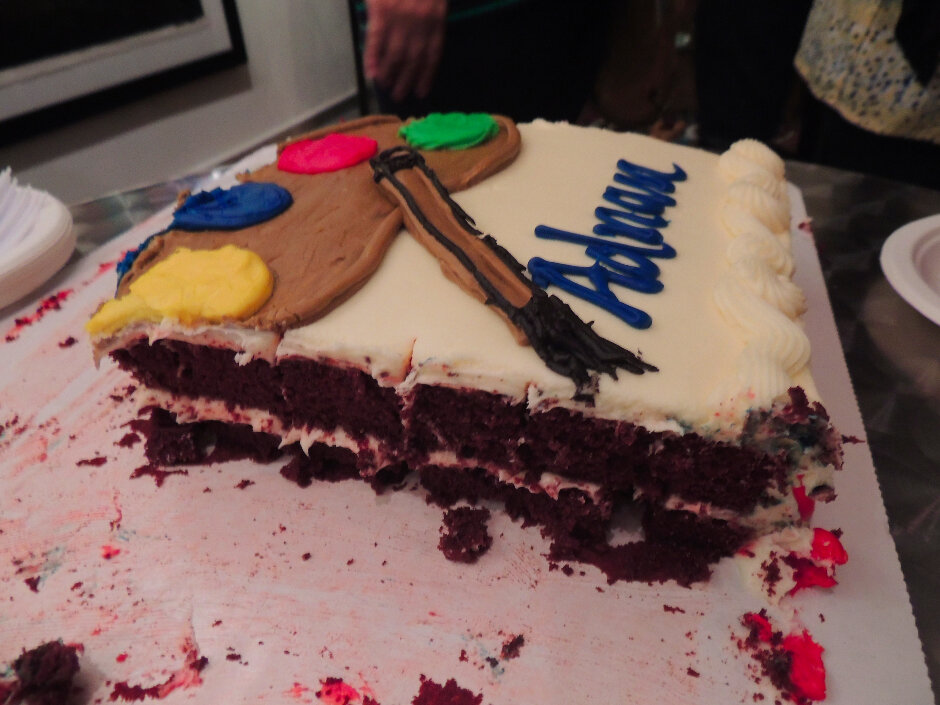
The Art of MusicIt has been a long journey to get to this point. I had painted 3 large paintings and 3 smaller live paintings before I pitched the idea for a gallery show on Central and South Asian music to Jordan of the Levantine Cultural Center back in Oct. 2012. He gave me the go ahead, and I began working on the rest of the 13 paintings for the show. The pieces included collaborations with Jorge "Tyme" Martinez, as well as 10 large paintings of music from 5 countries I visited while backpacking across Central and South Asia, connecting to people across language barriers through music.After much hard work painting, reaching out to local communities of the five cultures represented as well as other people interested in cultures and music, then getting the pieces framed by RA Custom Framing and then putting them up with the help of Jordan, Lila, Rima, Sahra and Kasmira at the Levantine Center, we were finally ready for the opening.We had our official gallery opening on Feb 2, 2013 and it went well beyond my wildest dreams. It was really heartwarming to see friends, family and all kinds of fans of art and music pack the Levantine Center's Inside/Outside gallery space, with Kyrgyz and Uyghur music playing in the background. It was a joy to share some of my friends and my experiences connecting to people in these beautiful cultures, and very rewarding to see people connect to it. Particularly hearing people's own experience in using art to connect with others on a deeper level was inspiring.
Crowd Funding for the Girnari Jogi Group Album

Click to enjoy the music of the Girnari Jogi Group.Back in December 2011, I had called my friend Ustad Amb Jogi in Pakistan. I was visiting Ohio at the time, and thought it would be good to catch up with some friends I hadn't spoken to in a while. I had hired Jogi and his group of musicians to record music for my short animated film Gul, back in 2008. I returned to the US, finished the film, toured around with it, then returned to share the results with Jogi and his group in 2010. That day in December 2011, on the phone, after some prodding, Jogi told me that he and the other musicians had lost their homes to flooding, earlier that year.I felt ashamed for not having called sooner. My second thought was that I needed to do something. Sitting a world away, what could I do for these wonderful musicians? I had one song that I had hired them to record. There was some unedited video footage from the recording session. Perhaps I could use these along with the photos of them I had already posted online in promotion of my film, to try and piece together a campaign to raise funds.

It was not feasible for me to raise enough funds to rebuild their homes. Still, I knew they could use whatever I could raise, but there had to be something more. I had discussed promoting them with recordings that others may have made of them before all of this, but no one every really gave them footage from shows, nor were there people interested in looking our for and promoting them.What if I used this campaign to pay them to create an album? Then they would be earning the money and it would work towards trying to create new opportunities for their careers. I already had a website, so I researched some shopping plugins for wordpress and decided on Shopp. I also started contacting people in the US and in Pakistan. I started letting everyone I met know about this campaign that I was putting together. My target was to get it up and running after Christmas and New Years, when people might be paying attention again. I enlisted the help of a few friends for recording at the Institute of Sindhology in Jamshoro, Sindh, Pakistan.

I went through my data backups and pulled out the footage, and the music only version of the score from my film. To me, this was the key to connecting potential crowd funders here in the US, with these musicians in Pakistan. I edited the video together, finished testing the shop portion of my website and finally launched the campaign, a few days after New Years. I used my facebook page, and fan page to send out messages with the purchase link. Everyone I spoke to learned about the campaign. By the time the campaign began, I had everything worked out as far as recording facilities, how to send the money directly to Ustad Amb Jogi and what to do with the footage for the new album once I had it. Now I just needed to raise the funds. I set a goal for $1,200 as that would be 4 to 5 times what the musicians would normally get paid for recording.Now that I had pushed myself so hard and put it all out there, certainly the money would come pouring in. Wrong! A few sales came through, but it quickly became apparent that things needed to pick up to make this goal a reality. I posted in all kinds of forums and groups related to Sindhi culture (Sindh being where the musicians were from in Pakistan). There was interest. People enjoyed watching the video, but it really did not increase sales.I started sending direct messages to everyone based in the US on my facebook. It took time to write all the messages, personalize them and try and connect people to what I was trying to do. Every day, I sent messages until I hit the facebook anti spam warning, then stopped for the day to start again the very next. Things picked up slightly, but on a day when I didn't campaign, nothing happened. I kept on it morning, noon and night around my work schedule.Every time someone purchased the music, I sent a thank you with them tagged in it from the Mad Guru facebook page. This showed up to all their friends and then to my twitter feed which was connected. I tried to use hash tags that would help with visibility. I kept this going for 2 months, messaging and remessaging to get through to friends and their circles.By the end of the campaign, there were over 90 people who purchased music to help the Jogis. I sent it all to Ustad Amb Jogi, all the while discussing what the purpose of the album was, how stories are what connects people and how their culture is what people wanted to enjoy. The Jogis were ready to go. With money in hand, they were able to hire a recording engineer and studio at the Institute of Sindhology for a very low cost thanks to the generosity of contacts there.

Receiving the recordings ended up being the largest delay in the process. I called from April to October to try and get the recording sent. I tried to have other contacts go and pick up the tapes to send me, but in the end a good friend Suffi Bilal Khalid in Lahore was able to get the tapes sent to him, which he was able to digitize and ftp to me as courier services refused to send music, probably due to piracy fears, though these were original recordings.

With the recording in hand, I've launched the album, and feel thankful to all those who chipped in $1.50 to $150, and placed their faith in the Jogis and myself. It had been a rewarding journey so far, and I hope to keep connecting the Girnari Jogi Group to new opportunities. Thanks Saeed Mangi for all the beautiful photos from the recording session, and for helping to make it possible to record at the Institute of Sindhology. Thanks to Fatah Daud Poto and Suffi Bilal Khalid for making it possible for me to ever even meet Ustad Amb Jogi and the group.

Happy Thanksgiving!
Today, for the third time, I shared Thanksgiving in Long Beach, at a Drop in for people in need. I sat at the gratitude table along with Norma and stacks or art supplies in a Church, to share with people in writing and drawing things they are grateful for on this day.


Today, for the third time, I shared Thanksgiving in Long Beach, at a Drop in for people in need. I sat at the gratitude table along with Norma and stacks of art supplies in a Church, to share with people in writing and drawing things they are grateful for on this day.Every year it's always fun to join this group of volunteers to serve food to a lot of people who really need it. I tend to be at the art table, but it's satisfying to see the smiles and full tummies. This year there was a wonderful family with 6 kids that really made my day, along with a sweet child who came to volunteer with her mom. In fact that little girl told her mom that she wanted to come out to help instead of going to dinner for thanksgiving. Kids are so inspiring. My bud Koji enjoyed some Star Wars video games on his Nintendo.These are some photos of the kids that made my Thanksgiving so much fun. They made these wonderful cards for me and I made each of them a card too. Some were tag teams with Norma (leaf rubbings and paper hearts), the children and myself. The last one is from Alex, a young man I met outside the entrance as volunteers were setting up inside. I sat down and talked to him for a while. Like several other homeless people I have met, here was a man with a great deal of wisdom and much to share, but due to some condition, uncared for, here he was, unable to connect his thoughts and connect to life as many others do. He made me that card and I made him one too.Thanks to my friend Sonali for the invite and organizing!
Latest Posts
- animals
- animation short film concept art
- california
- china
- condo
- costa rica
- culver city
- dance
- dance performance
- data darbar
- desert
- downtown
- festival
- figure drawing
- film festivals
- ger
- hasan abdal
- hate crime
- human rights
- humanrights palestine israel conflict activism
- India
- jamshoro
- kyrgyzstan
- la zoo
- lahore
- landscape
- landspcape
- life drawing
- live music
- live music performance watercolor sketch
- los angeles
- los angeles forest
- mogolia
- mongolia
- montezuma
- motel
- music
- music show
- musicians
- naadam
- nadam
- nankana sahib
- Orange County
- painting
- pakistan
- palestine
- panja sahib
- photo
- photography lahore pakistan travel people
- photos
- post natyam
- protest
- risalo
- sindh
- sketch
- sketches
- students
- sufi
- travel
- ucla
- USA
- uzbekistan
- uzbekistan people travel photography
- venice beach
- volunteer
- watercolor
- watercolors
- wrestling
- Yorba Linda
- zoo